The Charlotte Model: Helping students find success through a unified approach
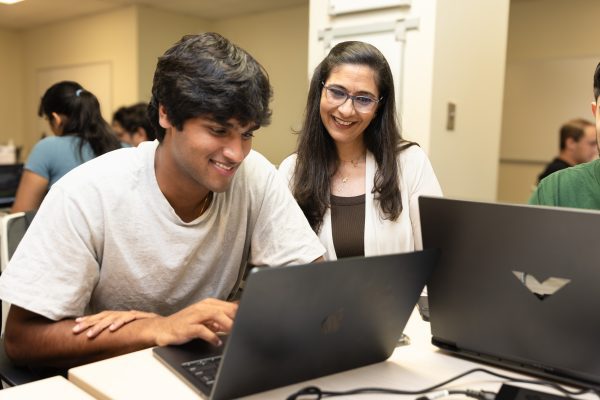
The Charlotte Model is UNC Charlotte’s holistic framework designed to help students achieve success at every stage of their college experience, from discovering their purpose to transitioning to post-graduation life. It connects academic progress, skill development, campus engagement, career readiness and financial well-being into a coordinated system that helps students thrive.
The efforts are yielding results, including:
- An 8.1 percentage point increase in first-year retention since 2000 (from 77.7% to 85.8%).
- The four-year graduation rate has more than doubled, increasing by 29.5 percentage points since the fall 2000 cohort (from 25.9% to 55.4%).
- Last year, more than 94% of graduates reported career success within six months of graduation, including securing a job, enrolling in graduate school or joining the military.
“The model maps the full student experience — not just the first year — to ensure every phase, from orientation to graduation and beyond, is intentional, connected and supported,” said Teresa Petty, associate provost for undergraduate education and dean of University College. “By thinking about the entire journey, we’re helping students design and navigate their academic path, personal growth and professional development in a cohesive way.”
Charlotte has increased support services for students, including expanded bridge programs like SAFE (Students Achieving First-Year Excellence), the University Transition Opportunities Program (UTOP) and the Forty-Niner Intensive Transition Program (FIT). The University has hired professional advisors for every student and established a peer hub for undergraduate students to receive general advising services with trained peer advisors.
Students are graduating with less debt, too, with a reduction of $4,066 in the average federal debt per borrower and a decline in graduates with federal debt — from 66% to 53.3% (from 2016-17 to 2023-24).
The model intentionally considers key transition points — such as onboarding, the first year to sophomore shift, changing majors and gaining real-world experience through internships — to provide students with right-on-time support, meeting them where they are with what they need, when they need it.
By aligning efforts across the University, the Charlotte Model ensures all students can design and achieve their individual paths to success.
“One of Charlotte’s strengths is the number of opportunities that are available to our students,” Petty said. “The Charlotte Model connects programs and services across the University into an intentional structure that helps them graduate on time, with less debt and well-prepared for meaningful careers.”