Shaping stronger student-athletes: How Kameron Roach ’23 supports Niners beyond competition
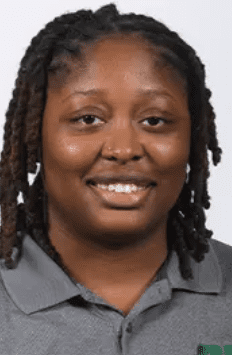
Kameron Roach knows what it takes to succeed on the court and in the classroom. She was named to the SEC Academic Honor Roll four times at the University of Kentucky, where she played women’s basketball for three seasons. With two years of eligibility remaining, she transferred to UNC Charlotte, earning a master’s degree in liberal studies with a focus on sports and leadership, and helped women’s basketball win the 2022 Conference USA tournament title.
Born in Hopkins, South Carolina, Roach considered Charlotte a second home after years of playing travel basketball in the area. She returned to UNC Charlotte in 2024 when she was hired as the director of student‑athlete involvement.
In her role, Roach plans events, tracks community service and leads leadership programs, career‑development workshops, networking mixers, financial‑literacy sessions and identity‑building programs. Her office oversees the 3Cs program — Collaborate, Cultivate, Celebrate — which supports community engagement, career development, personal leadership growth and recognition of athletic and academic achievement.
Roach brings firsthand experience to the work of supporting student‑athletes. In this Q&A, she reflects on her time as a student‑athlete and the challenges today’s student-athletes face.
How did you transition from being a student‑athlete to working in student‑athlete development?
I always wanted to work in sports. When I was a student at Charlotte, my sports supervisor was Reagan Hill, executive associate athletic director, and she gave me an opportunity to intern with her. I got a lot of great experience — conventions, March Madness and networking. When the student‑athlete development role opened up, I asked about it and got the job.
What was it like seeing the “other side” of athletics after being an athlete yourself?
It made me super grateful for academic advisors, operations and supervisors. You get to see what it takes to make things happen. This job requires going the extra mile. As athletes, we don’t always realize that, but being on this side has helped me appreciate the people who supported me.
What were some challenges you faced as a student‑athlete that other students might not understand?
The schedule, for sure. Preseason is always a really rough time for any student-athlete. You’re pushed mentally and physically, and are still expected to show up to class presentable. I had structure growing up, so my transition wasn’t as bad, but it was still tough. I double-majored and had a minor — taking 19–22 credit hours some semesters. Time management, the mental side, being away from home for long stretches — that was hard.
How does that experience shape how you support student‑athletes now?
I can relate to them. Some things that seem simple to other students aren’t simple for student‑athletes. I help them think strategically: maybe you can’t network during the season, but you can in the summer. I bring in speakers who’ve lived it — former athletes who talk about identity outside of sports.
How important is it for student‑athletes to build an identity outside of athletics?
It’s huge. The job market is tough. Employers want student‑athletes who took advantage of the opportunity — networking, time management, resume building — not just people who played a sport. Some athletes only apply those skills to their sport, but if you use the available resources, you can really set yourself apart.
What do you wish more people understood about student‑athletes?
That they’re human. With gambling and social media, some people forget that. Athletes lose family members during the season and still play. Some are away from their support systems. Some are first‑generation — which is a whole different challenge. They deal with life just like everyone else, while being held to a high standard in their sport.
What’s the most rewarding part of your job?
When athletes come back and say, “Thank you so much, this was so helpful,” or “I got the internship,” or “This inspired me.” That makes me happiest — knowing something we did helped them.