Understanding America’s electric grid: Why modernization matters

The NSF Grid Modernization Engine in the Carolinas (Carolinas Grid Engine) – led by UNC Charlotte with support from more than 100 partners – is a regional energy innovation hub that spans 36 counties in North Carolina and South Carolina designed to create a resilient, efficient and technologically advanced power grid. With research support from the National Science Foundation, it will speed the pathway for new grid technology to move from ideation to adoption.
Robert Cox, co-principal investigator of the Carolinas Grid Engine, executive director of UNC Charlotte’s Energy Production and Infrastructure Center and The Duke Energy Distinguished Scholar in Power Engineering Systems, answers questions about the current state of America’s energy grid infrastructure and why modernization is critical.
What is the electric grid and how does it work?
The electric grid is the network that moves electricity from where it is generated to homes, businesses, hospitals and other built structures. Electricity leaves a power plant via high-voltage, large-capacity transmission wires to substations located in our communities. From there, electricity is transported along lower-voltage, safer-distribution lines to homes and other end users. Power plants, transmission lines, substations and local distribution systems are components of the infrastructure that work together to keep electricity flowing.
Why does America’s electric grid need modernizing?
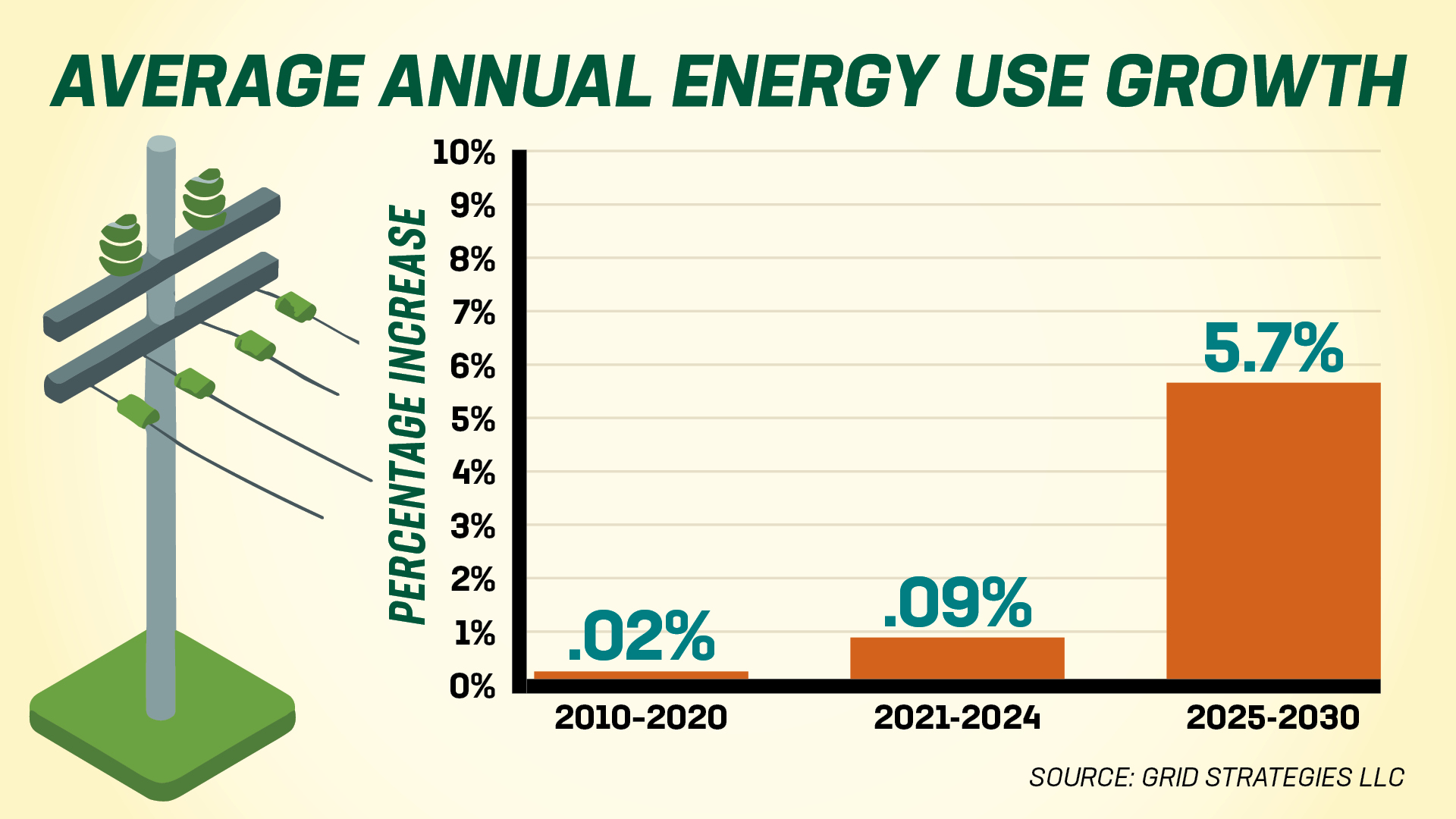
Demand for electricity is growing and the infrastructure that delivers it is outdated. Aging power grids, built decades ago in many areas, struggle to handle today’s requirements, which are driven by population growth, new technologies, extreme weather and increasing electrification. Modernization is essential to make sure power is available to users 24/7 and to increase capacity and create reliable systems.
What challenges does the electric grid currently face?
Aging infrastructure, increased usage, cyberattacks, severe weather and increasing complexity present a number of pressures to today’s electric grid. Without a more modern infrastructure, we face a growing number of unplanned outages that put people and communities at risk.
What are the consequences of not updating the grid?
A lack of electricity for short or long periods can lead to life-threatening outcomes, for example, in homes and hospitals. Outages at military bases and government data warehouses make the United States vulnerable to cyberattacks, threatening national security. System upgrades alone will not solve these challenges. Solutions require investment in new technologies, a larger and upskilled energy workforce and better coordination among utilities, regulators and tech providers. In addition, AI data centers and manufacturers – leading drivers of economic growth – require significant power. Unless America is able to affordably and reliably power these new loads, we risk vital economic growth potential to other parts of the world.
What is an example of a demand on the electric grid that emerged since it was first developed?
Managing the adoption pattern for electric vehicles without driving up costs is a challenge. Charging an electric car can double a household’s energy usage. Separate from the energy required, it emphasizes the complicating factor that existing poles, wires and transformers were not designed for the required level of power usage.
How do extreme weather and natural disasters affect the grid?
Severe weather can damage infrastructure, disrupt power generation and create widespread outages. Building more resilient infrastructure can mitigate disruptions and help communities recover more quickly when they occur.
How does grid reliability affect the economy?
Reliable energy infrastructure supports businesses, manufacturing, healthcare systems, transportation networks and everyday life. Regions with strong infrastructure are better positioned for growth and investment.
The International Energy Agency recognizes grid modernization as a global challenge, with countries across North America, Europe and Asia investing heavily in transmission, distribution and grid digitalization to support economic growth, energy security and new technologies. Global grid investment is expected to exceed $600 billion annually by 2030.
What kinds of technologies could help improve the grid – and how?
Advances in artificial intelligence, sensors, data analytics and grid controls are changing how energy systems operate. Advanced research can help determine how these new technologies will help utilities better predict demand, identify problems quicker and improve efficiency. Additionally, “grid-enhancing technologies” hold the potential to accommodate the surging load from data centers. GETs include software and hardware components that allow utilities to pass more electricity through existing infrastructure, increasing their capacity by as much as 50%.
Why are utilities typically reluctant to adopt new, innovative technologies?
Because utilities are required to provide electricity with high reliability, they are reluctant to adopt technologies that come with possible unseen risks when asked to operate 24/7 over the course of decades. GETs are a perfect example. Utilities could easily adopt these systems to upgrade existing – rather than build new – infrastructure, resulting in less upfront capital investment. However, these technologies could risk failing during critical moments unforeseen during their development (while requiring additional worker training). In an environment focused on affordability, utilities need to think carefully about how much it will cost to maintain new infrastructure.
What else prompts reluctance surrounding the adoption of new grid technologies?
Because utilities are risk averse, it can take a long time and excessive capital for startups and innovators to prove that promising, new technologies can stand up to the reality of long-term, constant operation. This means that venture capital firms and other investors think long and hard before supporting them. For new concepts to see the light of day, improving the innovation pipeline for grid technology is imperative.
What could happen if the United States declines to modernize its electrical grid?
Without continued investment and innovation, the gap between the grid’s original intended capability and current demands will only widen. Over time, that will create challenges for reliability, economic competitiveness and resilience, and increase susceptibilities to attacks.
“The NSF Grid Modernization Engine in the Carolinas will make
Robert Cox,
our nation safer by addressing security risks, stronger by driving
economic growth and smarter by building a skilled workforce.”
Co-principal investigator for the Carolinas Grid Engine
Executive director of EPIC at UNC Charlotte
What is the NSF Grid Modernization Engine in the Carolinas and what does it aim to accomplish?
The NSF Grid Modernization Engine in the Carolinas is a regional energy innovation hub spanning North Carolina and South Carolina designed to create a resilient, efficient and technologically advanced power grid. This will ultimately unleash venture capital and create a new pipeline for advanced technologies to reach the market. Additionally, partners throughout the region will collaborate to address other issues related to manufacturing readiness and workforce development.
What makes North Carolina and South Carolina distinctly positioned to address grid modernization challenges?
In addition to the proximity of partners willing to work through adoption challenges, the Carolinas possess the tremendous laboratory infrastructure required by utilities and investors to prove the decades-long staying power and uncompromising reliability of new technologies – and the exceptional manufacturing and workforce training sectors to support them.
How does this research partnership and project benefit energy users in the community?
As electricity demand surges and infrastructure ages, the only remedy the utility companies have right now is to spend more money on new infrastructure. This ultimately leads to higher costs for the consumer. Research that is conducted through the NSF Grid Modernization Engine in the Carolinas will lead to the adoption of new technologies that ensure greater reliability, fewer outages and faster restoration, while keeping costs in check.
Written by Christy Jackson and Monica Hughes