A history of leadership in energy and electrical grid innovation

UNC Charlotte’s William States Lee College of Engineering, an energy-innovation leader for nearly two decades, steadily built its research capability, partnerships and workforce to support one of America’s most urgent infrastructure challenges: the modernization of the national energy grid.
In 2008, the college’s early work in power systems and energy infrastructure accelerated with the launch of the Energy Production and Infrastructure Center. Established through major public and private investment, EPIC explores and tests solutions to the rising challenges facing industry partners in energy production, transmission and distribution. At the forefront: development of a pipeline of skilled engineers to replace an aging workforce. In response, EPIC has served as a catalyst for the expansion of UNC Charlotte’s energy-focused curriculum, research enterprise and specialized facilities.
Rob Keynton, dean of the W.S. Lee College of Engineering, arrived at Charlotte in 2020 and recognized EPIC’s potential for national distinction. His vision for the center, shaped by conversations with industry partners and supported by University and EPIC leadership, has positioned the center to drive next-generation energy solutions.
“The work initiated at EPIC remains relevant – and critical – as we leverage the center’s elite faculty, facilities and partnerships to address future industry challenges,” Keynton said.
Today, under the leadership of Executive Director Robert Cox, EPIC has expanded its foundation to include specialized laboratories focused on power systems, smart grid technologies, resilience, power electronics and advanced energy infrastructure. Researchers across disciplines are studying challenges ranging from grid reliability and resilience to integration of emerging technologies and changing energy demands.


Applying vision to expertise
Keynton’s foresight and EPIC’s rising industry validation led engineering faculty to secure transformational support from the NSF Regional Engines program. Consequently, they now will spearhead the NSF Grid Modernization Engine in the Carolinas project alongside faculty from across campus including CCI.
“By leading the NSF Grid Modernization in the Carolinas, EPIC researchers are positioned to solve skyrocketing grid demands from AI, data centers, electric vehicles and advanced manufacturing,” Keynton said.
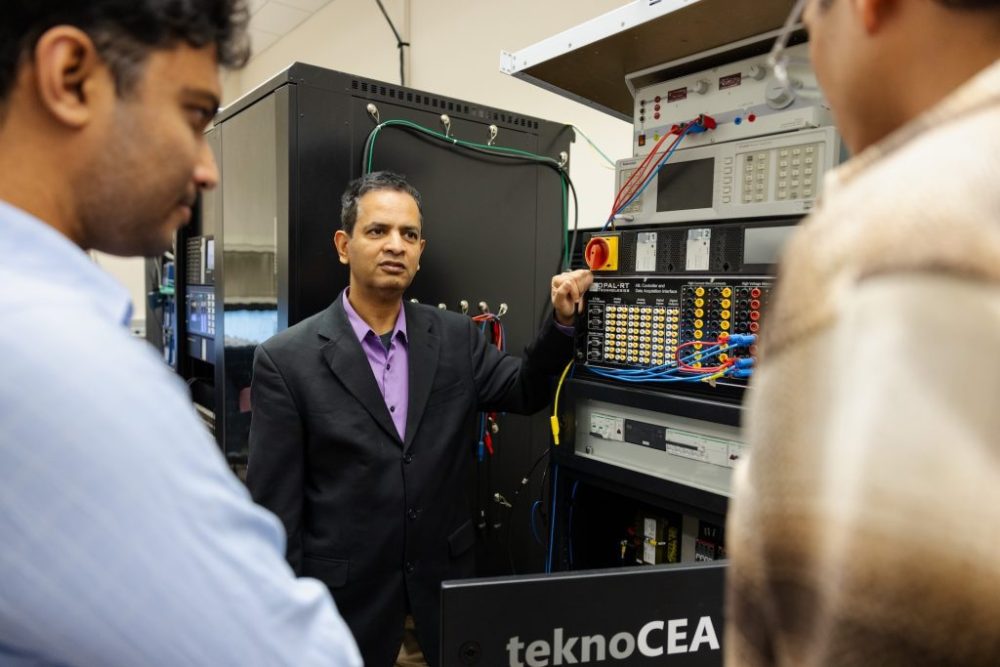
Sukumar Kamalasadan’s energy research has led to the creation of digital blueprints and safety controls needed to ensure that clean energy, like wind and solar, can power homes reliably without causing blackouts or technical failures. His solutions — backed by over $15 million in funding from the National Science Foundation, U.S. Department of Energy, and industry giants like Duke Energy and Siemens — are actively helping utilities maintain reliability during drastic generation and demand shifts, and extreme weather events.
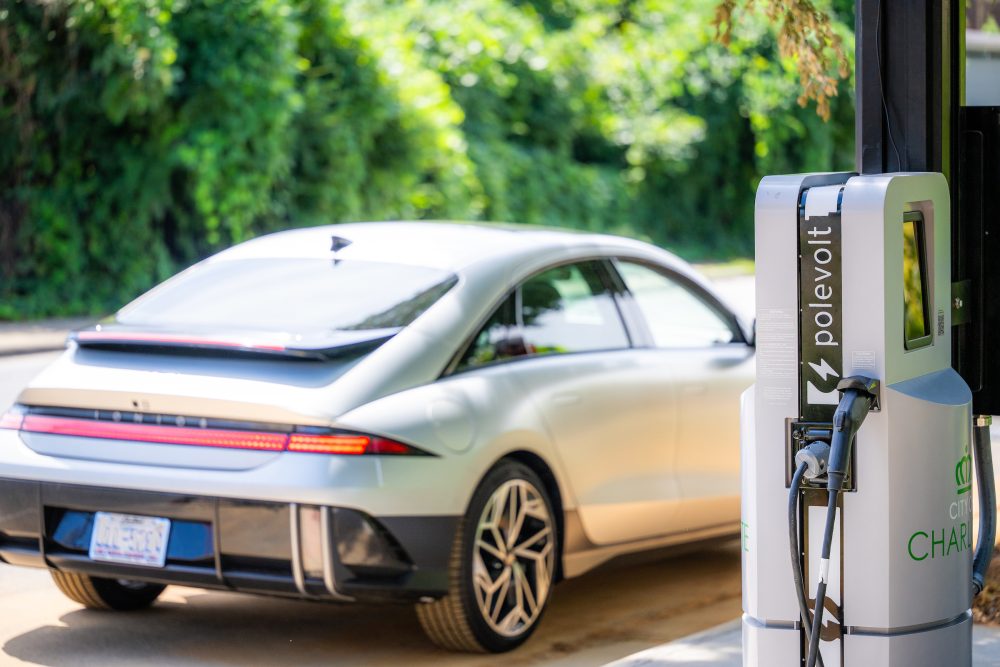
Robert Cox, the city of Charlotte and Duke Energy partnered to create the first universal electric vehicle charging solution of its kind in the U.S., including real-world testing in Charlotte. The solution, called PoleVolt™, draws power from existing streetlight poles to provide curbside electric vehicle charging.
Partnerships drive success
Research alone is not what distinguishes UNC Charlotte’s groundbreaking energy work. Located in one of the country’s largest energy regions, the University is situated within a network of utilities, manufacturers, infrastructure partners and technology companies that allows ideas to move quickly from research and testing to demonstration and deployment.
“Our close regional partnerships provide a unique energy-powered network to transform economic development and create a highly attractive ecosystem for advanced manufacturing, AI and future industries still to be defined,” said Keynton.
Initiated to address foundational energy issues and workforce development, EPIC has evolved consistently to meet changing industry needs, positioning this centerpiece of energy expertise to tackle the next-generation challenges of the national grid. Through the Carolinas Grid Engine, EPIC researchers, industry leaders and community partners are working toward a more resilient and reliable energy infrastructure to support individuals, communities and industry for today and the future.
Written by Christy Jackson and Monica Hughes