Q&A with Colton McComas ’26 on his mobile app, Fixxr
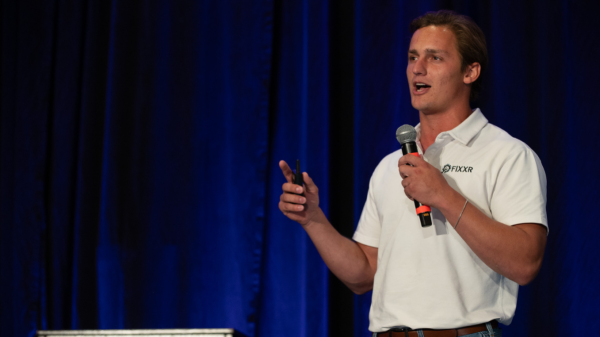
Fixxr, a mobile app created by UNC Charlotte mechanical engineering graduate Colton McComas ’26, gives drivers a clearer view of what’s going on under the hood. Its diagnostic tools and quote analysis features help users interpret repair recommendations and find reputable shops, turning a traditionally confusing process into one that’s easier to navigate.
What inspired the idea for a car repair app?
My grandfather ran a repair shop when I was a kid and that’s where my liking for mechanics started. I’ve also run my own mechanic shop for a number of years and kept running into the same problem. Friends and family would call me and ask what’s wrong with their car, or if they’re being ripped off by their mechanic. That’s where the idea for Fixxr came from — educating drivers on car repairs so they feel confident in making repair decisions.
How did your UNC Charlotte mechanical engineering education shape the app’s design and functionality?
My education gave me both the technical knowledge and industry connections to build Fixxr the right way. Having an engineering mindset shaped the diagnostic engine. The app is built to reason through what’s wrong with the car rather than just giving a generic result. As a mechanic myself, I designed the app around how repairs really work and what a driver actually needs, not just what sounds good.
Were there any classes, professors or experiences at UNC Charlotte that played a role in developing Fixxr?
While building Fixxr, I connected with Chris Halligan and Rob Cummings, who teach an entrepreneurship class at the Dubois Center at UNC Charlotte Center City. After my first session, I never missed another. It became one of my favorite classes and introduced me to startup founders from across Charlotte’s entrepreneurial ecosystem. That experience helped me build connections that continue to benefit me today.
What problem does the app aim to solve for car owners?
Fixxr is a mobile app that educates drivers on car repairs and connects them with local vetted repair shops. The app aims to solve uncertainty — most people have no clue what’s wrong with their vehicle. On average, two out of three drivers don’t trust their mechanics, and 76% of drivers believe mechanics do repairs that the owner doesn’t need.
Walk me through the process of turning your initial idea into a working app.
The initial idea came because I was living the problem. I also talked to drivers and repair shops to find out if this was just me experiencing this problem or if it was an industry-wide problem. Through these conversations, we discovered that everybody was having this problem. I brought on a small team, and we built the diagnostic tool and the two-sided marketplace. We launched in Charlotte, and since then, we’ve been talking to shops, iterating the process, fixing the process and repeating.
How does the app work, and how is it different from other car repair resources?
We have a multitude of tools customers can use, including a diagnostic tool. Drivers can take a video of what’s wrong with their car or describe it and we will diagnose their issue and give them suggested next steps. We also have a quote analyzer where customers can take a picture of their repair quote and we will break it down for them. We explain what they’re paying for, if they’re overpaying, the warranty details, etc. Unlike other existing platforms that focus on bringing leads to the shop, we focus on the customer experience and what makes the driver feel better.
How important have networking and collaboration been in your entrepreneurial journey, and did your time at UNC Charlotte help you build those skills?
It’s probably the single most important thing. You have to get out, talk to other entrepreneurs and build real relationships. UNC Charlotte played an important role in that, especially because it’s where I met my co-founder, Thomas Spraker. I leaned into the University’s resources after graduating and found that much of Charlotte’s startup ecosystem traces back to UNC Charlotte in some way. The University does a great job supporting students who want to build something of their own.
What advice would you give students or recent graduates who have an idea they want to turn into a real product?
My first piece of advice is to talk to who you think your customers are. If you know you’re going to be building something for repair shops, go talk to repair shops to see if it’s something they’d use or pay for. So, just go talk to people — whether it’s repair shops, fellow founders or investors — you’ll learn so much. Charlotte is a great city to build a startup. There are connections everywhere, so don’t be scared to ask people for help. You can’t do it alone.
Written by: Lily Warlick