Air Force veteran finds new mission at UNC Charlotte: Smarter HVAC technology
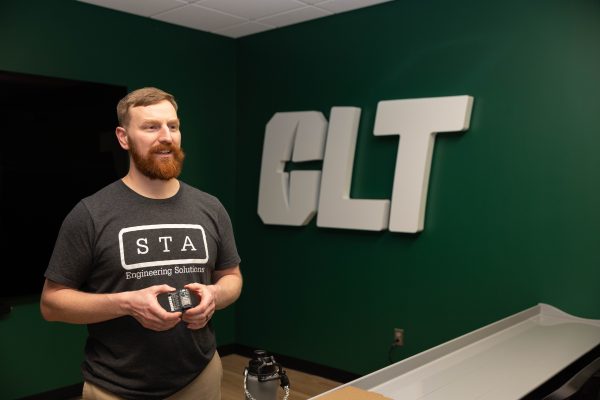
For most of his life, Steven Bowers thought his future would look very different.
Growing up in Concord, North Carolina, Bowers focused more on athletics than academics. A track athlete at Jay M. Robinson High School, he dreamed of competing at the highest levels in sports and eventually serving in the military like so many members of his family before him. Attending college was not part of the plan.
“I compared myself to other students academically,” Bowers said. “I thought if I wasn’t as smart as somebody else, then maybe I just wasn’t good enough for school.”
After high school, Bowers enlisted in the U.S. Air Force, serving 10 years in aircraft maintenance, including deployments to Turkey and Iraq during Operation Inherent Resolve. Working on aircraft often left him thinking about design inefficiencies.
Bowers would frequently become frustrated with engineers. “I would think, ‘What were they thinking? Who would design it this way? I can do better,’” Bowers said.
Today, Bowers is proving how dramatically life’s plans can change. Now a dual major in electrical and computer engineering at UNC Charlotte, the military veteran, husband and father is leading a student team in developing an innovative HVAC monitoring system designed to predict air conditioning failures before they happen. The technology aims to improve home maintenance, reduce outages and modernize the HVAC industry.
As he prepared to transition out of the military, Bowers enrolled in an HVAC trade program designed for service members. During a classroom discussion, the idea for his future startup took shape.
A fellow student asked whether HVAC systems could self-diagnose problems. The teacher said no. Bowers immediately began asking a different question: How do we make a “dumb” HVAC unit smart?
With no coding or engineering background, he began building an early prototype.
“I had no idea what I was doing,” he said. “No coding experience, no design experience, nothing.”
What started as rough wiring and a self-taught experiment has evolved into a unique monitoring system capable of tracking HVAC performance, diagnosing issues and eventually predicting failures before they occur.
After arriving at UNC Charlotte in 2023, Bowers leveraged the University’s resources to advance the design. Working alongside fellow engineering students, Bowers rebuilt his original prototype from the ground up. Today, the team is developing a refined version that includes cloud-based monitoring, mobile app integration and predictive analytics.
The system, called the SC Add-On for Smart Cooling, can monitor refrigerant pressures, detect failing components and alert users before breakdowns occur, potentially saving homeowners thousands of dollars and helping families avoid outages.
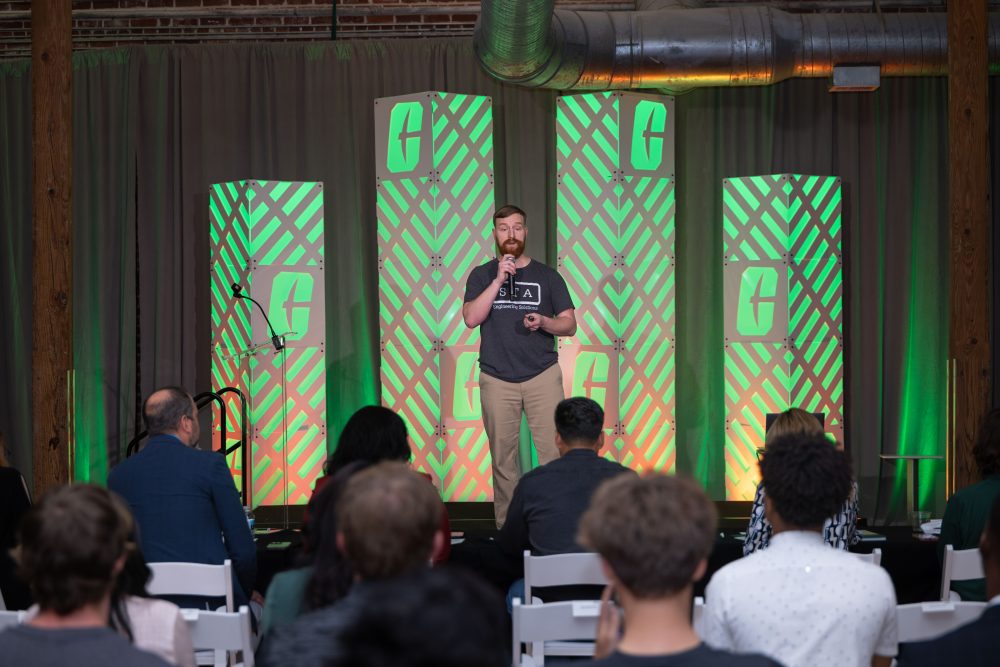
The technology recently drew attention during a campus pitch competition hosted by the UNC Charlotte Center for Entrepreneurship and Innovation’s 49er Foundry program and attended by investors and industry professionals. Bowers placed third and earned a cash prize while also attracting interest from business owners in the room who expressed interest in incorporating the technology into their operations.
Bowers credits the 49er Foundry for helping his team think more like entrepreneurs by developing business plans, exploring manufacturing strategies and connecting with Charlotte’s innovation leaders.
“The end goal is to have a product that acts as your own 24/7 technician and can alert you and your preferred HVAC company,” Bowers said. “Since the pitch competition, I’ve incorporated a machine learning algorithm with it to where when it’s trained properly, it can predict if your unit is going to fail. So we have a lot of great pieces that we’re trying to put together.”
UNC Charlotte has given Bowers the opportunity to challenge himself academically and grow his invention. His aim is to have the system implemented in commercial and residential HVAC units. For Bowers, the project represents more than a business opportunity. It is a chance to create a meaningful impact, provide for his family and build a future he never imagined possible as a young student in Concord who once believed college was out of reach.
Written by: Jason Vaughan.