Lessons learned: UNC Charlotte student researches impacts of post-Helene road closures
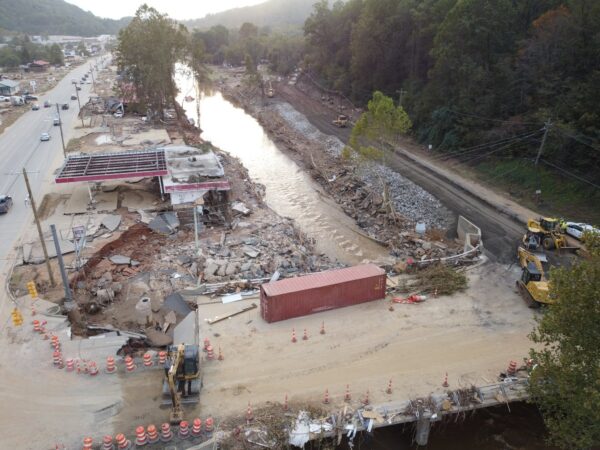
In the aftermath of Hurricane Helene, which devastated much of western North Carolina, accessing critical supplies like water, food and gasoline was a challenge for people just beginning the recovery process. Road closures, washouts and obstructions made travel nearly impossible in some of the hardest-hit areas.
As the second anniversary of the storm approaches, a UNC Charlotte graduate student is researching how the road closures impacted residents’ efforts to reach water distribution sites. Because of infrastructure damage, many people living in and around Asheville did not have clean drinking water for weeks after the storm.
Kendrick Grant is pursuing a master’s degree in civil engineering with a concentration in transportation engineering. As part of his research, Grant was recently named a Mountains to Sea Fellow. The research is also funded by the National Aeronautics and Space Administration (NASA).
“Something I really appreciate about being a student at Charlotte is getting this opportunity to work with government officials on an active problem and actively help a lot of people,” he said.
Grant is looking specifically at water distribution sites and the accessible routes, or lack thereof, in the days and weeks after Hurricane Helene. Much of his work has focused on compiling data from numerous sources, including local and state government data and user-reported data through the Waze for Cities platform.
“One of the goals of my study is to see how user-reported closures could be utilized and give everyone a better picture of what roads are closed and which routes would be best for people trying to travel,” Grant said.
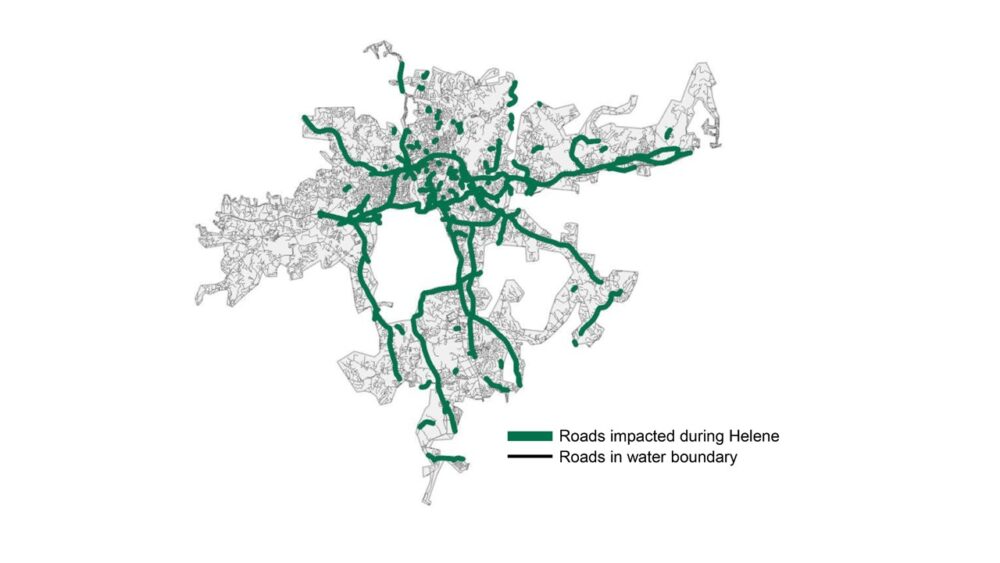
Grant’s research has gained interest from government organizations, leading to discussions with the city of Asheville’s water department, the North Carolina Department of Transportation and the North Carolina Department of Health and Human Services. He hopes his work can lead to lessons for future severe weather events.
“The hope is that no one is ever left in the dark with which roads are closed, which routes are the best. Hopefully it allows for recovery to go a little smoother, at least from the transportation side,” Grant said.
“Kendrick is developing one of the first pictures of what we know about road damage in Asheville after Helene,” said Kelsey Pieper, assistant professor of civil and environmental engineering.
Pieper has completed extensive research in post-disaster drinking water recovery and is serving as Grant’s faculty mentor along with Carlos Gonzalez-Calderon. For her, an important byproduct of Grant’s work is the conversations it has started.
“It’s getting people to think about which roads might be compromised when setting up emergency resources. We might assume certain roads will remain accessible, but that’s not always the case,” she said.
Grant is honored by his selection for the Mountains to Sea Fellowship and the additional funding support for his research. While the work has been tedious and difficult at times, it has been a fulfilling project.
“I do want to help people, and being able to see that work I’m doing will positively affect people who have been put in a horrible situation — that means a lot to me,” Grant said.
Written by: Andrew James
Photos: Courtesy of the city of Asheville and Kendrick Grant