Filthy Rich
From food scraps to a flourishing farm, Kris Steele ’08, ’12 and Eric Theys ’13 are building a cleaner, greener Charlotte — one compost bin and backyard at a time.
By Meg DellaMea & Jenny Matz
Photos by Ryan Honeyman & Crown Town Compost
You could say they’ve closed the loop.
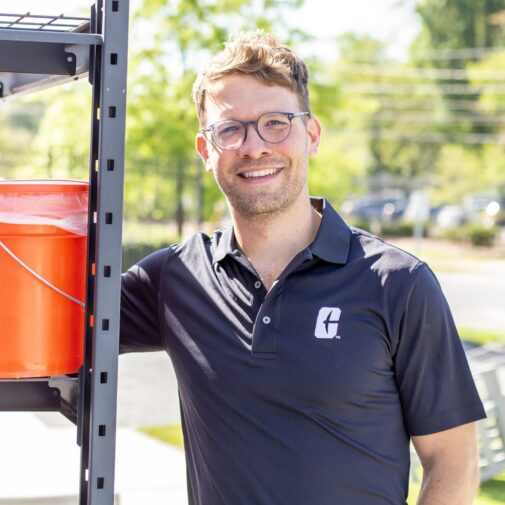
Alumni Kris Steele ‘08, ‘12 and Eric Theys ‘13, along with partners David Valder and Marcus Carson, are at the helm of Charlotte’s successful Crown Town Compost and Crown Town Landscapes. The mission is simple: reduce food waste and improve the environment through composting. Now after 10 years, business has blossomed throughout the city; they’ve got a bustling hub at the Innovation Barn and the team now has a working farm in Mount Pleasant, NC.
Crown Town Farm is a living demonstration of what happens when you invest in the environment and in your community. Led by a passionate team and farm manager Todd Jackson, it’s sprouting everything from zucchini and cucumbers to fruit trees and native grasses.
The farm is where our values come to life. We’re not just talking about change — we’re growing it.”
Kris Steele
Seed of an Idea
Crown Town Compost launched in 2015 with a bold mission: reduce waste, regenerate soil and reconnect people to the earth. The founders — all with full-time jobs in other industries — collected food waste by bicycle, turning it into nutrient-rich compost delivered to customers twice a year.
Starting in Charlotte’s Wilmore neighborhood and at farmers markets, they built a loyal following. As demand grew, so did their infrastructure, eventually swapping bikes for pickup trucks and expanding to hundreds of households and businesses.
Table Scraps
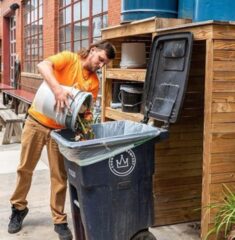
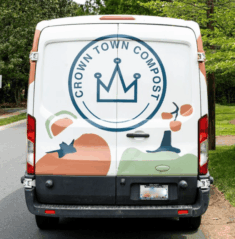
You’ve probably seen their black bins around town — or in your neighborhood. Smaller than a regular trash bin with the signature crown on the sides, they are made specifically for food waste and are transforming Charlotte’s environmental impact one bin at a time.
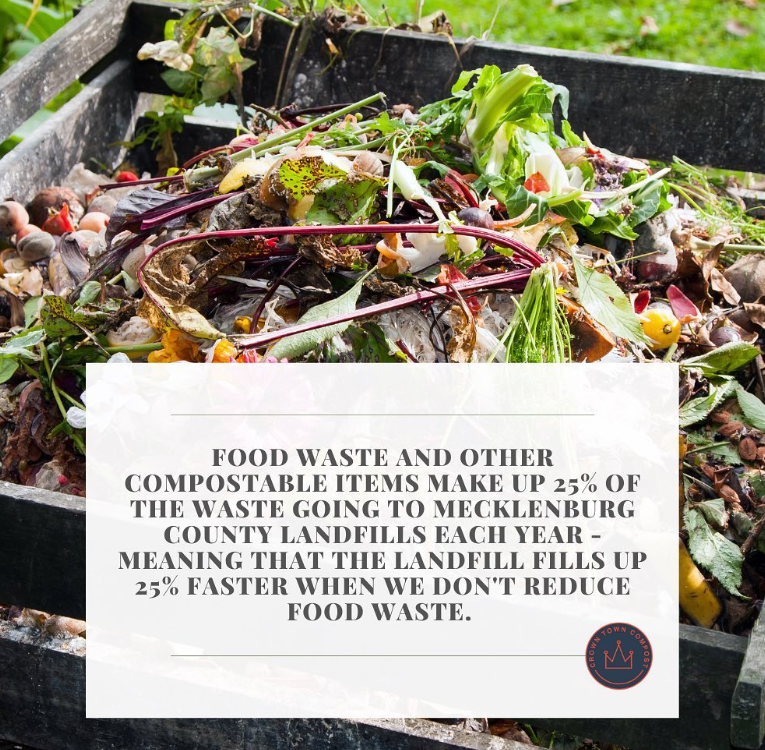
Crown Town Compost estimates Mecklenburg County’s food waste to be around 200,000 tons per year, going straight to the landfill. Composting helps to combat emissions from landfills, promotes carbon sequestration, rebuilds healthy soils, supports healthy food systems and promotes the circular economy. In short: a small lifestyle change and a big impact.
Clients included early adopters like Supperland, Haberdish, Not Just Coffee, Pasta & Provisions, and Jeni’s Ice Cream. Each compost bin helps divert waste from landfills, reduce emissions, support local food systems and promote the circular economy.

While business was booming and people saw value in receiving the soil, they weren’t exactly sure how to use it. Thus, sister company Crown Town Landscapes was launched. Co-owner Theys grew up playing in the dirt and has a passion for the growth side of the composting cycle. His desire is to use the natural environment —instead of harmful chemicals — to cultivate beautiful and beneficial yards.
It’s a small lifestyle change with a massive ripple effect,”
Eric Theys
From Curb to Crop
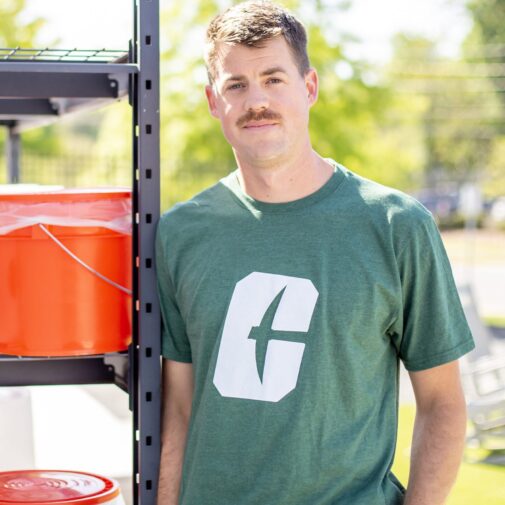
The Mount Pleasant farm represents the next chapter in that ripple effect. When Crown Town purchased the land, the soil was degraded and compacted from years of conventional farming. It took 220 cubic yards of compost, tilling, and a deep-soil tool called a ripper to bring it back to life.
Now, rows of cucumbers, zucchini, tomatoes and bush beans flourish in rich compost created from Charlotte’s food waste. Using trellising systems to maximize space and airflow, they’re producing up to 700 pounds of cucumbers per week during peak season.
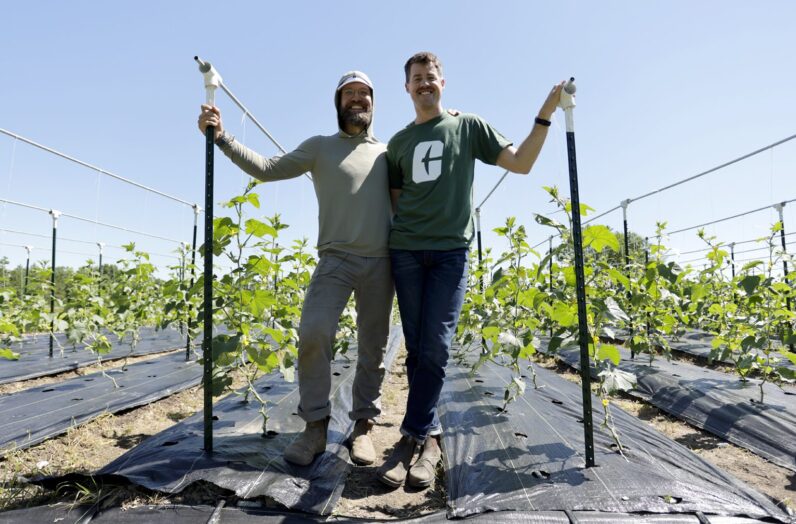
“We’re using the same compost we collect in Charlotte to grow healthy, vibrant crops. It’s the circular economy in action.”
Kris Steele
The farm also features a seed-starting greenhouse, an in-progress vegetable washing station, and future plans for agrivolunteer events, pick-your-own flowers and community education.
Regeneration in Real Time
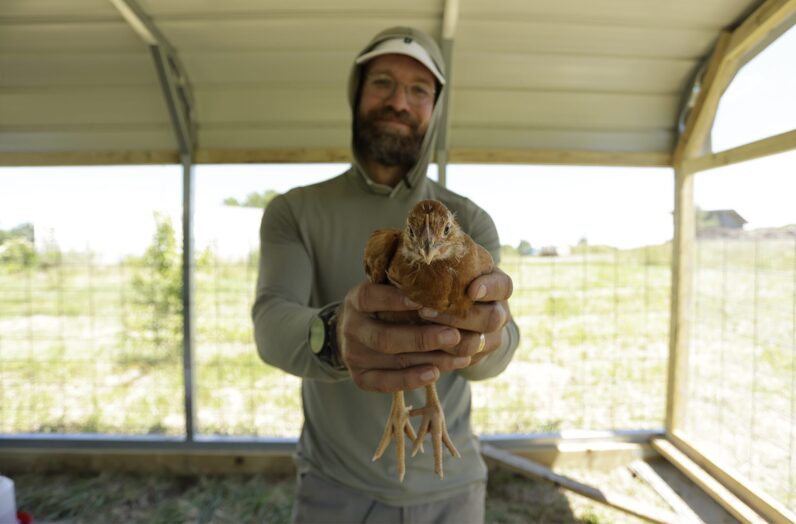
Crown Town’s farm is also testing keyline grazing and rotational livestock. Chickens move daily through the pasture in “chicken tractors,” foraging naturally and fertilizing the land. Long term, they plan to add cattle and goats to the regenerative rotation.
The property now includes fruit trees and native perennials, planted along the natural contours of the land to capture rainwater, reduce erosion and support biodiversity.
“Green doesn’t always mean healthy. We’re showing people how to build real soil, not just grow grass.”
Even the pond on the property is part of the plan — spring-fed and crystal clear, it will support both ecosystem restoration and future agritourism, including tent decks and overnight stays.
Landscaping for the Long Haul
Back in the city, Crown Town’s landscaping business continues to grow…literally. Originally launched to help customers understand how to use their compost, Crown Town Landscapes now maintains over 90 properties and has nearly 100 full landscape transformations scheduled this year.
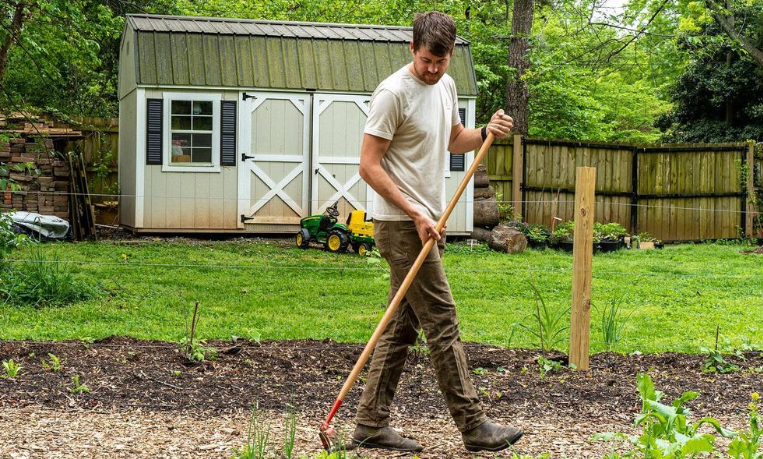
With a fully electric fleet, drought-resistant plantings and native landscaping, the team creates low-maintenance yards that are beautiful and beneficial. From analyzing the soil to maintaining vegetable and flower beds, they are experts in transforming lawns into a low-maintenance, drought resistant and environmentally beneficial oasis - beautiful, practical and built to last.
The Full Circle
From curbside pickup to regenerative agriculture, Crown Town is making sustainability practical — and personal.
They’ve occupy a spot at the Innovation Barn, a city-backed initiative to eliminate waste by 2050, and regularly host volunteer groups like Patagonia and local finance firms to build community around soil and sustainability.
“We’re not here to guilt people,” Steele said. “We’re here to show how small steps can lead to big change.”
Whether it’s composting, landscaping or farming — Crown Town is digging deep into what it means to care for a place. They’re proving that with a little effort, your leftovers can grow into something extraordinary.
Ready to Make a Difference?
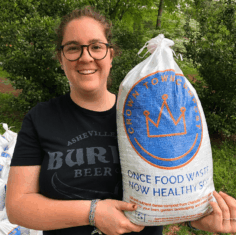
Customers can sign up for a personal membership to service their houses or apartments, including a drop-off option directly to Crown Town Compost. Businesses can sign up for a membership to help meet organizational zero waste goals for offices, restaurants, coffee shops, food halls, college campuses and more.
For Individuals:
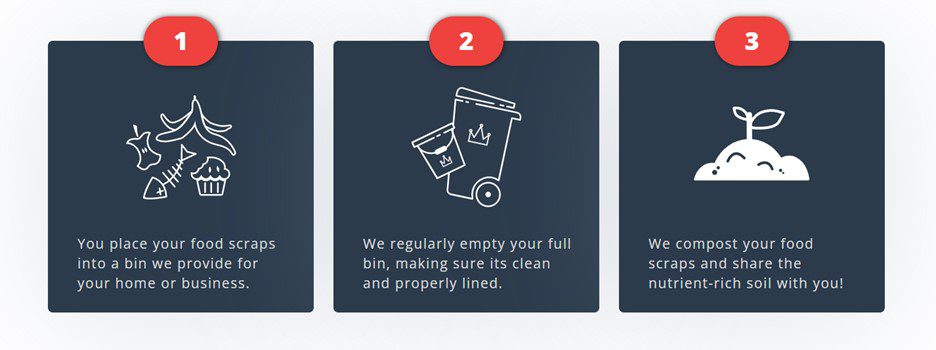
- Compost at Home: Sign up for weekly or bi-weekly compost pickup. Crown Town will handle the rest, turning your scraps into soil.

- Drop-Off Service: Prefer to handle it yourself? Drop-off options are available across Charlotte.
- Sustainable Landscaping: Transform your yard with native plants, clover lawns and water-smart design.
For Businesses:
- Zero-Waste Solutions: From coffee shops to corporate campuses, Crown Town partners with businesses ready to make a greener impact.
- Eco-Friendly Groundskeeping: Landscapes for commercial spaces that are beautiful and built to last.
Support the future of food, soil and sustainability — and help keep Charlotte growing.