Paul Riefenberg ’90 is
NUTS for Charlotte
Story by Christy Jackson
FAST FACTS:
- Paul Riefenberg, Class of 1990
- Bachelor of Business Administration, Minors in Philosophy and Economics
- President, CDP Inc.
Paul Riefenberg isn’t one to seek the spotlight. However, mention UNC Charlotte, and it’s immediately clear: This proud Niner bleeds green.
A fixture in the stands at football and basketball games, a consistent donor since the day he graduated and now the architect of an estate gift with his wife, Terrie, to support both business scholarships and athletics, Riefenberg has built his life on loyalty — to his mentors, to his University and to the people and places that shaped him.
“We were NUTS,” he said, recalling the student group he was part of: Niners United Toward Success. The name was cheeky, but the intent was serious. They were the students who stayed on campus. Who built community. Who believed in what UNC Charlotte was and could become.
Decades later, Riefenberg still does.
Here, he shares memories of his time as a Niner, how Charlotte helped him chart a successful career in business and why he feels so strongly about giving back to his alma mater.
Campus was home
In the late 1980s, Charlotte was a far cry from the city it is today, and the same could be said of UNC Charlotte. They both were growing with possibility. Riefenberg chose the University over other schools in part because he could try out to be a walk-on for the soccer team, but also because he felt something different here.
“The campus felt unified, self-contained. You could walk everywhere. It felt modern,” he said. “It felt like home.”
Though he didn’t ultimately play soccer, Riefenberg immersed himself in student life, living in Scott Hall, staying on campus most weekends and forming lasting friendships. He stayed five years, co-oping while earning his degree in business administration with a focus in operations management and management information systems (MIS).
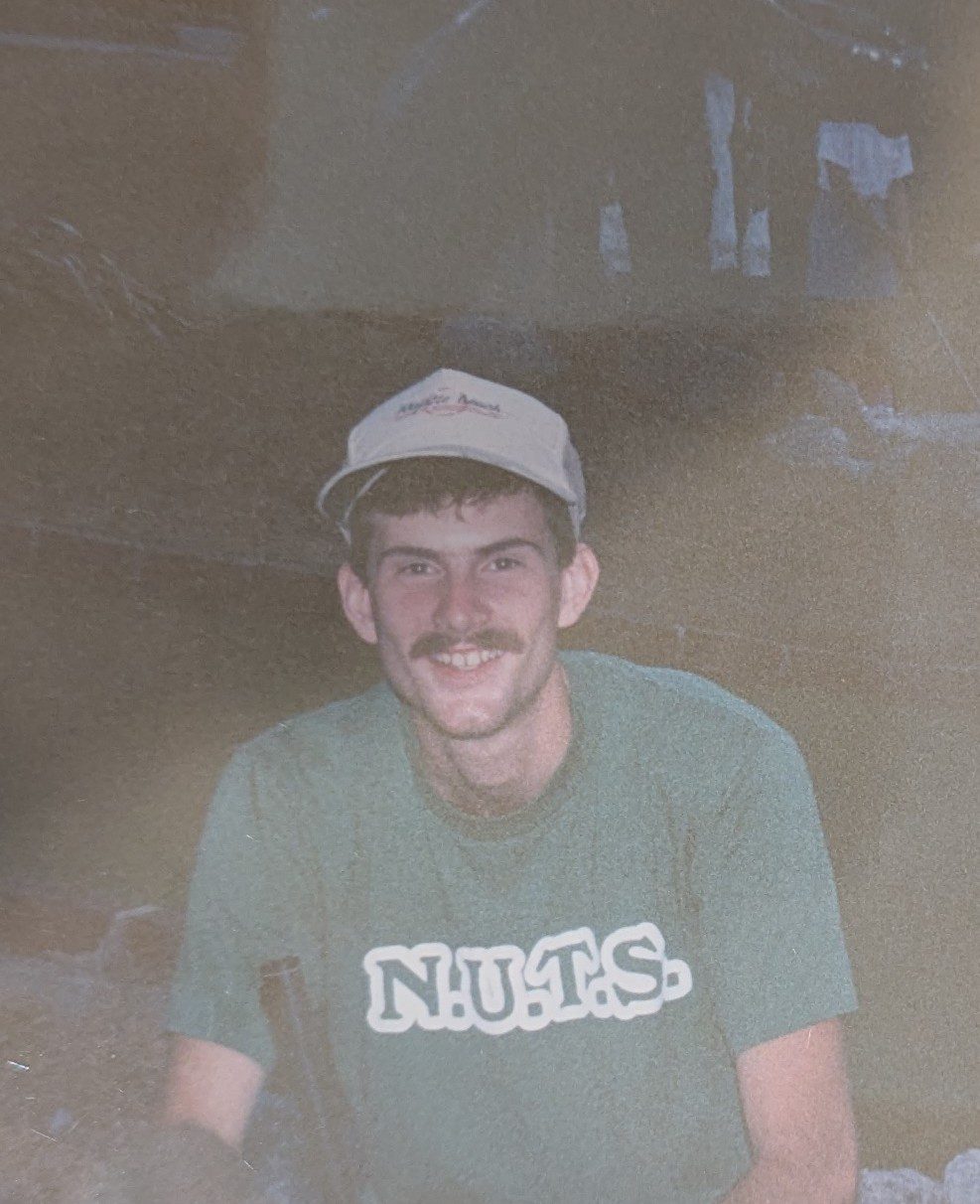
Niners United Toward Success (NUTS) was
a big part of Riefenberg's college experience.
Charlotte took me to the water.
I drank.
Charlotte didn’t just give Riefenberg a degree. It gave him his first job, and ultimately, his company.
A pivotal connection with Tim Kloppenberg, a professor who taught project management courses, led to an introduction at the Project Management Institute, where Riefenberg met the founder of CDP Inc., Al Padgett, the company he now leads. When Padgett was ready to retire, he asked Riefenberg to buy the company. The rest is history.
“It was all linked together,” he said. “Charlotte got me to CDP, and CDP became my career.”
The lessons he learned as a student through co-op placements at IBM and BellSouth were just as formative. Charlotte’s emerging cooperative education program allowed him to apply classroom lessons in real time, giving meaning and context to his business curriculum.
“A lot of times school is theory, but I was in meetings. I was doing the work. I saw how it all connected,” he said. “I think more students should have that opportunity.”
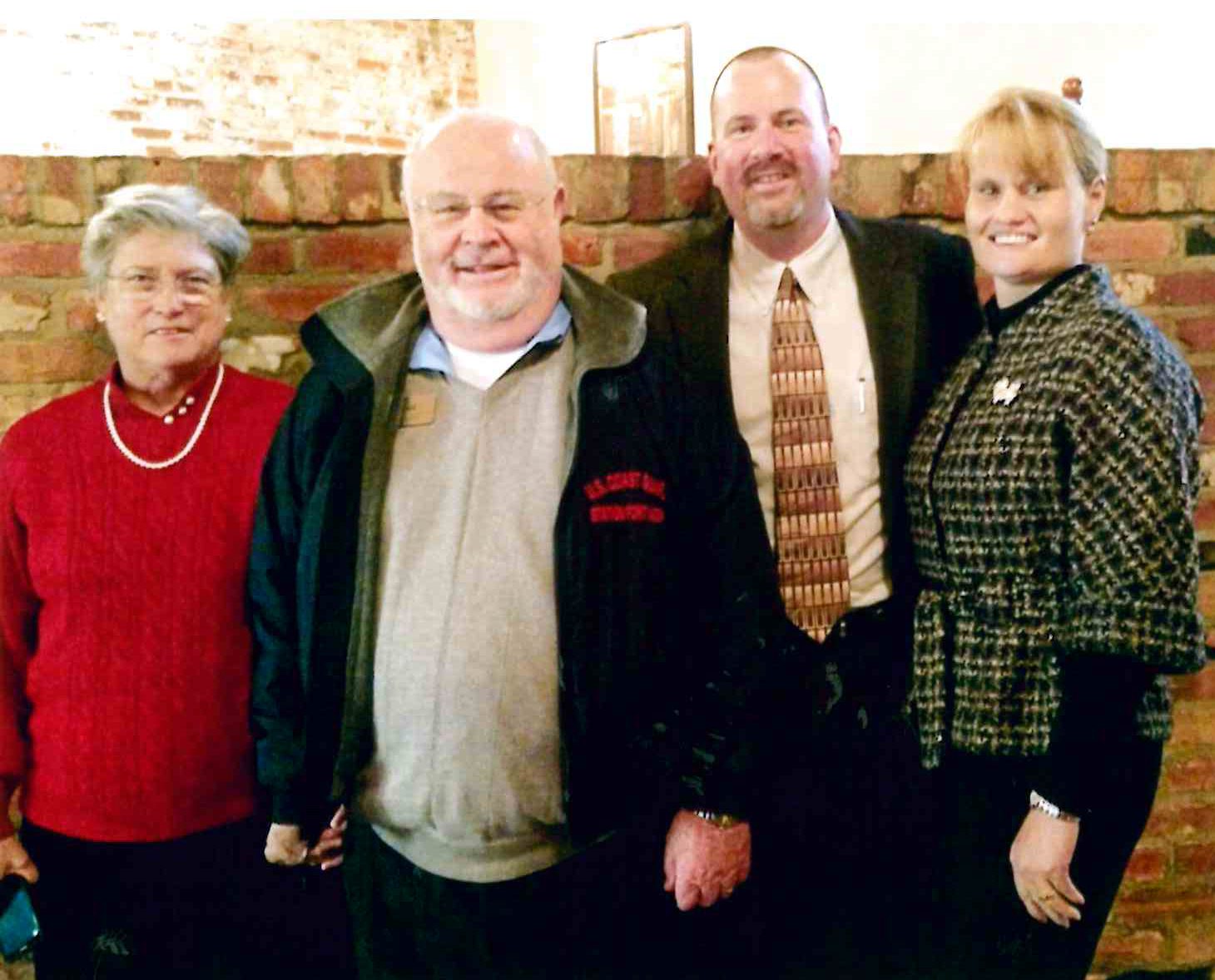
The Riefenbergs maintain a close relationship with Al and Peggy Padgett.
Al founded CDP Inc., hiring Paul in 1990 and eventually selling him the company in 1997.
Everything in life is about relationships
While Charlotte opened professional doors, what Riefenberg remembers most are the faculty who held them open.
He recalls Professor Martin Croy who invited him to become a teaching assistant and help lead outdoor VENTURE activities for his fellow students. John Gandar, an economics professor, hit tennis balls with him after classes. And Norm Schul and Margie Decker started the co-op program in the late 1980s that Riefenberg participated in.
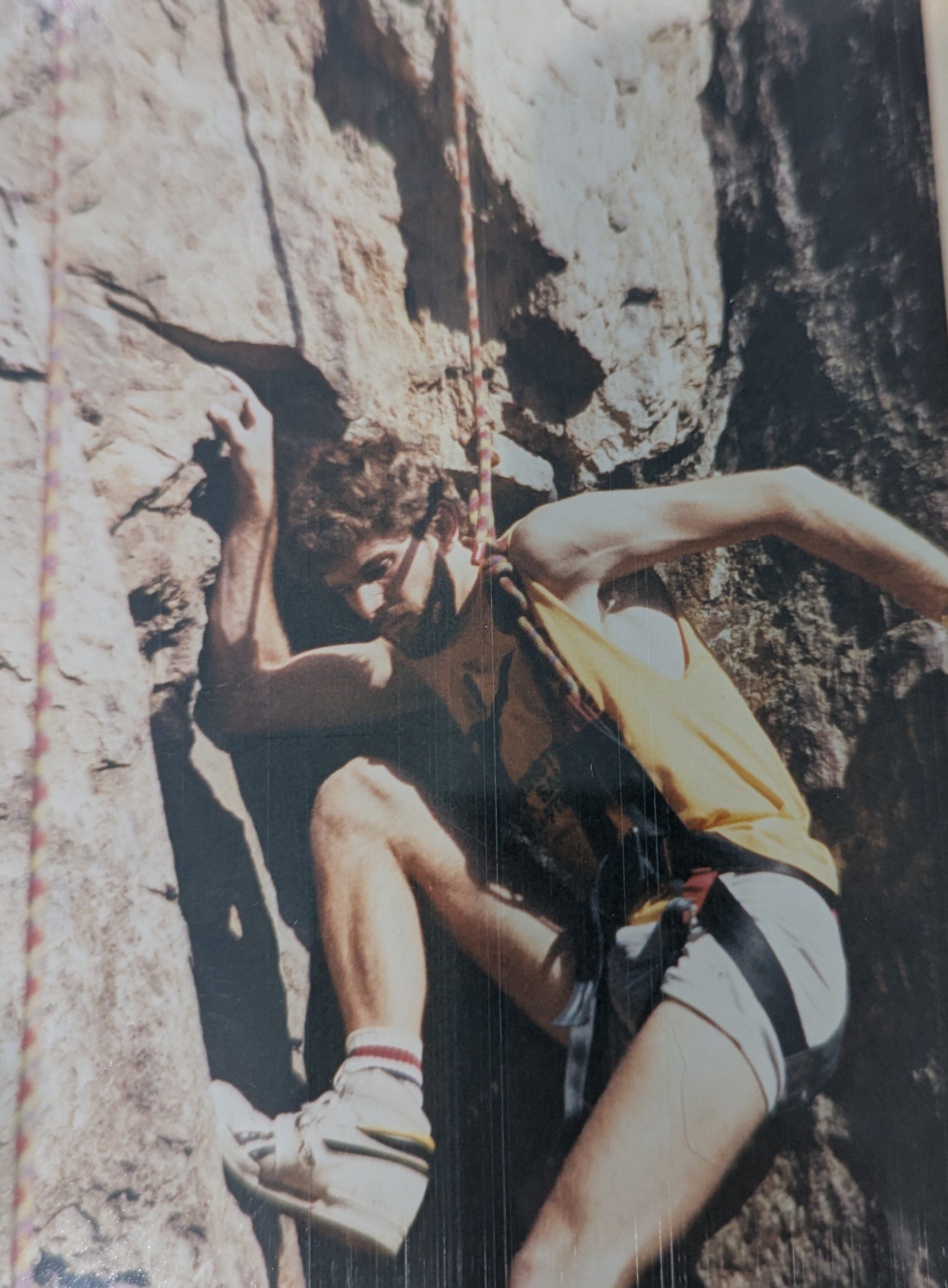
Among Riefenberg's many college activities was helping Professor Marvin Croy
lead outdoor VENTURE programs for his fellow students.
“These professors took a personal interest. They got to know you. They engaged,” he said. “That played a large role in making my experience at Charlotte so memorable.”
Now, Riefenberg makes a point to pass that lesson on. When he speaks to students, he stresses that relationships will outlast résumés, and that being generous, respectful and reliable will open more doors than ambition alone.
“I always tell them, don't burn bridges. You never know who’s going to be across the table from you five years from now,” he said. “Stay in touch with people. Show up for them. Invest in them. That’s where success really starts.”
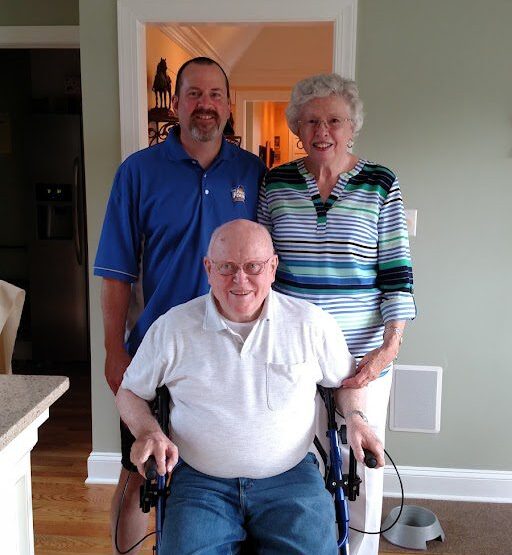
Riefenberg credits his parents, John and Janette,
with inspiring how he invests in other people.
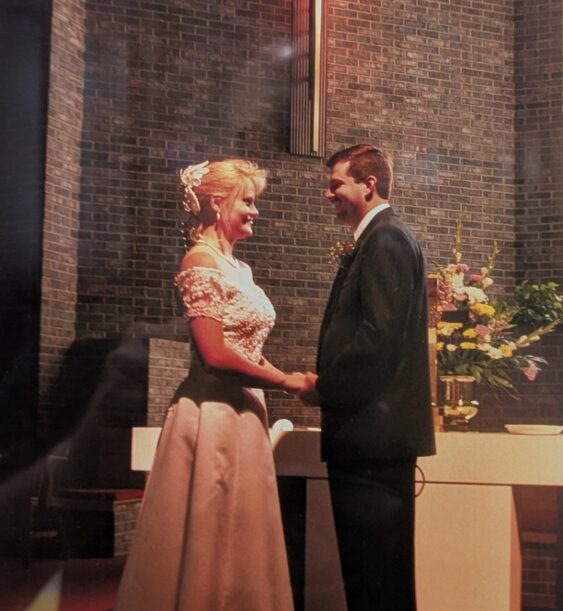
Paul and Terrie Riefenberg were married in June 1996,
making her a "Niner by marriage."
Athletics is the front porch
The Riefenbergs' $2 million estate gift is divided equally between the Belk College of Business and the Athletic Foundation — a reflection of where his Charlotte roots run deepest.
From his days as a diehard basketball fan, following the team on the road and writing letters to the local paper about its lack of front-page coverage of the 49ers, to today, cheering from the stands as a season ticket holder, Riefenberg has always seen athletics as a powerful connector.
“When Charlotte got football, everything changed. Students stayed on campus and the Charlotte community came to games. It created a buzz,” he said. “Athletics brings people in who might never set foot on campus otherwise. It builds spirit, and it builds connection.”
For Riefenberg, athletics doesn’t just unite current students, it extends a welcome mat to the entire Charlotte region.
He says he believes in the power of Charlotte sports to unify the city and elevate the University’s reputation. “We need those moments, and we need to show the next generation what it looks like to show up.”
Do something for the place that did something for you
Riefenberg doesn’t mince words about why he gives.
“UNC Charlotte changed the course of my life. That matters and deserves recognition,” he said. “We all need to take a minute, look around and ask: Who helped get me here, and what can I do to lift others up the same way?”
His gift is rooted not in ego but in responsibility to honor those who invested in him and to spark the same kind of commitment in someone else.
He hopes others, especially fellow alumni, will reflect on the role the University played in their own lives and consider how they can be part of its future. He is quick to point out that every gift matters.
“It doesn’t matter if it’s $49 a month, $490 a year or a larger gift if you are able. What matters is that you do it,” he said.
Riefenberg says he doesn’t think a lot about his own legacy at the University. He’s more concerned with creating a cycle of opportunity and a community that always remembers to reach back.
“My hope is that students who benefit from this will go out, be successful and then turn around and do the same for someone else. That’s the legacy I want to leave.”
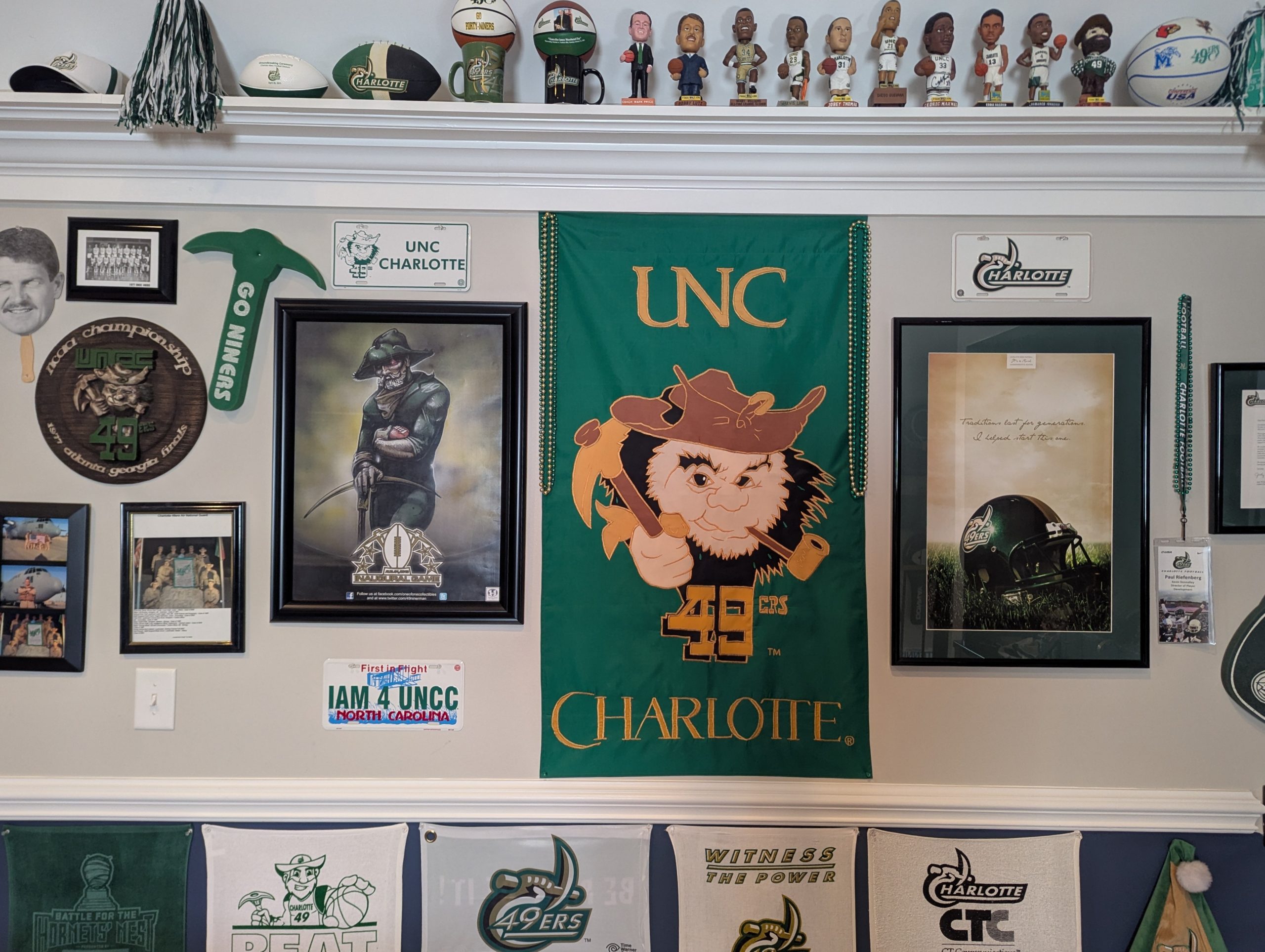
The Riefenberg home includes a game room decorated with Niner pride.
“It opens up the University to everyone. They show up for game day and see what we’ve become. It’s a reason to come to campus and a reason to come back.”
Paul Riefenberg
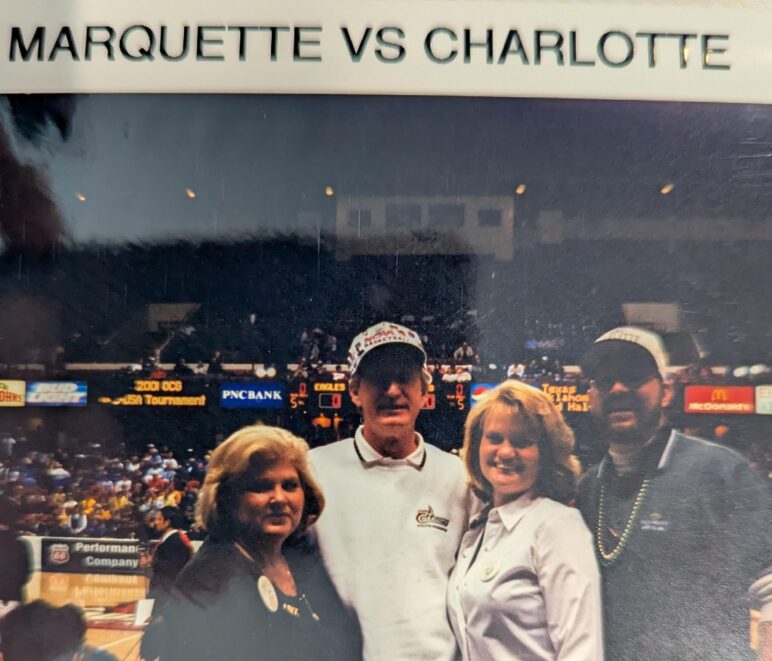
As a young alumnus, Riefenberg would mark his calendar every March
to follow the men's basketball team to tournaments.