UNC Charlotte’s Carolinas Engine for Grid Modernization advances in national NSF competition
UNC Charlotte’s efforts to build an energy innovation hub for the Carolinas continue to gain national momentum. The University’s Carolinas Engine for Grid Modernization has been named one of 15 finalists in the U.S. National Science Foundation’s (NSF) Regional Innovation Engines competition, advancing to a full site visit from more than 300 initial applicants.
The NSF Engines program supports regional coalitions focused on advancing key technologies through research, innovation and workforce development. Each finalist is eligible for up to $160 million in funding to implement their vision.
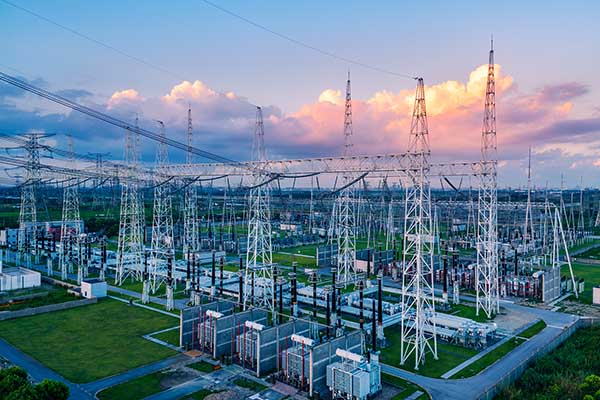
UNC Charlotte’s project addresses technologies that will shape the future of power transmission, distribution and generation, including nuclear energy. Its region of service spans 36 counties in North and South Carolina and engages partner institutions dedicated to creating an energy-focused innovation ecosystem.
This recognition builds on a $1 million NSF development award received in 2023, which enabled UNC Charlotte and its partners to expand the coalition and refine a shared vision for transforming the region into a national leader in energy innovation.
“UNC Charlotte is proud to lead this collaborative effort, bringing together higher education, industry and regional partners to strengthen the nation’s energy future,” said Vice Chancellor for Research John Daniels. “This recognition underscores our role as Charlotte’s R1 university and a driver of innovation and economic growth in our region and throughout the Carolinas.”
Daniels is the project’s principal investigator. The co-principal investigators are Greg Needham and Robert Cox, UNC Charlotte; Ramtin Hadidi, Clemson University; and Catherine Hayes, South Carolina Research Authority. The project includes more than 100 committed partners across industry, economic development, state and local government, institutions of higher education and research, risk capital, venture development and entrepreneurship organizations.
In early summer 2024, NSF received nearly 300 letters of intent (LOI) in response to the second NSF Engines funding opportunity, an initial step required to demonstrate interest in applying for the program. NSF published data from the LOIs to encourage proposers to grow their regional teams and potentially collaborate before the preliminary proposal deadline in August 2024. From the teams that submitted a preliminary proposal, NSF selected 71 to advance to the next round of competition and submit full proposals by a spring 2025 deadline. Earlier this summer, NSF selected 29 teams to advance to the next round of competition through a merit review process that engaged panels of external experts. NSF has since conducted live, virtual assessments of the semifinalist teams to better understand their regional coalitions, leadership teams and core partners, and visions for research and development as well as translation. These assessments informed the selection of the 15 finalists who are now advancing to the next round of the competition.
NSF anticipates announcing the NSF Engines awards resulting from the current competition in early 2026.
About NSF Regional Innovation Engines
Launched by NSF TIP, the NSF Engines program is building and scaling regional innovation ecosystems nationwide. Each NSF Engine is powered by a broad coalition of private sector, regional and scientific leaders and organizations to accelerate breakthrough emerging technology R&D that drives growth and ultimately bolsters U.S. economic competitiveness and national security.
Written by: Phillip Brown