BACK ON THE MAP:
Architecture students imagine a new Chimney Rock
Story by Susan Messina
Photos by Amy Hart
The people of Chimney Rock, North Carolina, are seizing a rare opportunity to reimagine their town, literally, from the ground up.
A year after Hurricane Helene — a bulldozer of destruction that whipped through the Blue Ridge Mountains — leveled the village’s thriving commercial corridor, there is reason for optimism. Chimney Rock State Park, considered the area’s tourism crown jewel, and a few local businesses reopened just nine months after Helene, heralding a gradual return of seasonal tourists.
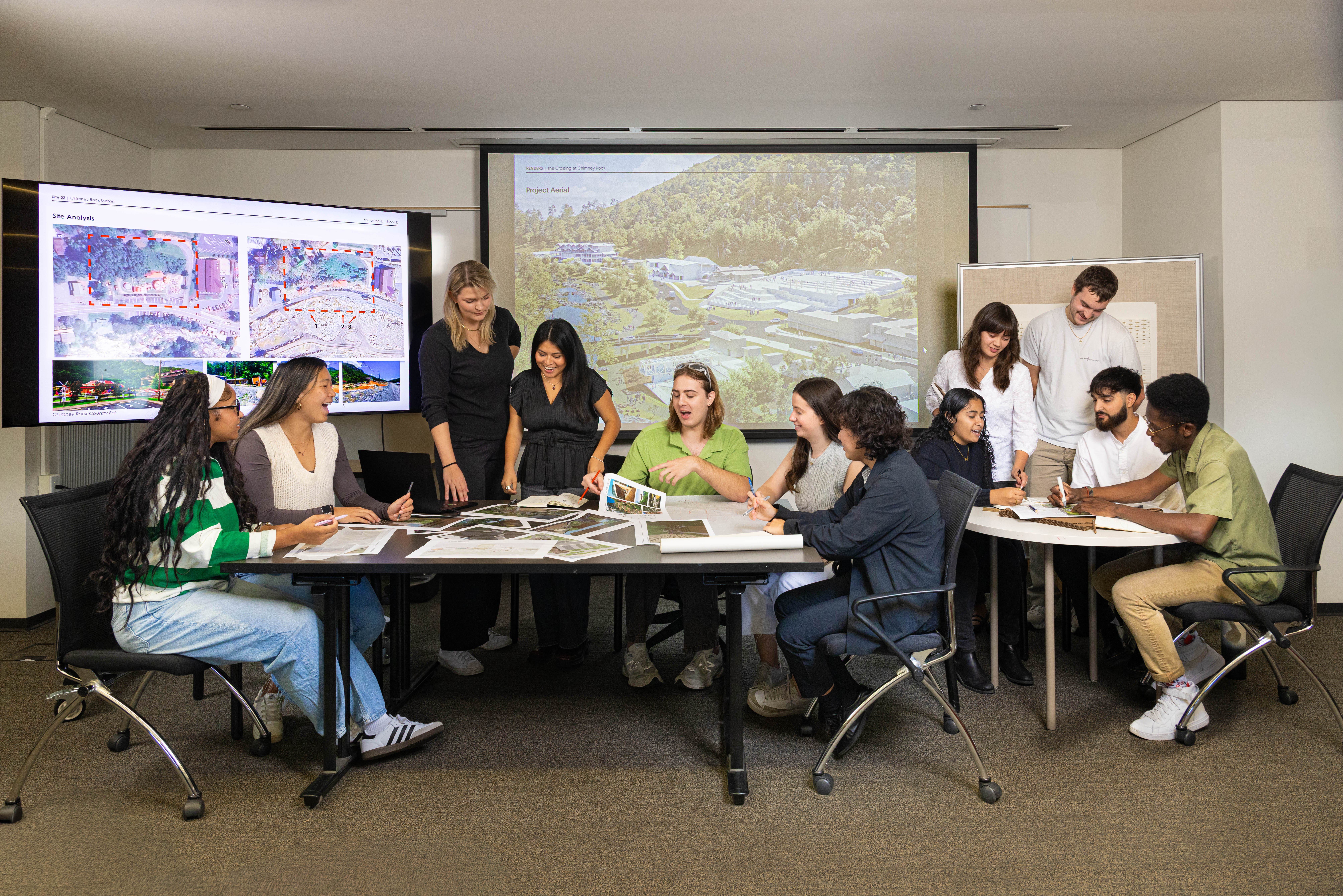
The 2025 Summer Design Studio included Arianna Hawkins, Grace Murray, Maddie Sisco, Juliana Card, Nick Shorter,
Rebecca Brown, Sydney Ly, Aisha Qatabi, Samantha Brennan, Isaac Moretz, Omar Awadallah and Ethan Taylor
Reclaiming the area’s prior vitality completely will take years. As momentum continues toward “normalcy,” Chimney Rock residents, officials and business owners rolled up their sleeves this past summer with 12 eager-to-collaborate UNC Charlotte students working toward the Master of Architecture. Their goal: Bring to life “Raise the Rock,” a plan for revitalizing downtown Chimney Rock created by Destination by Design. Their assignment: Prepare design proposals for five key village sites tapped for restoration.
We have a blank canvas to work with, and we do not want to miss any opportunities. It’s important for the village to see new, different ideas and to stretch our thinking about the possibilities.”
Peter O’Leary, mayor of Chimney Rock
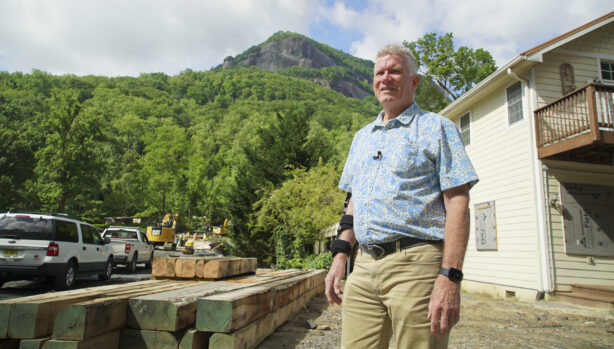
AP Photo
Rebuilding with purpose
As a first step, the students researched the history of floods in the region, the impact of Helene and flood resilient design in strategies. This is vital, explained Marc Manack, associate professor of architecture, to “mitigating flood risk and the impact of future storms.”
Manack leads the Master of Architecture summer design studio course for the David R. Ravin School of Architecture, a requirement the Chimney Rock project fulfills for these students. He emphasizes the importance of the group getting to know the town to ensure proposed designs address real concerns. The latest in a series of summer design studios that immerse students in real-world challenges and serve the public interest, the project challenged the group to work as a team, solve technical problems, practice empathy and present their work publicly.
Early last semester, the students ventured to Chimney Rock to learn more about the revitalization plan. This trip was followed by another in June to assess the devastated landscape firsthand. They also met with O’Leary and Don Cason, director, Rutherford County Travel Authority.
“The students have had a great opportunity to work collaboratively and professionally in the public realm,” said Manack.
The big reveal
By August, the plans were ready. Prioritizing the town’s need for commercial activity, the students presented options to reboot both the community and the local economy. Positive feedback signaled openness to the students’ plans for renewed retail, creative community gathering spaces, tourism promotion, expanded municipal parking and more.
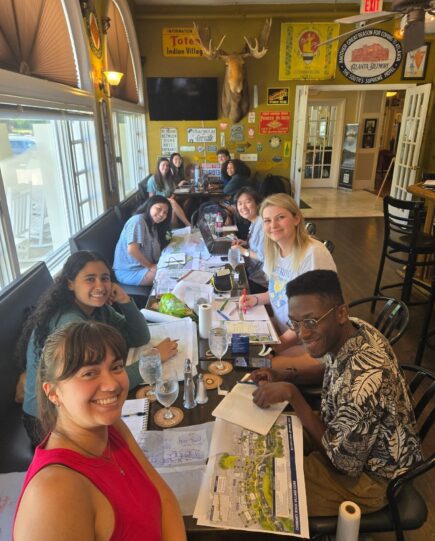
Students from the summer design studio course took in the view from the Moose & Goose Lounge in Lake Lure while planning their design projects for Chimney Rock’s revitalization. Photo by M. Manack
Boosting Retail
Samantha Brennan and Ethan Taylor ‘25 took on the design for Chimney Rock Market, a commercial building where new and returning businesses can rent for short or long periods. Their proposed structure is raised to withstand future natural disasters — and maximizes parking that generates revenue for the village.
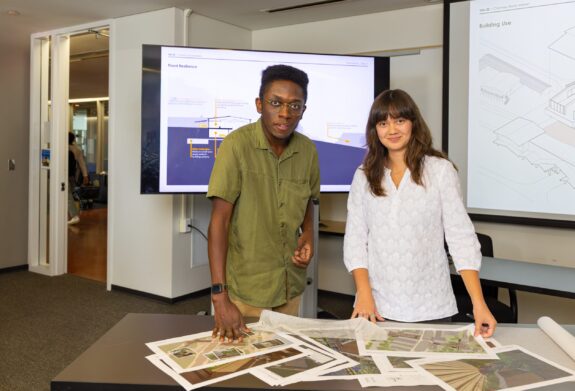
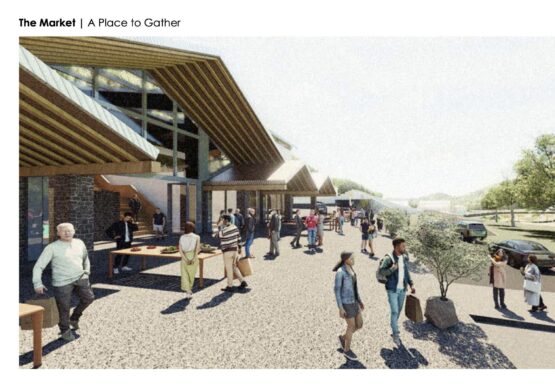
I look forward to seeing Chimney Rock embrace a modern form of architectural design that reflects its original historic buildings and moves the village forward in a new and exciting direction. I hope a sense of healing lasts for generations for the Earth and the human community.”
Ethan Taylor
Igniting Belonging
A frequent Chimney Rock visitor before Hurricane Helene, Rebecca Brown, along with two classmates, imagined a community gathering place for bringing people together as they honor what used to be. Their ambitious project encompasses a community park, a lookout bridge, a memorial and a central parking structure.
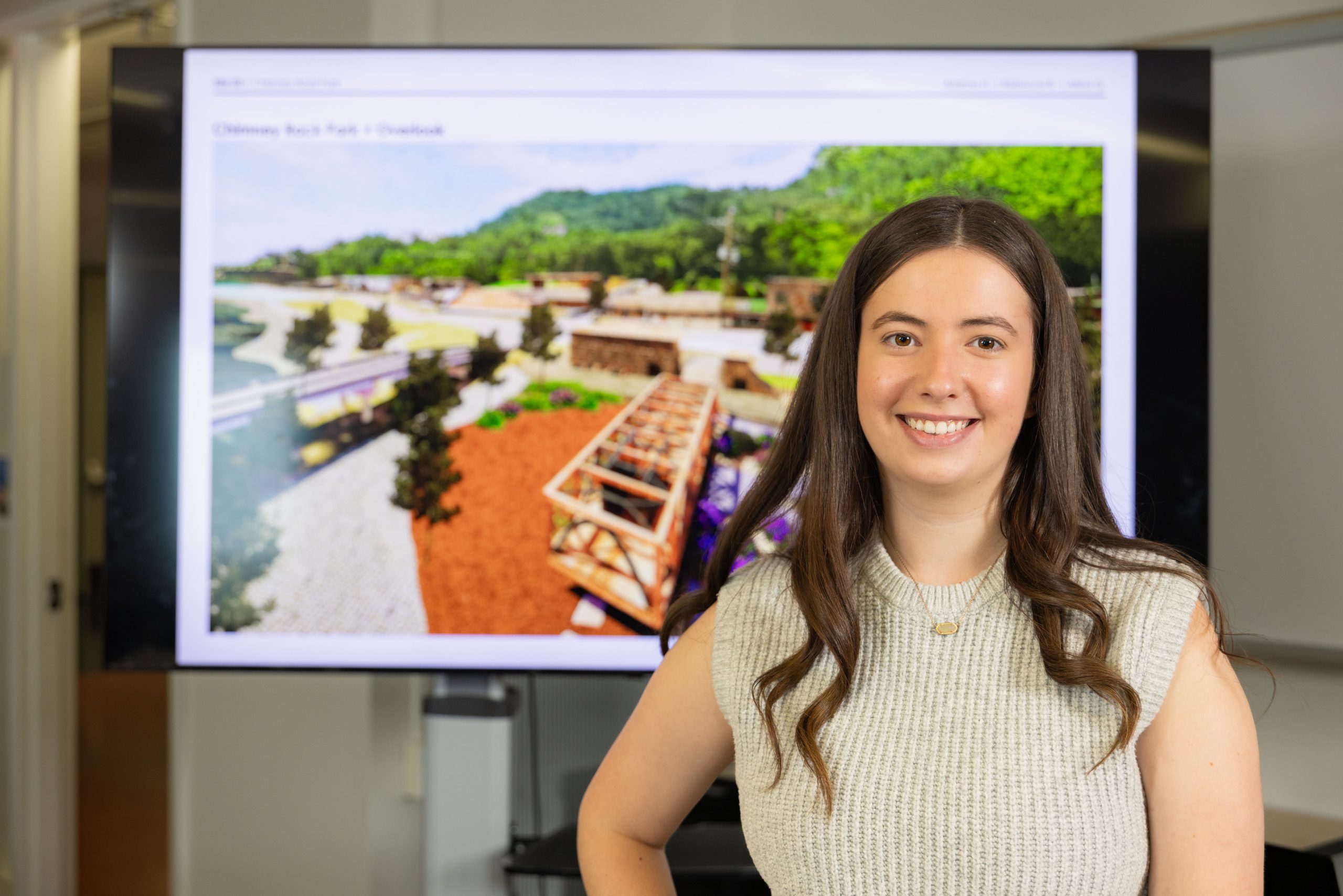
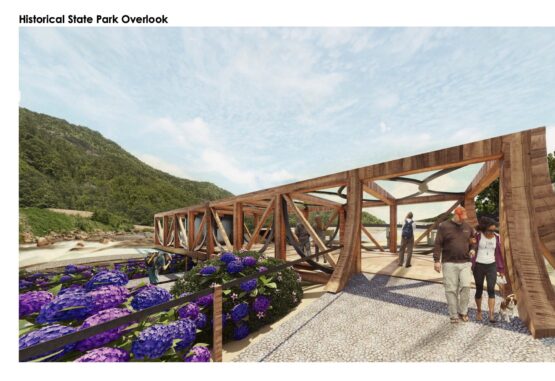
This project represents resilience and hope. It is our hope that it gives the community something positive to look forward to as they rebuild.”
Rebecca Brown
Self-determination
A phased approach to retail space and future hospitality expansion that puts the pace of development in the town's hands drove the design for Chimney Rock’s West Village by Maddie Sisco and her team. They integrated technical strategies for stormwater management and flood resilience, and considered an architectural aesthetic inspired by familiar local businesses.
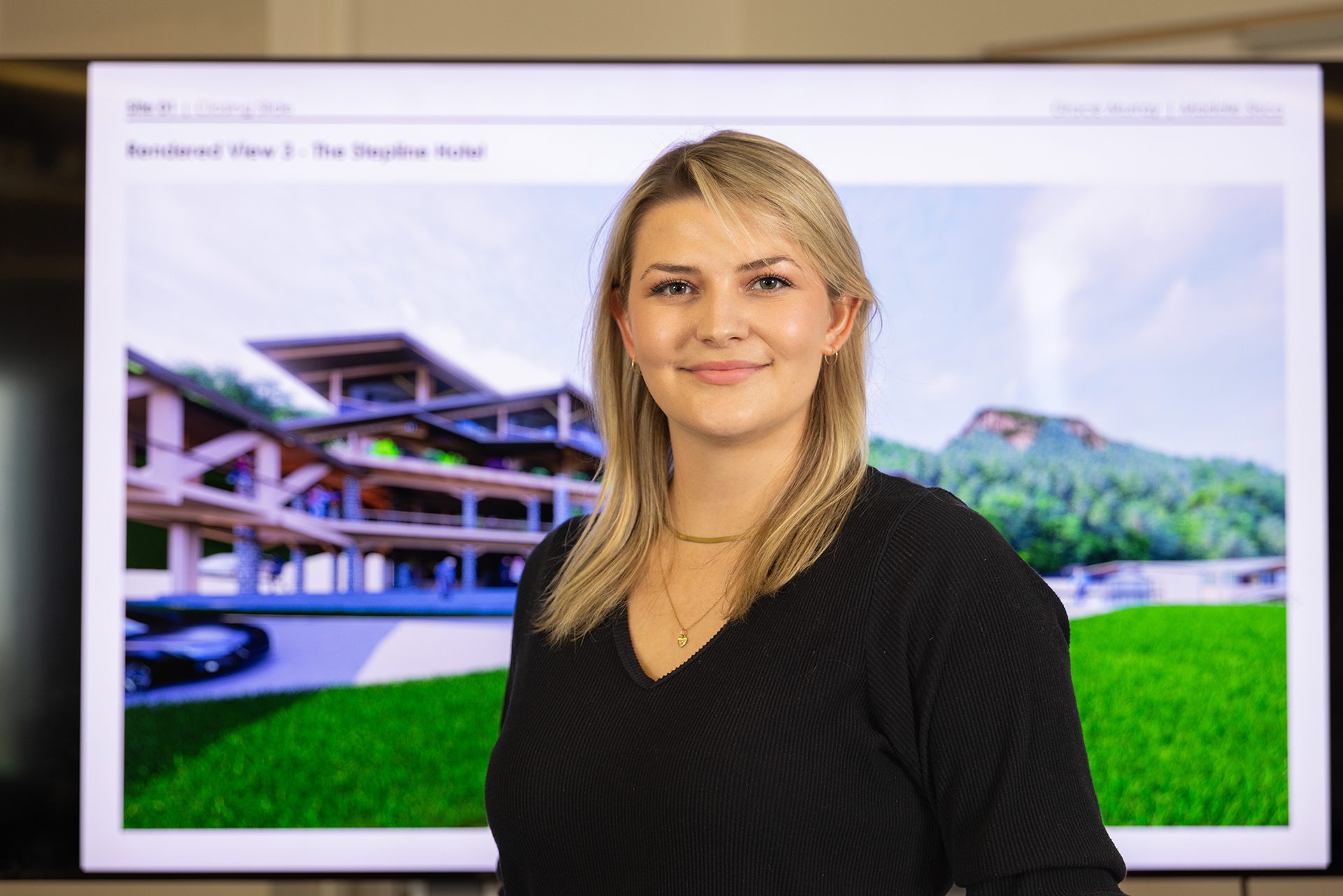
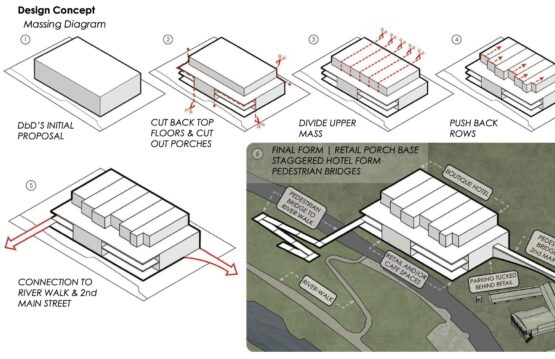
I look forward to seeing how a plan for future expansion framed around community-centered growth, resilience and local character helps Chimney Rock imagine growth that feels both ambitious and achievable.”
Maddie Sisco
Welcoming All
The Crossing at Chimney Creek, a multi use space that visually welcomes visitors to Chimney Rock, showcases retail and leads to a riverwalk. Conceptualized by Sydney Ly and her team, the design promotes walkability by prioritizing spaces for small businesses lost to the hurricane and flood-resistant terrace gathering spots that meet the street’s edge.
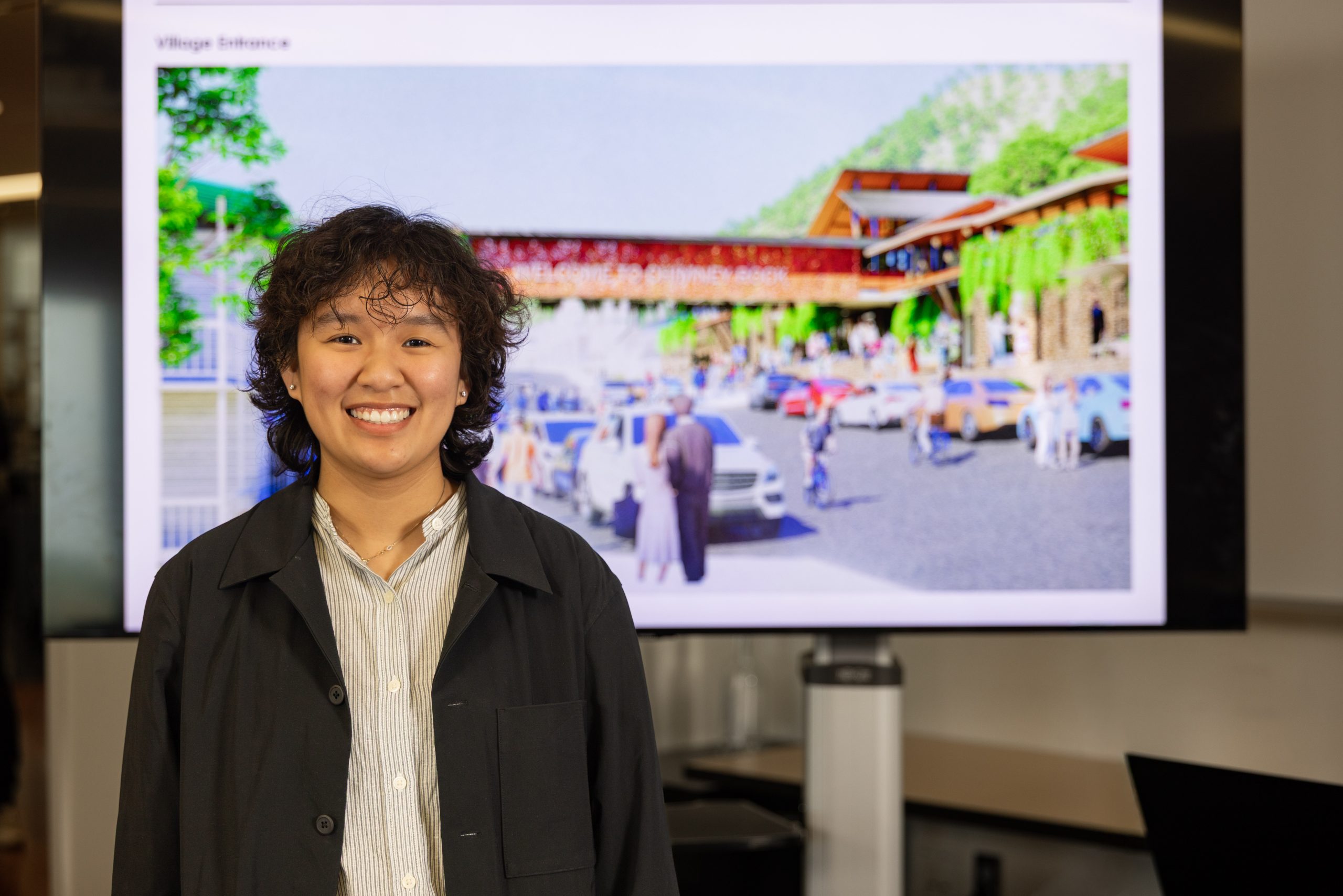
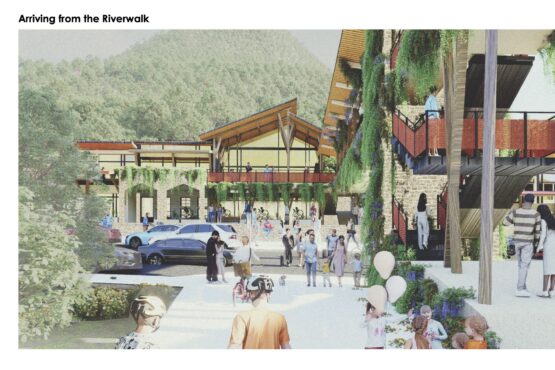
Voices from the community showed us the value of grounding design in a site’s background. This informed our decisions and reminded us to consider Chimney Rock's history while imagining how it might evolve — bringing people together with ideas that revitalize and reinforce its identity.”
Sydney Ly
“The Charlotte students offered good choices to consider now and in the future,” commented O’Leary, who will determine with other local decision makers the projects to greenlight. “Funding opportunities are available provided we present a bold, innovative, creative and reasonable approach; in fact, a recent grant from the North Carolina Department of Commerce will allow us to begin rebuilding infrastructure in an area to relocate lost businesses.”
I hope our proposals sparked interest and new ideas for what Chimney Rock can be — and help bring in the support that the village needs to get ‘back to beautiful.’”
Samantha Brennan, MArch, spring 2026
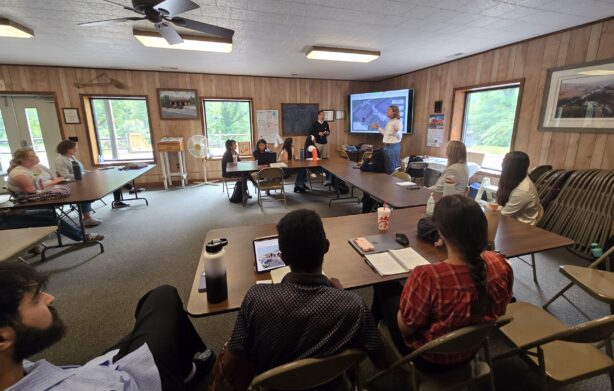
Photo by M. Manack
Additional A+A support for Western North Carolina
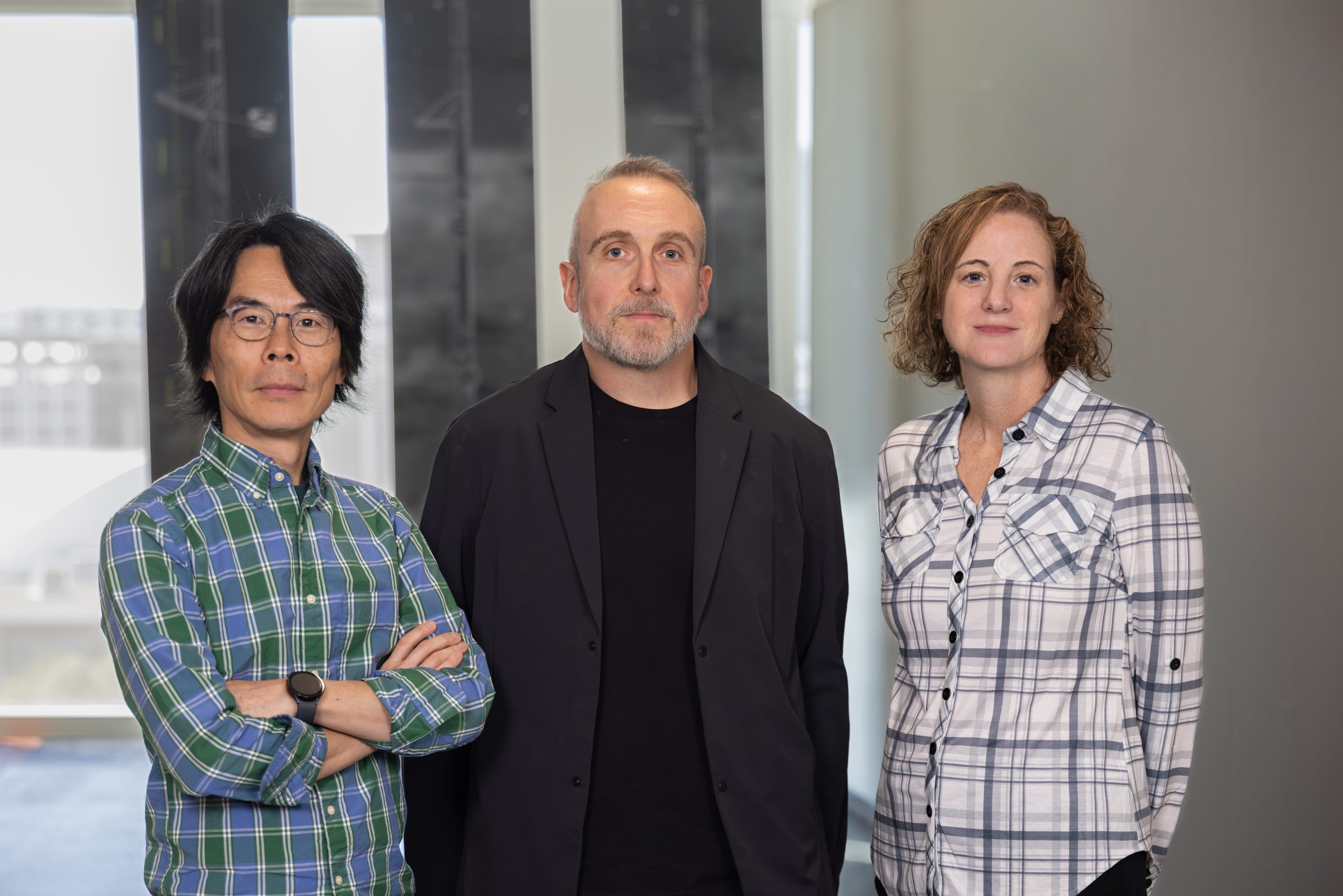
Manack (center) and colleagues Ming-Chun Lee and Emily Makas from the College of Arts + Architecture — both who reviewed students’ Chimney Rock proposals — advance the School of Architecture's commitment to post-Helene recovery in Western North Carolina:
- Makas, an associate professor of architectural history who co-directs the Center for Community, Heritage and the Arts, is a historic preservation and memorial sites expert; she and Manack have submitted a proposal for NEA support to expand the work of the summer design studio for “resilient rebuilding” throughout the Hickory Nut Gorge, including compiling a book of strategies for community partners.
- With a graduate assistant, Makas is preparing a proposal for interpretive or signage commemorating Chimney Rock’s historical evolution, which focuses on the historic gateway to the bridge to Chimney Rock State Park, partly washed away by Helene.
- Lee, program director for the Master in Urban Design program and its City Building Lab, is applying a birds-eye-view to the Hickory Nut Gorge ecosystem for future needs.
“In so many communities impacted by natural disasters, so much is lost very quickly, including local landmarks that help create community identity and connections to the past,” said Makas. “Integrating surviving historic and cultural sites and memories of heritage into the rebuilding process can help communities come together and build a future that is linked to what came before as well as highlights what makes them special places.”
Related Stories