Designing for impact: Cheryl Walker’s vision supports University sustainability goals
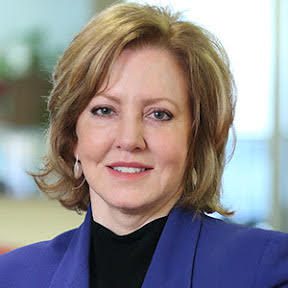
Prior to joining UNC Charlotte in 2022, Cheryl Walker, an architect and project manager, already was a trailblazer for sustainable construction and planning in North Carolina. She spearheaded the first LEED project in Mecklenburg County, ImaginOn, which spurred several other sustainable firsts for the city of Charlotte and institutions for higher education.
As a member of the advisory committee for the Triangle J Council of Governments, she was part of a team to develop a construction and demolition waste management specification. This tool, funded by a grant from the Environmental Protection Agency, was adopted nationally to help owners, designers and contractors implement waste management practices on all projects. She worked with the firm that designed the Center City Building, now The Dubois Center at UNC Charlotte Center City. Their efforts enabled the facility to obtain LEED gold certification.
Today, as a planner in facilities planning, design and construction, she coordinates with campus leadership, facilities management, the Office of Sustainability, the design consultants, commissioning agents and contractors to integrate sustainable goals and practices near the start of project planning.
In this Q&A, Walker explains her move from the private sector to the University, how sustainability is integrated into the planning process and the long-term benefits of thoughtful design for the campus community.
What inspired your transition from private architectural practice to working at UNC Charlotte?
Most of my private practice has been designing civic and municipal projects and projects for higher education. I have a long history working with universities in North Carolina. I thought, instead of being the designer that’s hired by a university, what would it be like to be on the other side of the table where the planning happens?
I find this work really rewarding, being tasked with the responsibilities of helping the whole team — the university, the designers, technical consultants — make informed environmental decisions that have lasting impact on the quality and operations of campus buildings.
How do you integrate sustainability into campus planning and construction projects?
It starts in the advanced planning phase where you have the maximum engagement with the constituents: academic units, University leadership and facilities groups, including sustainability, engineering, maintenance and grounds. I coordinate University working groups that meet regularly with the designer to establish the project mission, goals and programmatic needs for each project and develop strategies to attain these. Sustainable goals and enabling strategies are reviewed at every phase of the project. This process is essential in how I make sustainability an integral part of the project.
As meetings continue throughout every phase of a project, it’s important to keep participants engaged. The Office of Sustainability has a lot to offer, so I invite them to the table. Our engineering group has an enormous capability in sustainable strategies that can be applied to a project. Our maintenance and operations folks are invested in ongoing performance and operation of buildings.
Unless sustainable goals are brought up early and consensus achieved, we lose sight of the maximum opportunities.
Twenty-five years ago, few firms in our area were knowledgeable and committed to delivering sustainable solutions for their clients. A cohesive framework for applying sustainable strategies was lacking. Fast forward to today and the landscape is very different. Firms and contractors are well schooled in recognized green strategies. A variety of rating systems exist to hold us accountable to our stated goals. Fortunately, UNC Charlotte has many people that see the value that this brings to the University over time.
What are some projects you’re working on that emphasize sustainable design?
One that’s about to begin construction is the Burson renovation and expansion project. In the advanced planning stage, the University wanted us to look at what was possible to achieve in terms of sustainability.
We decided to look at it through the lens of the LEED system. We had a design team that featured sustainability experts and commissioning agents who focused on achieving better energy efficiency and air quality. One criterion for higher a construction manager is their track record on delivering sustainable projects.The Charlotte facilities team is invested in realizing these goals. The project is registered with LEED, and we’re shooting for gold status.
I’m currently leading the advanced planning for the Smith Comprehensive Renovation. Our designers, along with their sustainability experts, are exploring applicable design, sustainable practices and feasibility.
What long-term benefits do sustainable buildings offer to students and the University?
Constructing a well-designed building that uses less energy and conserves water, improves indoor quality of learning spaces and introduces natural daylighting will have environmental benefits. The University can see improved performance, less costs and easier maintenance.
I’m always interested in the benefits for the users, the students. Students viscerally experience air quality within the classroom from its temperature to its smell. With good indoor air quality and good energy management, the learning conditions can vastly improve. Well-chosen construction materials have a lot to do with the indoor air quality of a room.
Another aspect that impacts students is lighting. Low energy cost lighting, particularly natural lighting, can greatly improve the experience of sitting in class and doing work.
There are lots of studies that try to tie high-level sustainable buildings to productivity and learning outcomes. Researchers also are looking at single elements such as self-sustaining green wall systems. And you can take it a step further, integrating the air flows from a wall system with the HVAC system to study the microbiome.
Some very talented professors, researchers and students are starting to track outcomes, and it will take time to gather data. These kinds of innovations, especially if it’s very visible to the student, can have more impacts and create a conducive learning environment.
Written by: Alex Reynolds