49er Rocketry aims for redemption
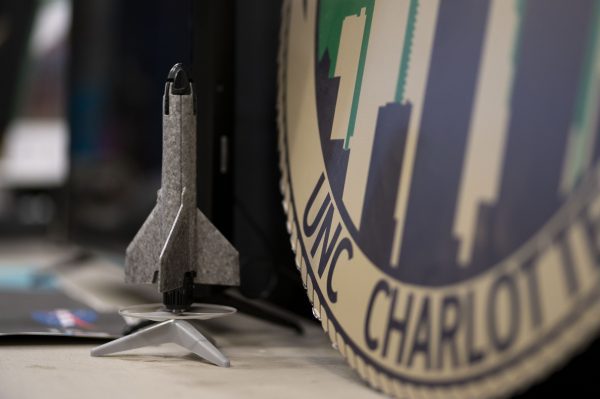
The 49er Rocketry Team is crowdfunding for a comeback season as it prepares for the NASA University Student Launch Initiative, April 22-26, 2026, in Toney, Alabama, near NASA’s Marshall Space Flight Center.
These Niner engineers look to prove themselves once again on the national stage, redeem an uncharacteristic finish last year and create one of the most complex designs in USLI history.
“Last year, we placed 14th out of 60 schools, which isn’t bad, but it’s not up to the Charlotte standard,” said Hunter Boik, a senior mechanical engineering major and 49er Rocketry Team project lead. “We’re putting in an insane amount of work so that we don’t just place in the top five — we’re going for the top spot on the podium.”
Perennial Underdogs with a History of Winning
The 49er Rocketry Team has placed in the top five in the NASA-sponsored collegiate competition in seven of the past eight years. It won in back-to-back seasons in 2021 and 2022 — breaking the competition’s all-time record for altitude in 2022.
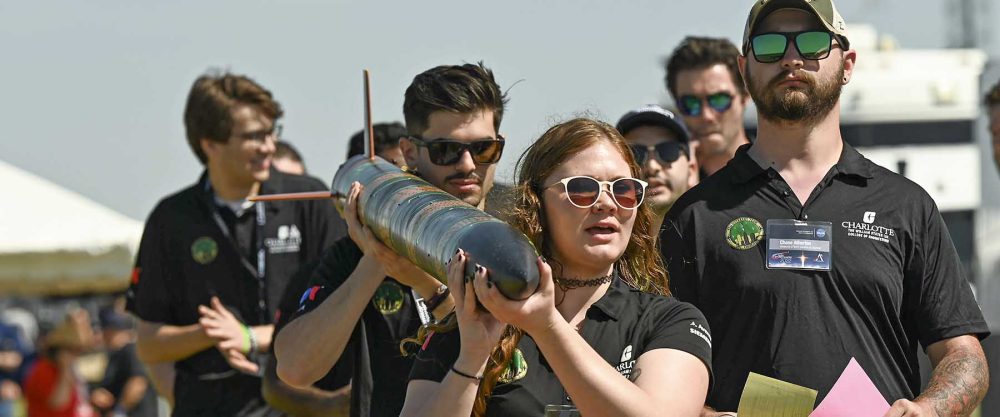
UNC Charlotte launched an aerospace engineering concentration in fall 2025, meaning all the team’s success has come without the backing of an aerospace program. Daniil Zykov, a senior computer engineering major and payload lead, says the team takes tremendous pride in being able to outperform teams — like rival NC State — with longstanding programs.
“We are extreme underdogs,” Zykov said. “It’s amazing when a classical mechanical engineer from Charlotte, who specializes in engines, can build a rocket just off sheer grit, and not only does it work — it works better than the rocket from the aerodynamics engineer.”
NASA Lays Down the Gauntlet
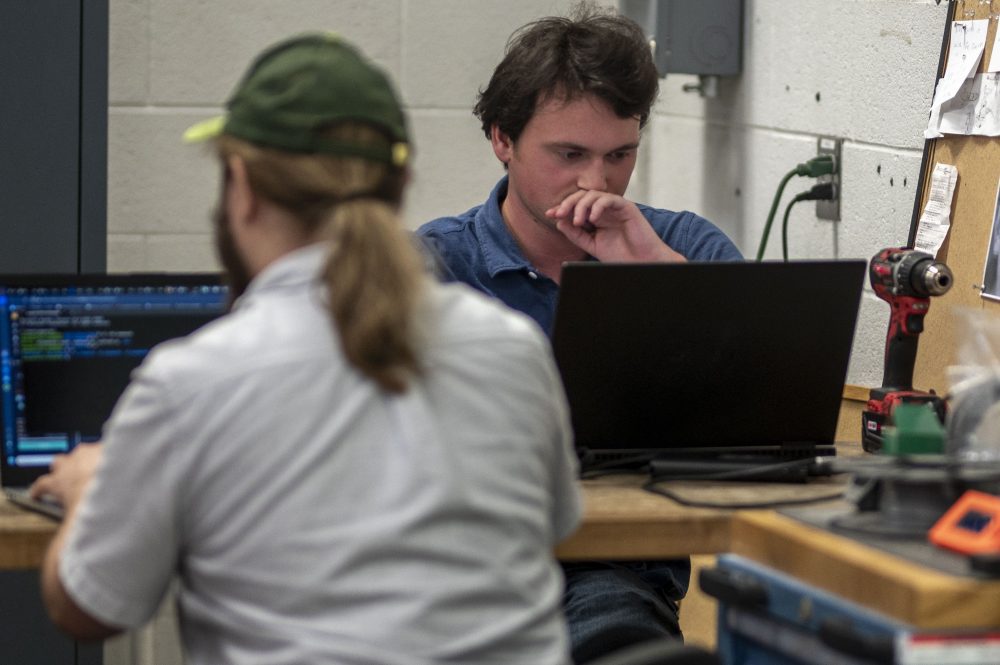
Every year, NASA creates new criteria and challenges each USLI rocket must achieve. The task for this year’s team is among the most demanding in the competition’s history.
“NASA has increased the requirements for this competition each year,” said Jason Constantino, a senior mechanical engineering major and vehicle design lead. “If you want to build a rocket that wins, you have to design something that no one else has thought of.”
The team must construct a high-powered rocket that can launch between 4,000 and 6,000 feet in elevation — which is the easy part according to Boik. Then, the rocket must land via parachutes and perform a soil sample with scientific instruments (payload) that must fit inside the rocket. All this must be achieved in 15 minutes.
“Think of it as when astronauts go to Mars or the moon and sample and test the soil, that’s what we are simulating,” Boik said.
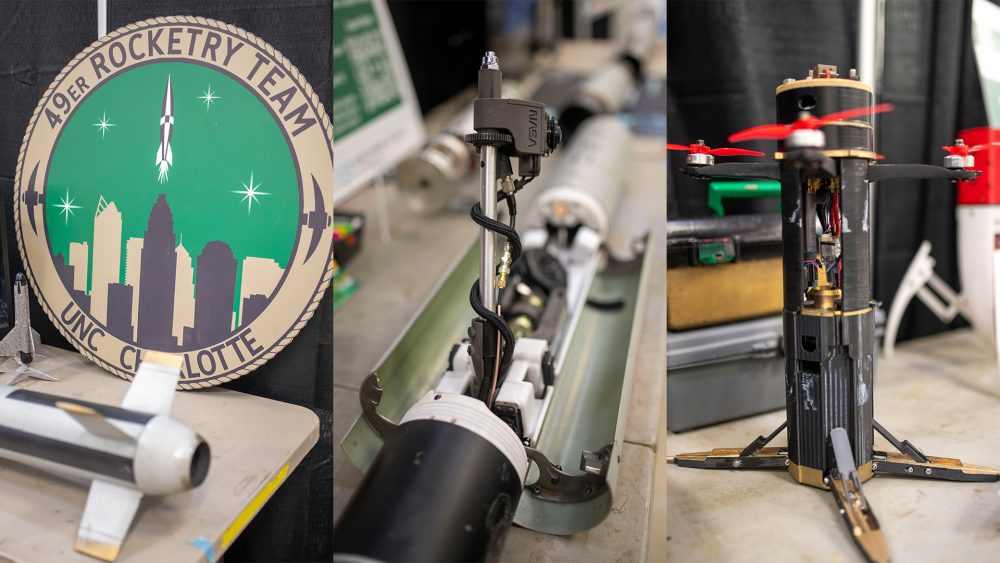
Charlotte’s nine-person team has put 2,500 hours into the project so far in just eight weeks. Boik says securing crowdfunding is essential to help the team reach the finish line and reap the rewards of their efforts.
“We do a lot on the team, but we could not do any of it without the support we get from people who think the competition is cool or want to support us,” Boik said.
Building Rockets, Fueling Futures
In addition to helping fund the construction of its sub-scale and full-scale rocket, the 49er Rocketry Team is crowdfunding to support its outreach events.
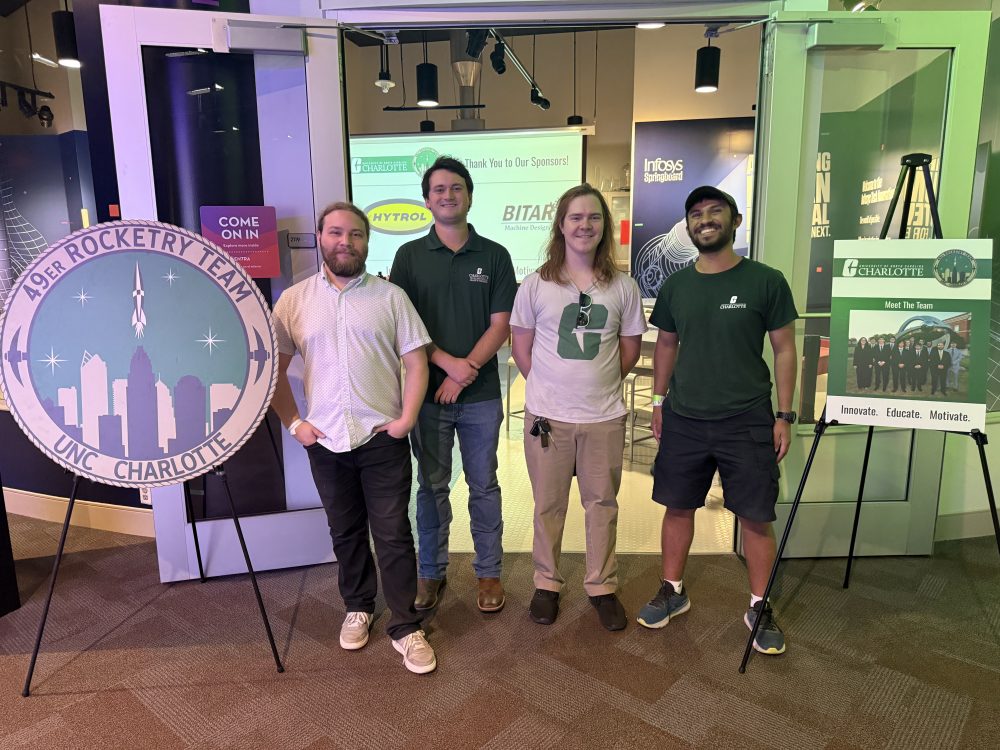
Last month, the team hosted a lab at Discovery Place Charlotte, one of the team’s external partners. Boik, Constantino, Zykov and social media manager Evan Nazareth showcased 3D printed modular toy rockets, previous competition payloads and a working wind tunnel to over 120 guests.
Events like these are particularly special to Boik — who grew up visiting Discovery Place. Working on an advanced rocket for NASA and then being able to turn around and inspire future engineers is a dream come true for the 49er Rocketry Team lead.
“Growing up, I thought Discovery Place Charlotte was the coolest thing ever, and it cultivated my love for science,” Boik said. “Now, I get to go back with the team and deliver that information to the next generation, and that’s invaluable, because we always need more people in STEM.”
Support the 49er Rocketry Team and other Charlotte student organizations at crowdfund.charlotte.edu/
Written by: Alex Reynolds