
Resounding Resistance
UNC Charlotte Students Give Voice to Professor’s Research of Holocaust Defiance
By Meg Whalen
Photos by Amy Hart, Toby Schuetze and Hanna Wondmagegn
On the streets of Budapest, Hungary, where Matthew Johnson grew up, physical reminders of the Holocaust are prevalent. There are the memorials to Raoul Wallenberg, who sacrificed his life to save thousands of Hungarian Jews. There are the bronze shoes on the banks of the Danube, marking where victims were shot into the river. There are the “stumbling blocks” – cobblestones bearing the names of Holocaust victims – in the former Jewish neighborhood where, many decades after World War II, Johnson’s own grandfather lived.
“The history is apparent there every day,” said Johnson.
Johnson’s family moved to the United States when he was 12. Now 25, he is a graduate student in the Belk College of Business and a baritone in UNC Charlotte’s University Chorale. Recently, he and 15 other choir members sang in the program “Partisan Song: Stories and Music of Holocaust Resistance” in performances in Charlotte and New York City.
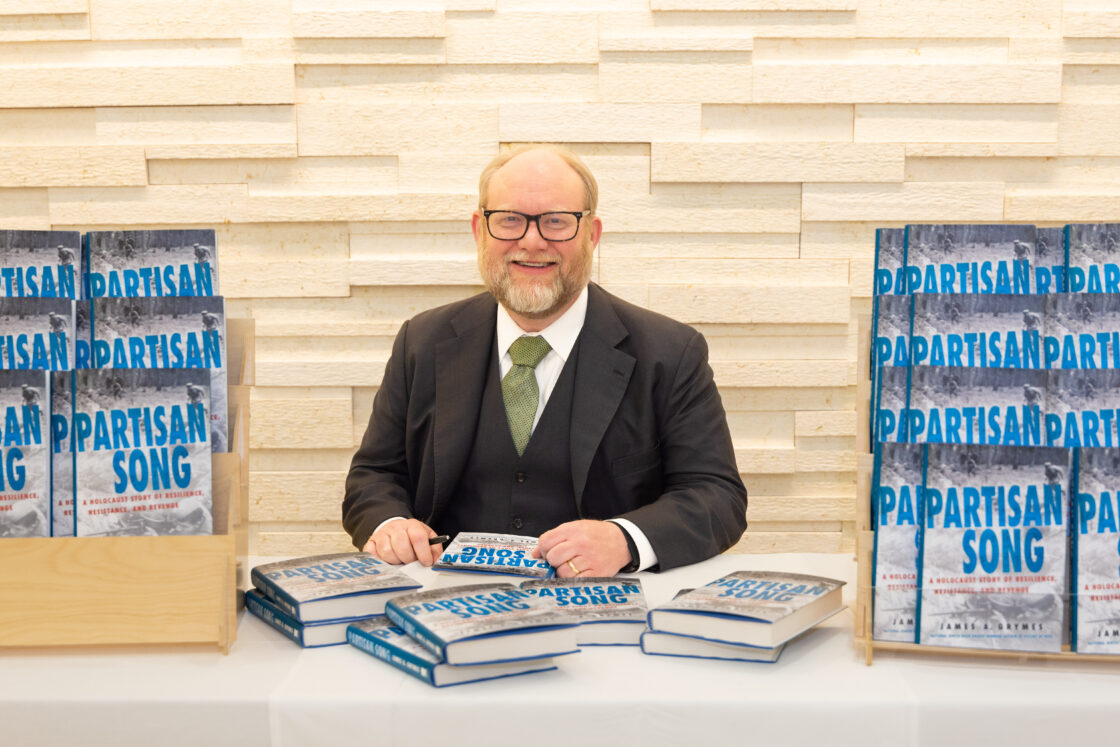
The program is the brainchild of James A. Grymes, professor of musicology and author of the book Partisan Song: A Holocaust Story of Resilience, Resistance, and Revenge. Published in January by Citadel Press and distributed by Penguin Random House, it tells the story of Moshe Gildenman, a Jewish Ukrainian engineer and amateur musician who became a partisan leader after his wife and daughter were murdered by the Nazis.
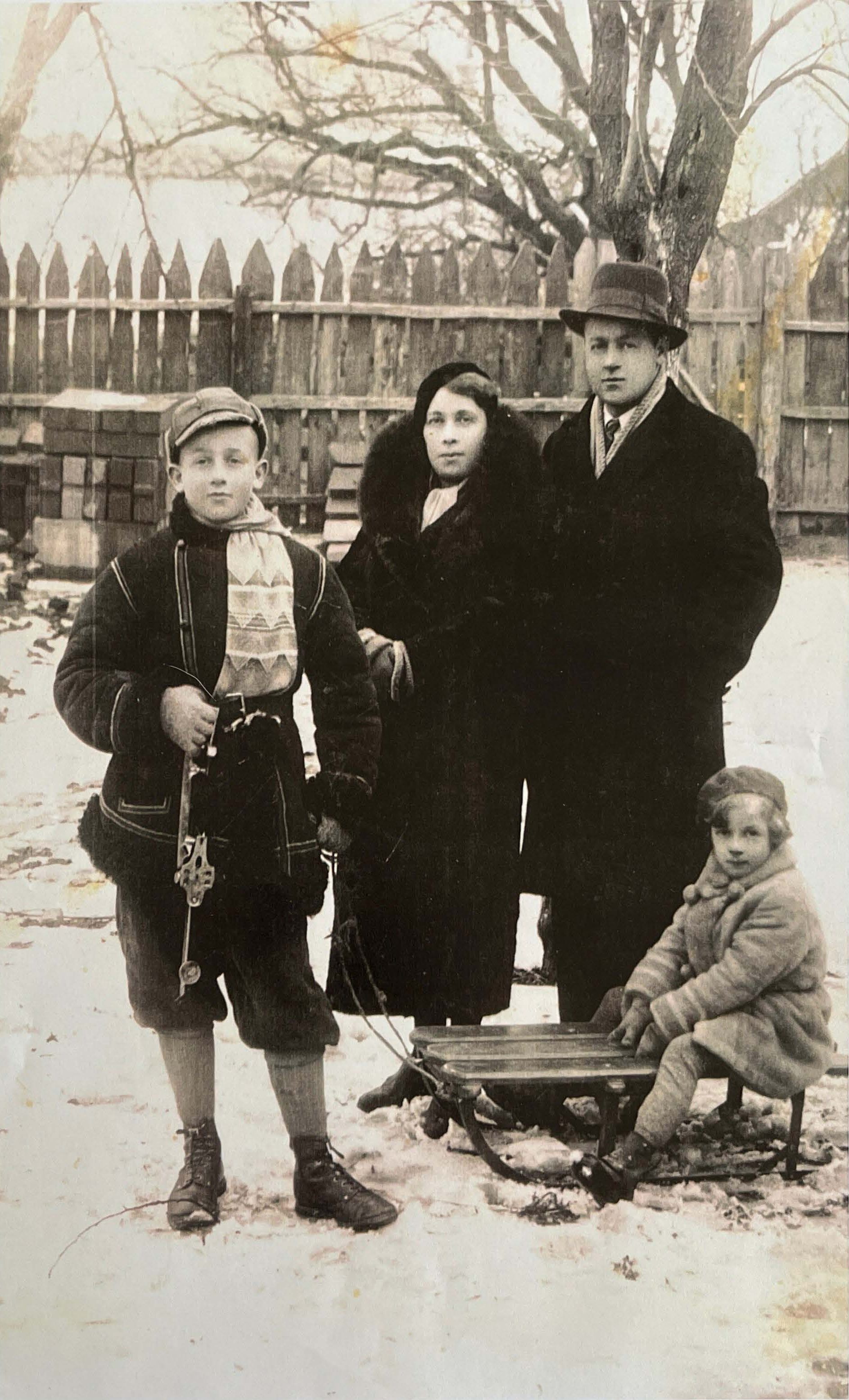
Moshe Gildenman with his family in the mid-1930s, before his wife and daughter were murdered by the Nazis in 1938. Photos courtesy of Yousef (Seffi) Hanegbi.
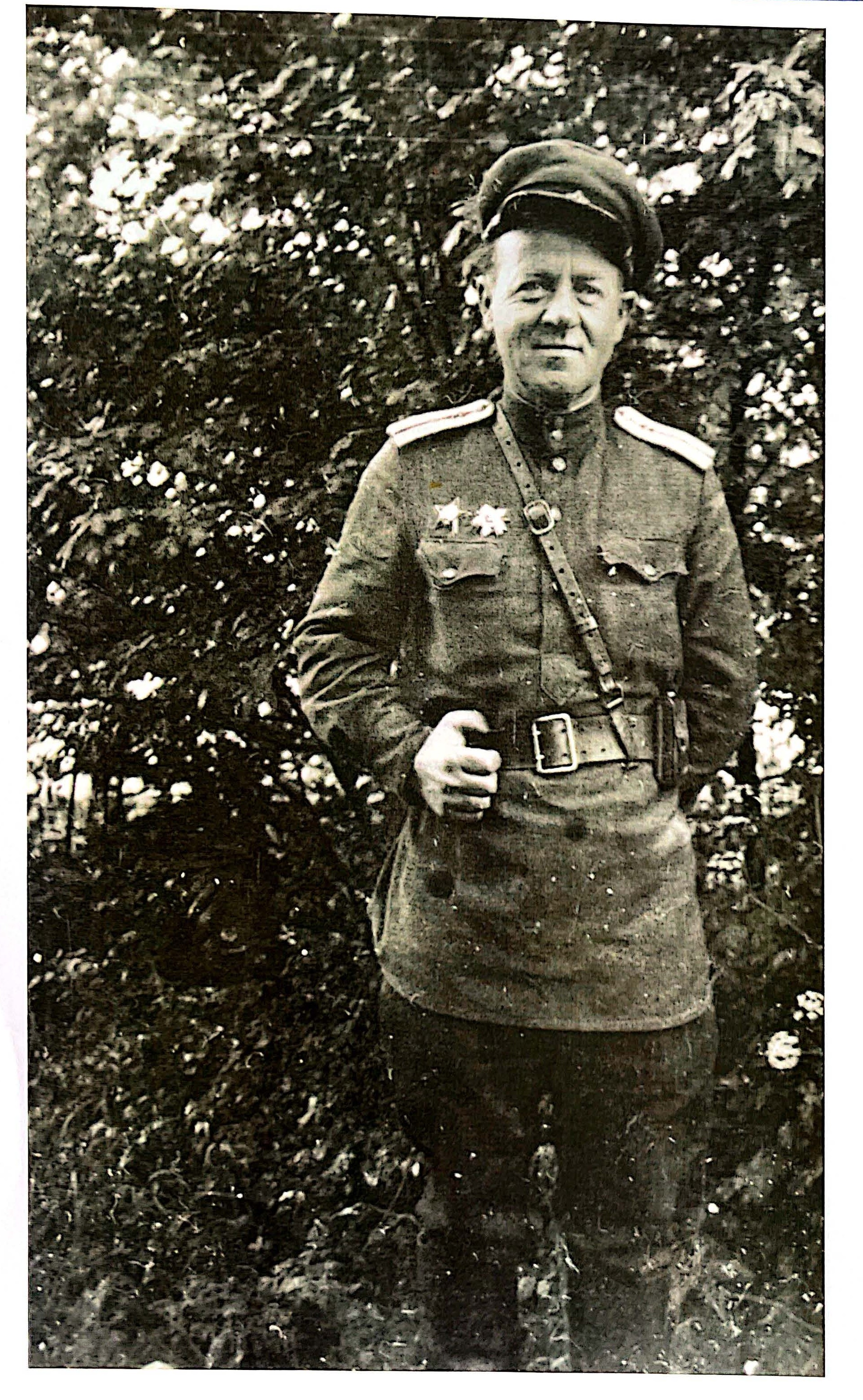
Moshe Gildenman in uniform, wearing his Order of the Red Star and Order of the Patriotic War, 2nd Class medals, ca. 1945. Photos courtesy of Yousef (Seffi) Hanegbi.
Despite being surrounded by Holocaust remembrances as a child, Johnson knew nothing of the Jewish partisans – guerilla resistance fighters – until he began to learn the songs that had soothed their sorrows and rallied them to revenge.
“The partisans were one thing I was not familiar with at all,” Johnson said. “To discover their story and get the more human side, with the music, was really inspiring. The fact that they took on that attitude – that we know we will die, but we will go out fighting – keeping that story alive was really special.”
The Songs He Carried
Grymes said that a goal of his book was to bring more attention to the partisans.
“Somewhere between 20,000 and 30,000 Jews escaped from Nazi ghettos and camps and, like Gildenman, engaged in guerrilla warfare against the Nazis,” Grymes said. “In ‘Partisan Song,’ I write about the battles they fought as well as the camaraderie they formed.”
Grymes first learned about Moshe Gildenman, known as “Uncle Misha,” more than a decade ago, when he was researching his book “Violins of Hope: Violins of the Holocaust—Instruments of Hope and Liberation in Mankind’s Darkest Hour.” “Violins of Hope” was published by Harper Perennial in 2014 and won a National Jewish Book Award.
“His story attracted me from the very beginning,” Grymes said, “even before writing ‘Violins of Hope."
But Grymes is a musicologist and felt that if he were to write a book about Gildenman, there needed to be a musical connection. One day in 2022, he discovered The Mendele Review: Yiddish Literature and Language, an online resource that briefly mentioned a songbook that Gildenman may have owned. Grymes contacted Yad Vashem-The World Holocaust Remembrance Center in Israel and learned that its archive did indeed hold a songbook – the very songbook, in fact, that Gildenman had carried in his coat pocket throughout the war.
“Of all the things,” said Grymes, “this is what he carried.”
Yad Vashem sent Grymes scans of the songbook and also copies of songs that Gildenman’s son had collected, some of which Gildenman himself had written.
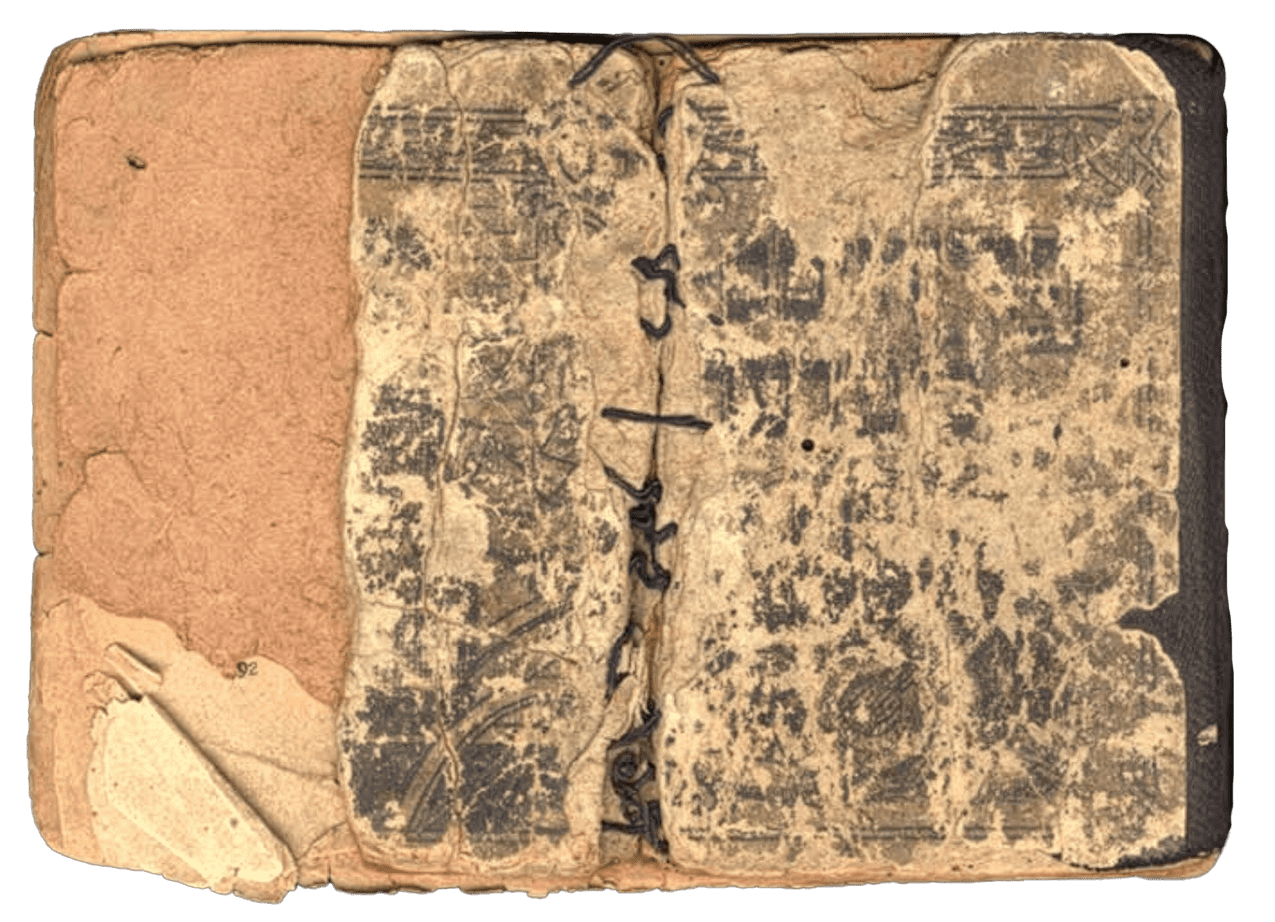
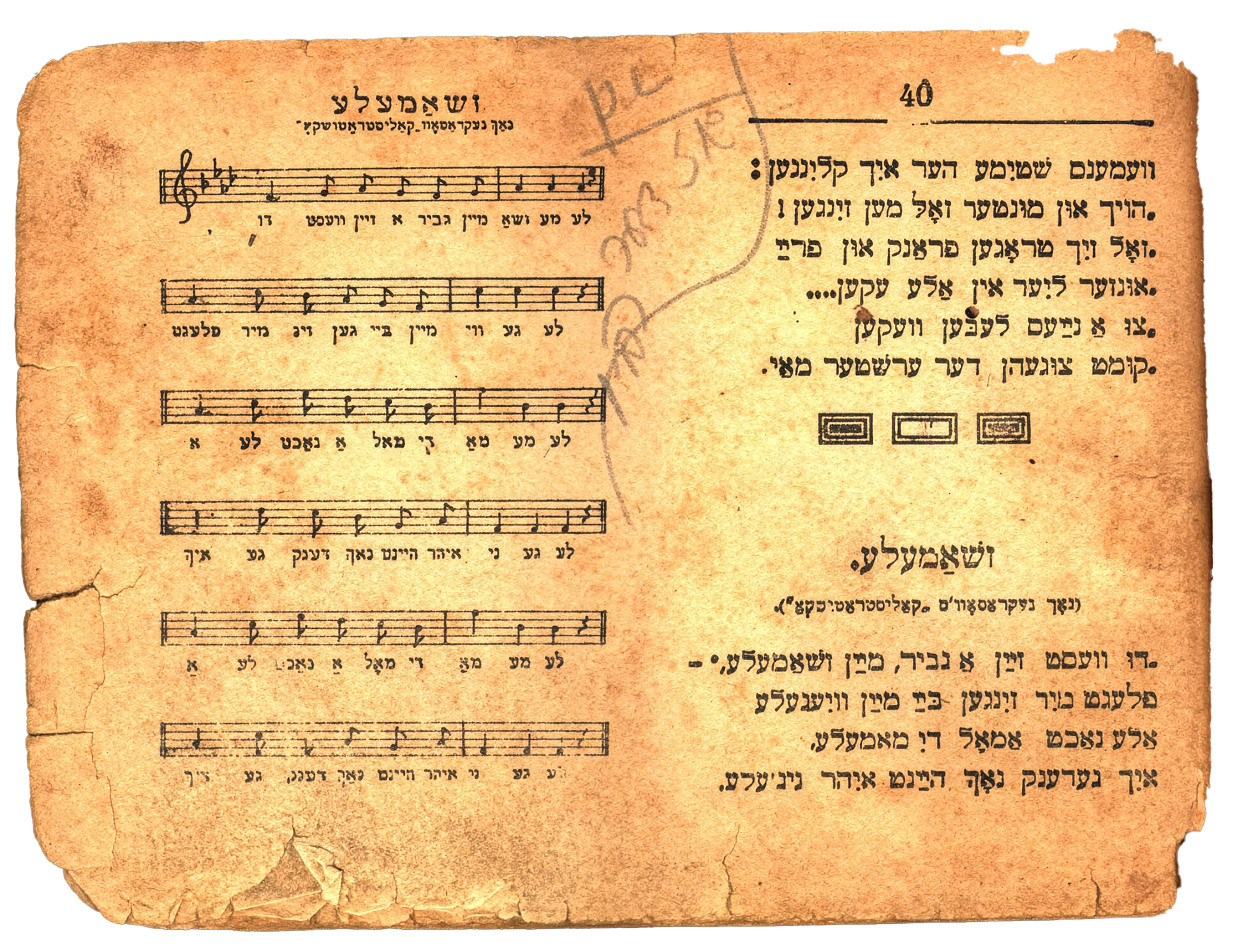
Cover and Interior page from the songbook with lyrics and melodies of songs that were sung by the partisans under the command of Moshe Gildenman, Yad Vashem Artifact Collection, #4955/1
“Finally, I had a music connection. I had the songs Gildenman carried with him and the songs the partisans sang.” It gave Grymes justification for writing Gildenman’s story: “This is why I’m writing this book.”
“Partisan Song” is a valuable contribution to Holocaust and World War II research. A review for the Jewish Book Council calls the book an “excellent history” and “an exciting read.” Especially distinctive, the review notes, is the emphasis on music: “Grymes introduces each chapter with a verse from Uncle Misha’s book of Freedom Songs, underscoring the surprising role that music played in the dangerous, bold actions of Uncle Misha and the Jewish Group.”
Learning a Language Nearly Lost
Many of the songs in “Uncle Misha’s” book had not been sung – or heard – in decades. Could they be resurrected? Could they again reverberate? Could they carry forth a culture that was once threatened with extinction?
Working with Jason Dungee, the Department of Music’s director of choral activities, and Department of Music Chair Joe Skillen, Grymes developed a plan that not only would revive the music but also provide an extraordinary educational opportunity for students. Grymes would oversee the creation of choral arrangements of several of the partisan songs; Dungee would prepare a student choir to sing them; the music department would support public presentations of the songs interwoven with readings from Grymes’s book.
“’Partisan Song’ stood out as a unique opportunity to highlight an important intersection of some of the music department’s strategic goals, namely, faculty research, student achievement and community engagement opportunities that are unique to Charlotte.”
-Joe Skillen,
Department of Music Chair
There was, however, a hurdle: Most of the songs were in Yiddish, the language of Central and Eastern European Jews. While choruses frequently sing in different languages, Yiddish is rare. If they were going to honor this history through song, the UNC Charlotte team wanted to get it right.
So the department brought Binyumen Schaechter, the director of the Yiddish Philharmonic Chorus, to Charlotte from New York City to work with the chorus on Yiddish pronunciation. For hours, Schaechter coached the students.
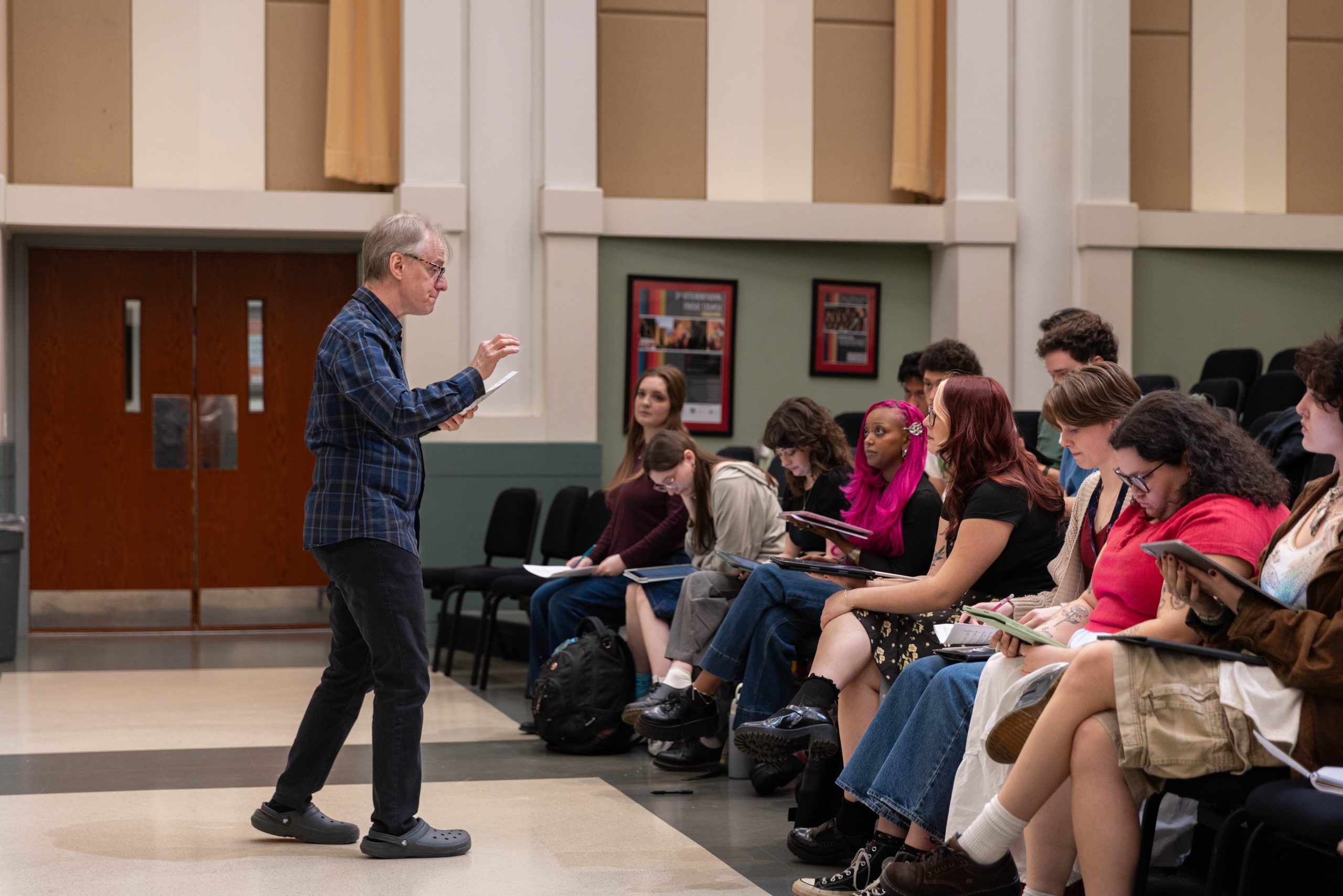
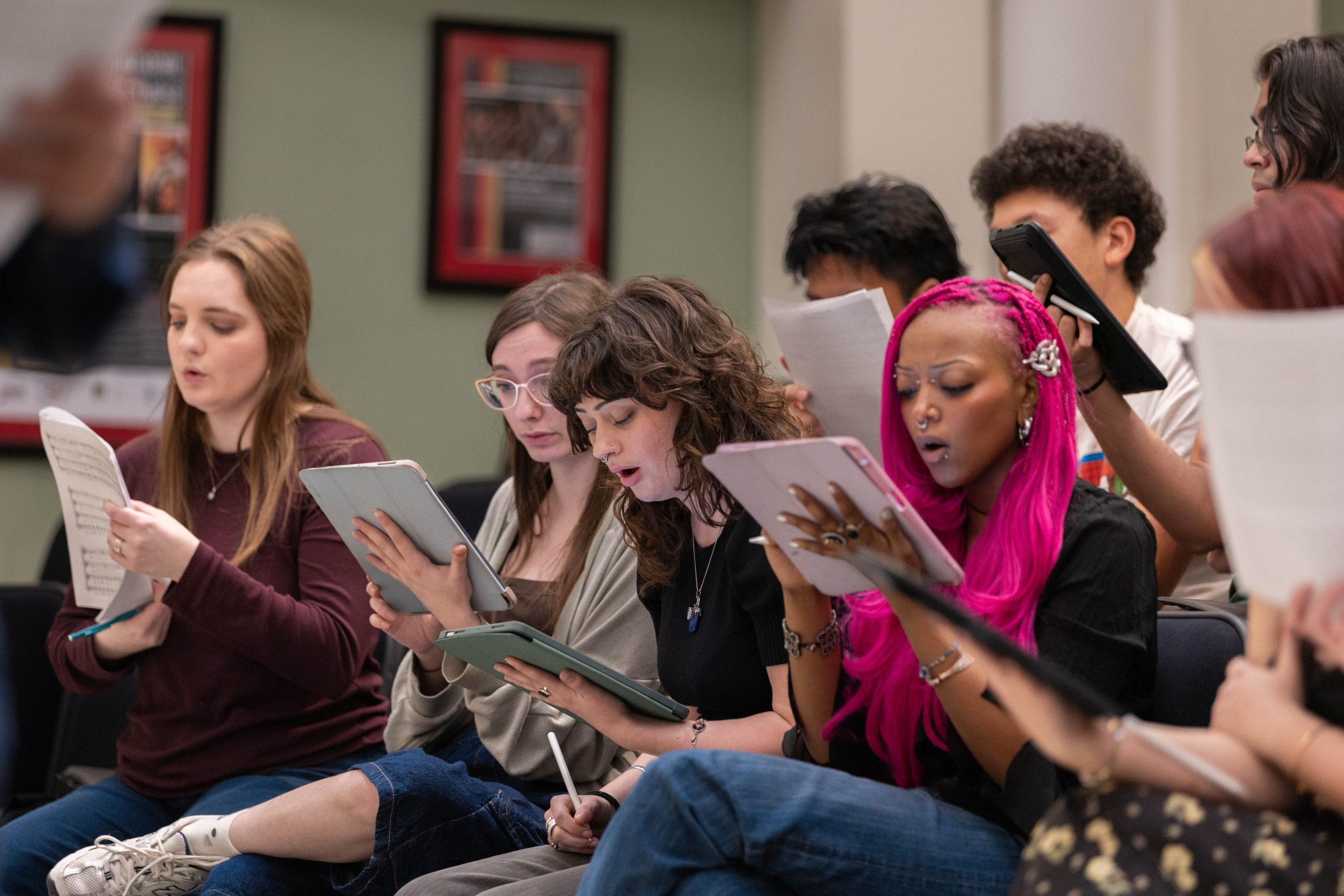
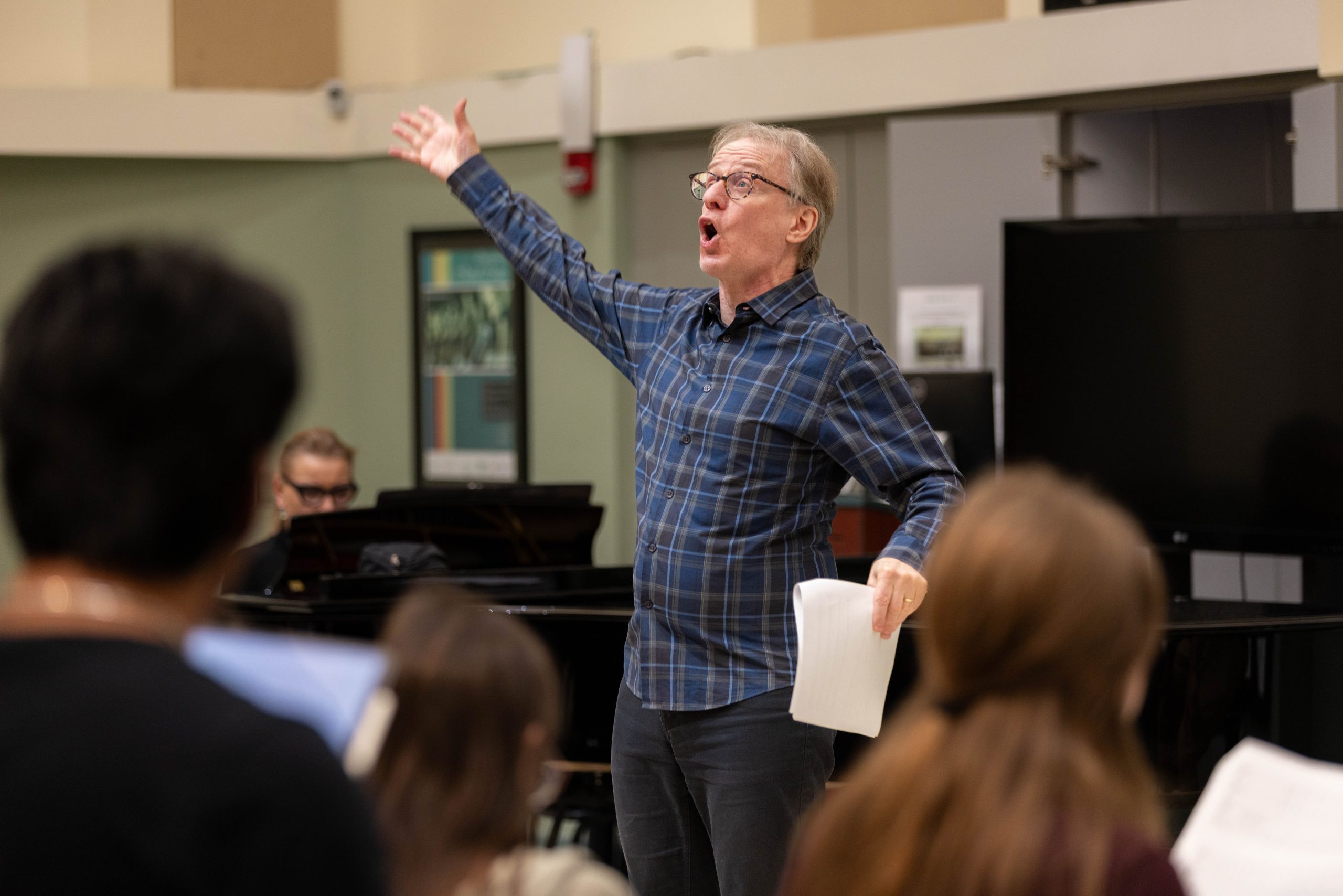
“The students had beautiful voices and made a beautiful blend,” Schaechter said. “I admired that they seemed to be very focused on getting the pronunciation right, both in the prep work they had done with the ‘words and acting’ MP3s (aka ‘pronunciation and expression’ MP3s) I'd prepared for them in advance as well as in the session itself. I would venture to say that the 16 students with whom I rehearsed, none of whom I believe are Jewish, now have a better understanding of Yiddish pronunciation than the singers in (and conductors of) many Jewish choruses that I've heard.”
For music students Jylian Taylor and Sam Mayo-Tinoco, the workshop with Schaechter was revelatory.
“That was when it clicked for me,” said Taylor. “I could really put the words to the meaning.”
Mayo agreed. “There was a whole shift in how we sang those songs. All the messages and the culture were so clear.”
A Heartfelt Reception
With support from the Blumenthal Foundation and the Crane Family Charitable Foundation, the program “Partisan Song: Stories and Music of Holocaust Resistance” was presented twice, at Charlotte’s Temple Beth El on Feb. 26 and at the Center for Jewish History in New York City on March 9.
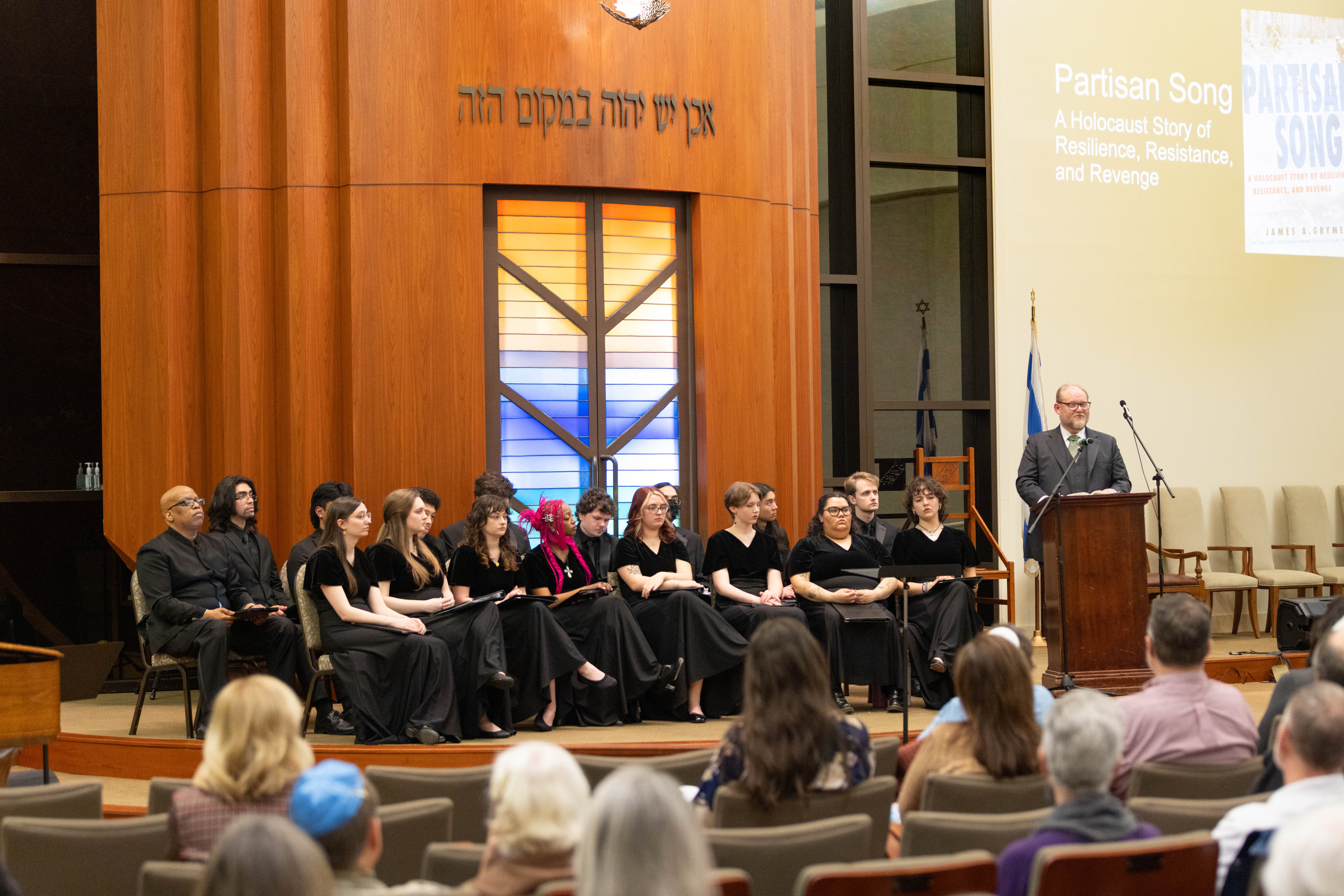
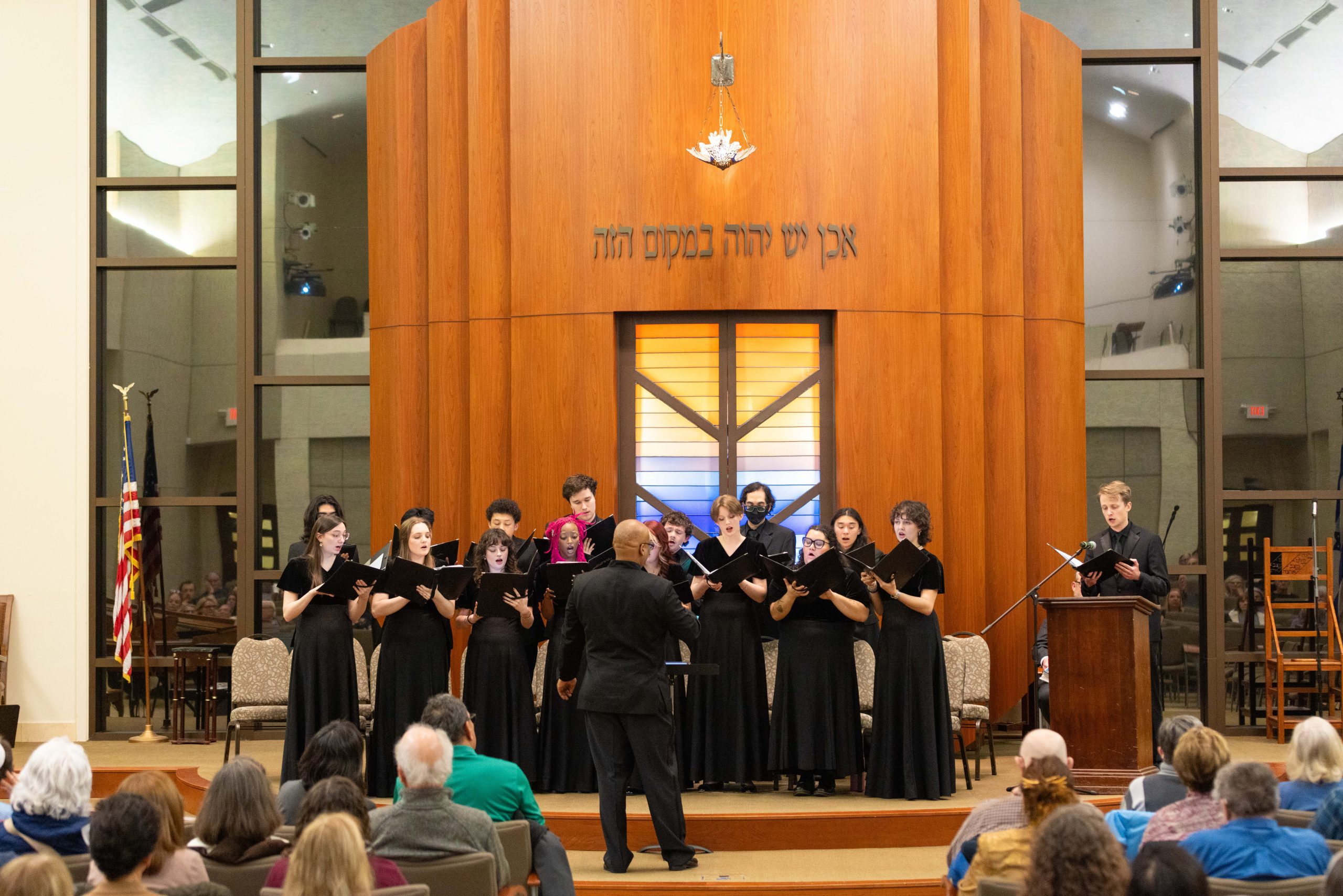
Performance of "Partisan Song: Stories and Music of Holocaust Resistance" at Temple Beth El in Charlotte on Feb. 26, 2026.
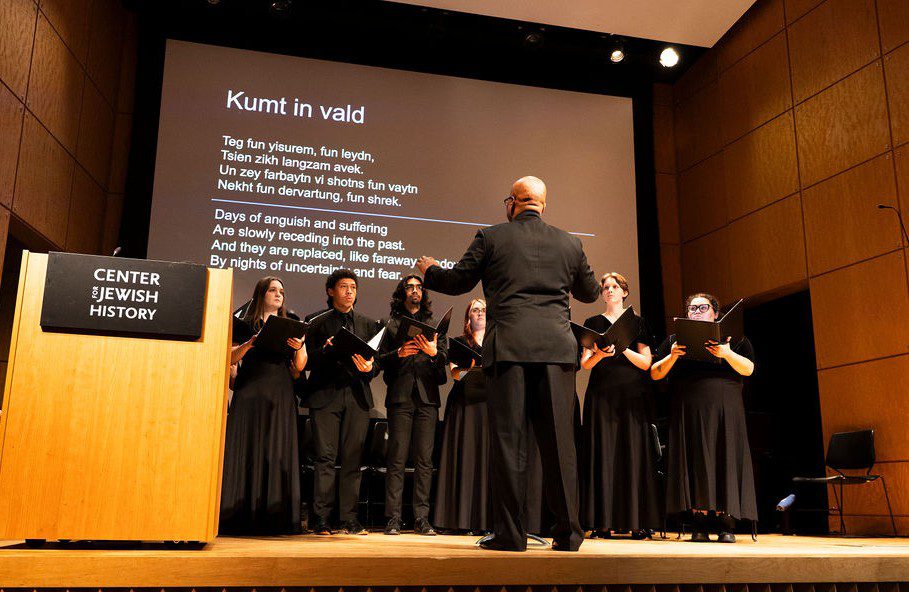
Grymes provided historical context and read passages from his book. Led by Dungee, the student chorus sang a total of seven songs. Among those songs were two for which Gildenman wrote the lyrics. “Kumt in Wald,” in Yiddish, exhorts listeners to join his group of partisans:
Would it not be better to die as men,
In a heroic death in battle?
Young and old, come to the forest!
Break out of the ghetto!
Ten may fall, but ten will survive.
Forward, all Jews, to the fight!
“Smert’ nemetskim grabitelyam!” is in Russian and enumerates the evil actions of the German army, ending with a call to courage:
The partisans will strike a blow
To the rear of the vile Germans…
And then we will drive this filth
Out of our homeland.
But you must help us
In that combat mission.
For that song, Johnson was the soloist, embodying the voice of “Uncle Misha.”
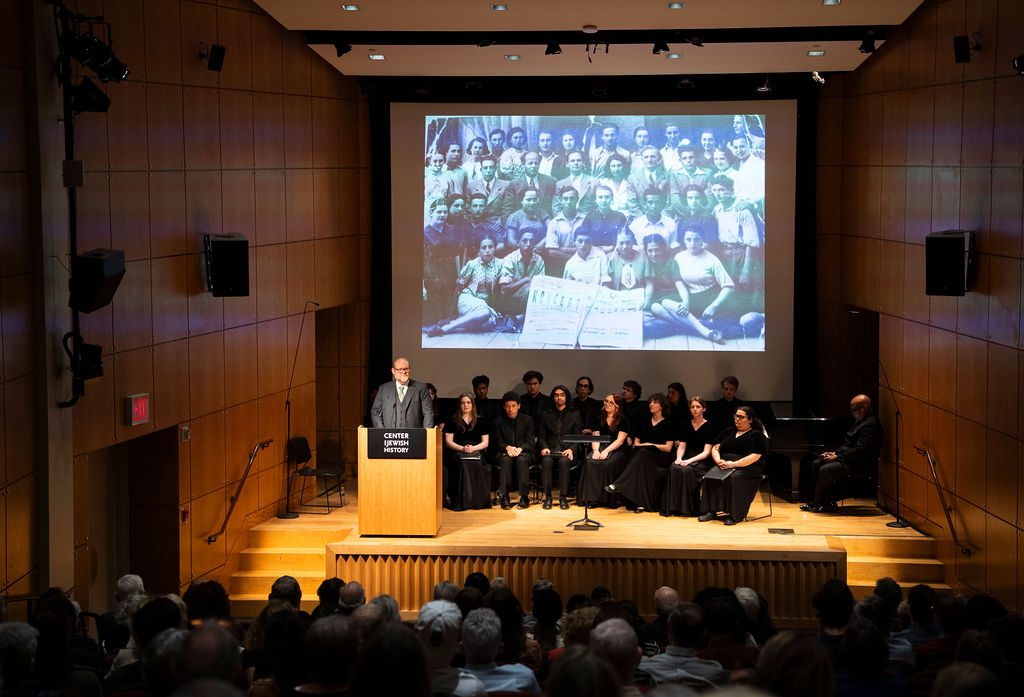
Two excerpts from the performance on March 9, 2026, of "Partisan Song: Stories and Music of Holocaust Resistance" at the Center for Jewish History in New York City.
Johnson, Taylor and Mayo said that both performances, to largely Jewish audiences, were profound experiences.
“We were singing through people’s pain, through people’s stories, through history,” said Mayo.
Equally exciting was the opportunity to travel to New York City –a first for Mayo. In addition to popular tourist sites like Times Square and the Museum of Modern Art, the students visited the Jewish Museum, where they learned “how the Jewish people have used art to maintain cultural identity throughout centuries of displacement and persecution,” Grymes said, adding that it was “an ideal way to underscore the themes of ‘Partisan Song.’”
Their trip culminated with the performance at the Center for Jewish History in Lower Manhattan. The large audience was enthusiastic and impressed, said Jennifer Gordon, manager of community outreach and member engagement, and gave the program a long standing ovation.
“It was a wonderful opportunity for our community to witness and recognize the great work of preservation of Jewish culture happening in Charlotte.”
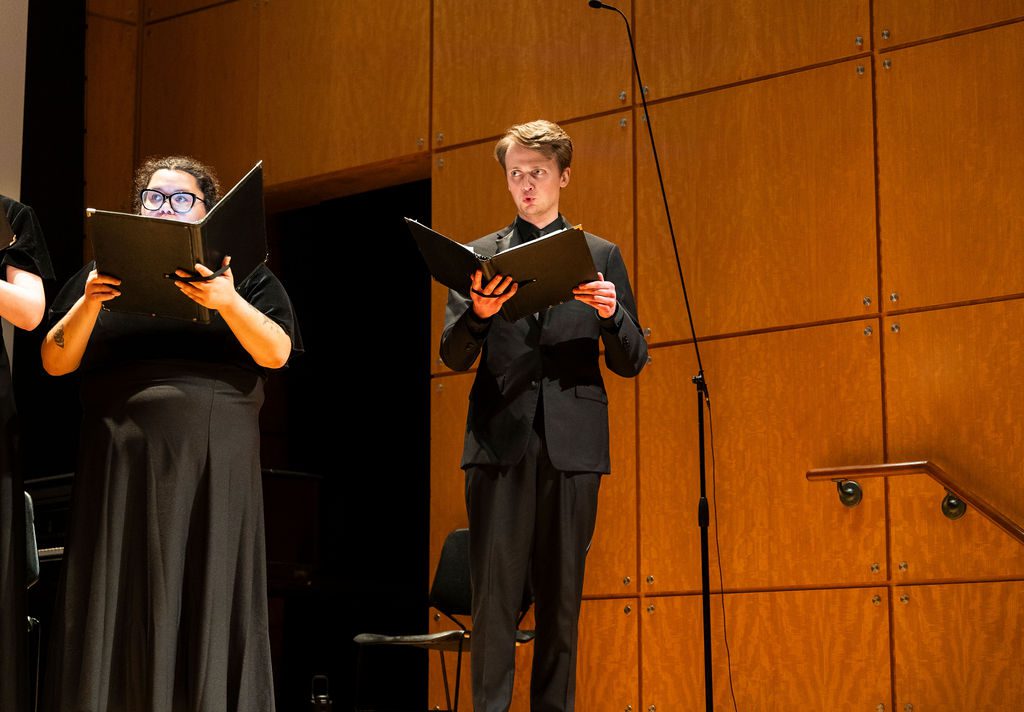
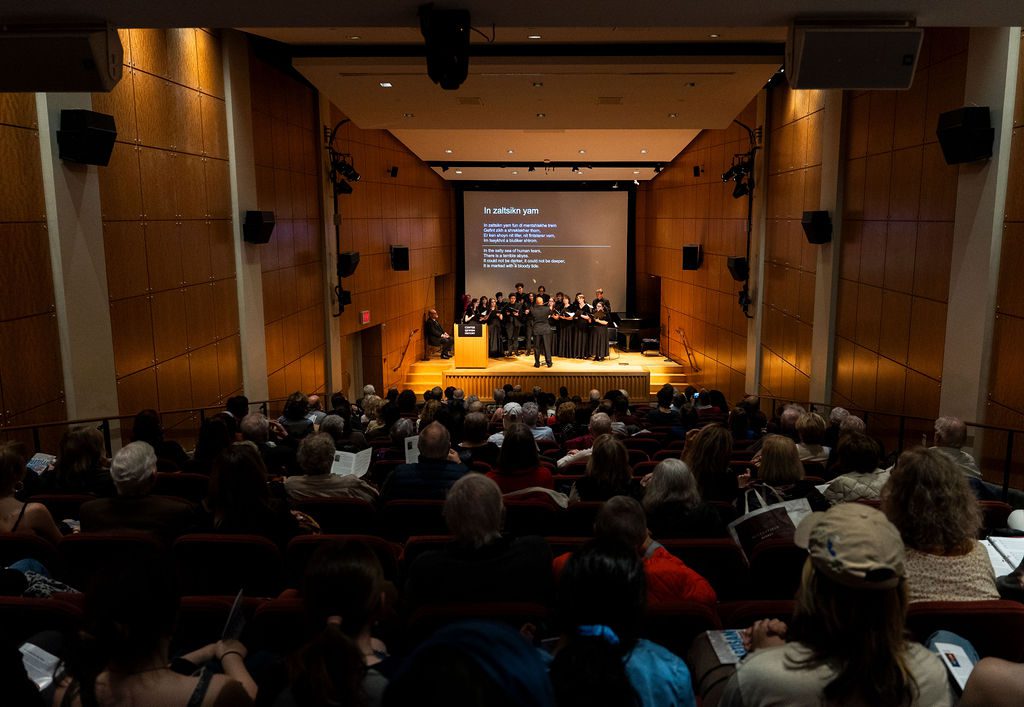
Johnson said he was “dumbstruck” by the response of the audience at the Center for Jewish History.
"People came up to us and said, ‘My parents were partisans’ or ‘My father was in a ghetto.’ One woman was from Korets – the same village as Gildenman – and her father knew Gildenman personally. She knows Yiddish fluently and said she could understand every word we sang. It made the hard work pay off. It’s so personal to them, and yet it’s so much bigger than any of us."
Taylor said that some audience members were even in tears.
“I am forever changed by this experience. You could tell how much of an impact it had on the people listening. We were giving something to people, a piece of history that might have been lost.”