A mace case: How two employees used their woodworking skills to create a piece of history
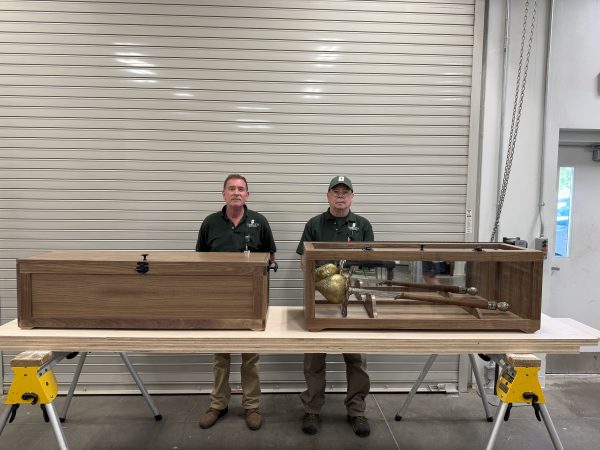
Michael Watt and Joe Coleman of the building interiors shop in facilities management were assigned a unique work order that quickly became a passion project. The task: repair the case that carries the University mace — an important piece of UNC Charlotte’s history.
Upon receiving the shabby Plexiglass case, they knew repairs weren’t the solution, or even an option. Instead, they saw an opportunity to showcase their woodworking skills by creating a display case worthy of such a valuable symbol. With an idea in place, they began by researching the history of the mace.
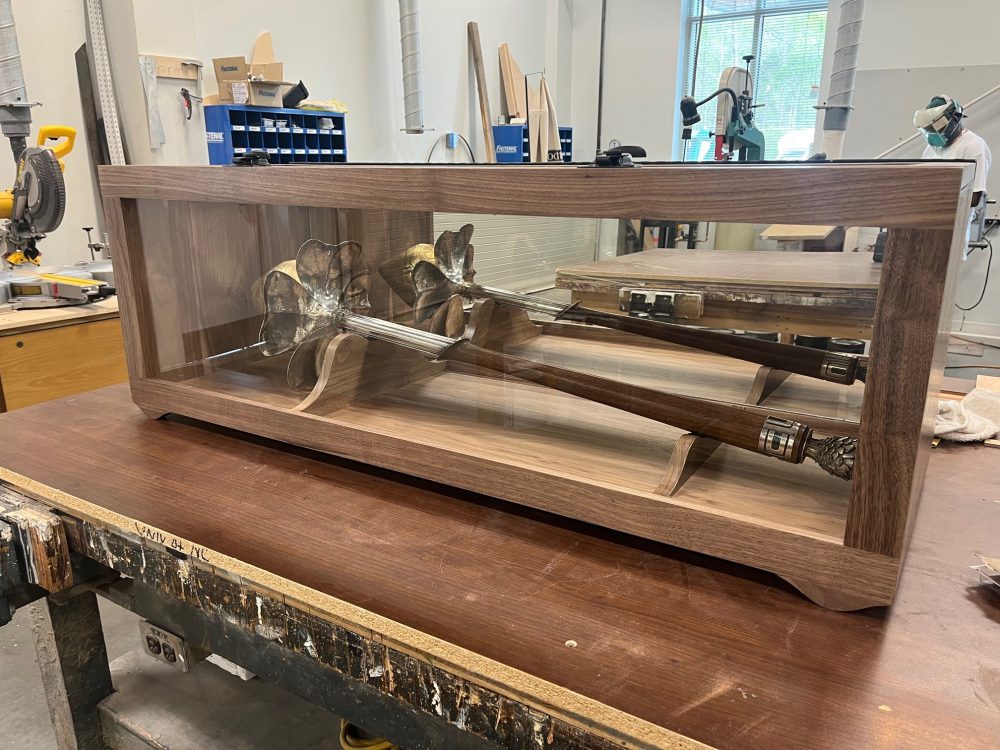
Maces are ancient symbols of authority that date back to the 14th century. Charlotte’s mace was specifically designed and crafted to represent the University’s symbols and history by Barry Merritt of the Penland School of Crafts. At the base is a gold pine cone. Moving upward into the native walnut handle is one of Charlotte’s former logos. The upper silver section is carved to represent the Belk Tower that once stood in Belk Plaza, which then blossoms into a dogwood flower with a gold-plated hornet’s nest.
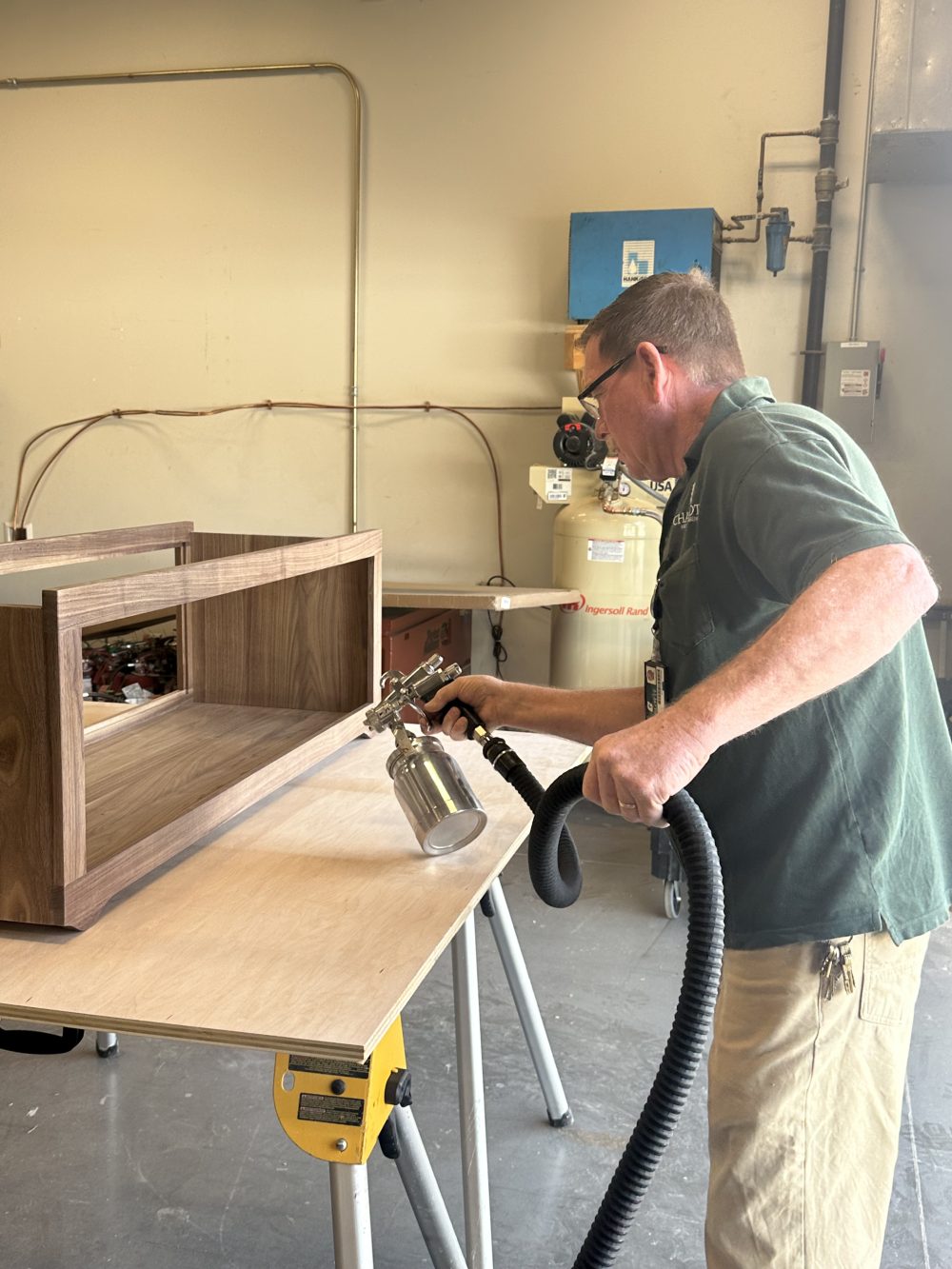
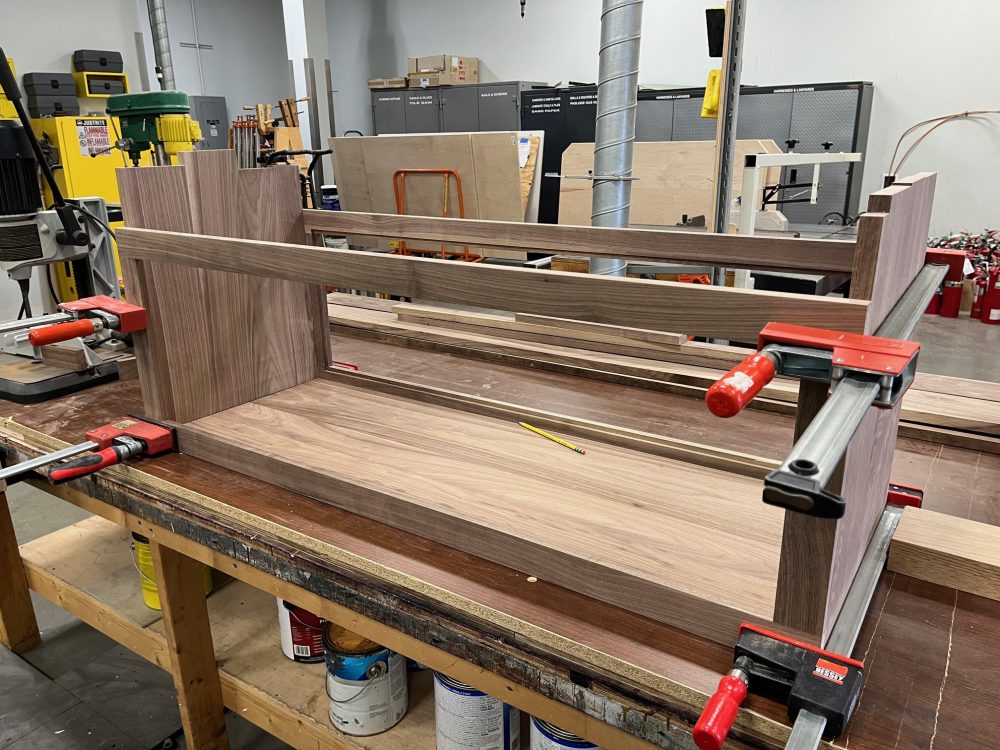
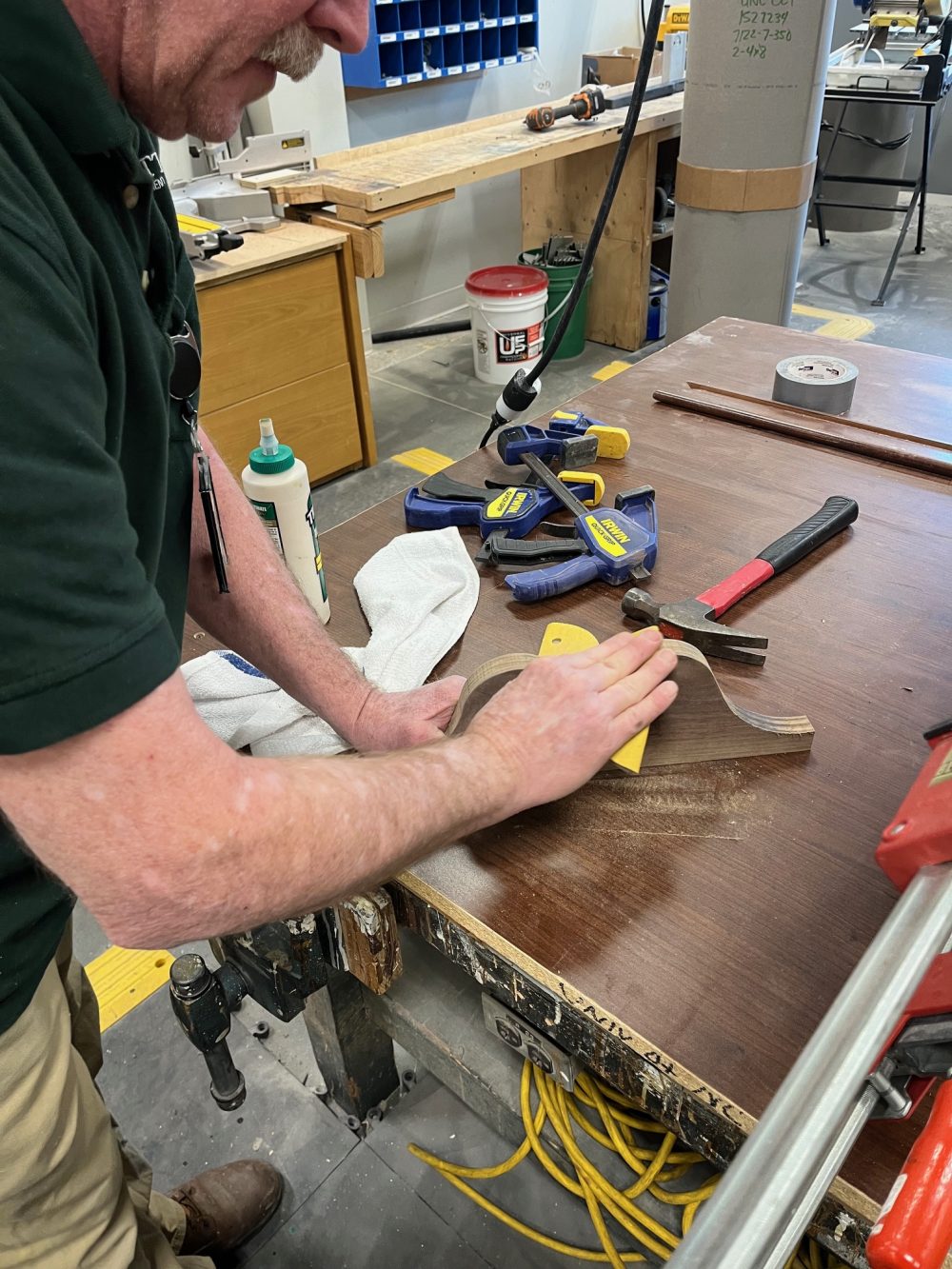
To match the mace, Watt and Coleman crafted the display case out of walnut. They started with a large slab of wood and planed it down to create the display case, which includes a mirrored back and glass at the top and front. But this case was heavy, and the mirror and glass made it risky to move, so they also created a carrying case out of thinner walnut planks.
“I have been a cabinetmaker for over 40 years, so I knew two cases — including one that was significantly lighter and easy to carry — would be the best option to avoid any damage to the mace,” said Coleman, a Charlotte staff member of 21 years. “Now, it will be protected at all times.”
The mace has always been kept in storage — brought out only during each commencement ceremony to be carried in by the University marshal. Now, with this stunning case, it will be displayed year-round in J. Murrey Atkins Library when it’s not in use.
This project took about two months to complete, as both Watt and Coleman had to wait for materials to be ordered while also managing daily work orders.
“It was a fun project and it’s nice to be part of history,” said Watt, a 10-year employee. “When we’re gone it will still be here for years to come — and that’s pretty special.”
Written by: Tenille Dellinger
Photos provided by: Kelly Ortiz and Tenille Dellinger