Student AI Fellows: Piloting solutions to complex campus challenges with large language models
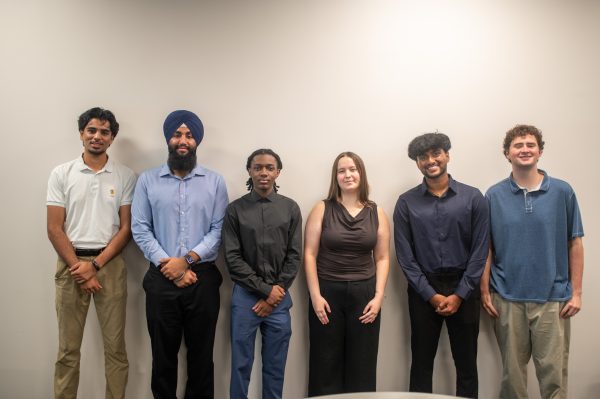
With AI influencing all aspects of University life and operations at UNC Charlotte — and several new AI-focused majors, minors and concentrations newly launched — the Office of OneIT is empowering select students to use University-licensed large language models to solve complex departmental problems through the Student AI Fellows program.
The inaugural AI student fellows cohort, chosen from a large pool of applicants, includes six computer science students, each completing a 30-hour, hands-on gig internship early this summer with a University academic department or administrative unit. Before their internships started, the fellows earned a Google AI microcredential to add to their resumes.
Campuswide benefits
The summer pilot, in addition to giving the student fellows an opportunity to flex their knowledge of Google Gemini, Microsoft Copilot and NotebookLM, laid the groundwork for AI processes that improve efficiency across campus, from the Botanical Gardens to the Center for Academic Excellence. University departments are able to request a student AI fellow for fall, when the program expands to 10 projects.
“These talented undergraduates bring a wealth of technical skills and fresh perspectives from their recent coursework and personal projects,” said Katherine Bennett, senior instructional design and training lead. “By pairing them with departmental staff, the University seeks to reduce manual workloads, improve process consistency and build AI-ready staff without introducing new or untested tools or risks.”
meet the student ai fellows
The student AI fellows presented their project outcomes to senior University administrators on Friday, June 26, at the Cone University Center.
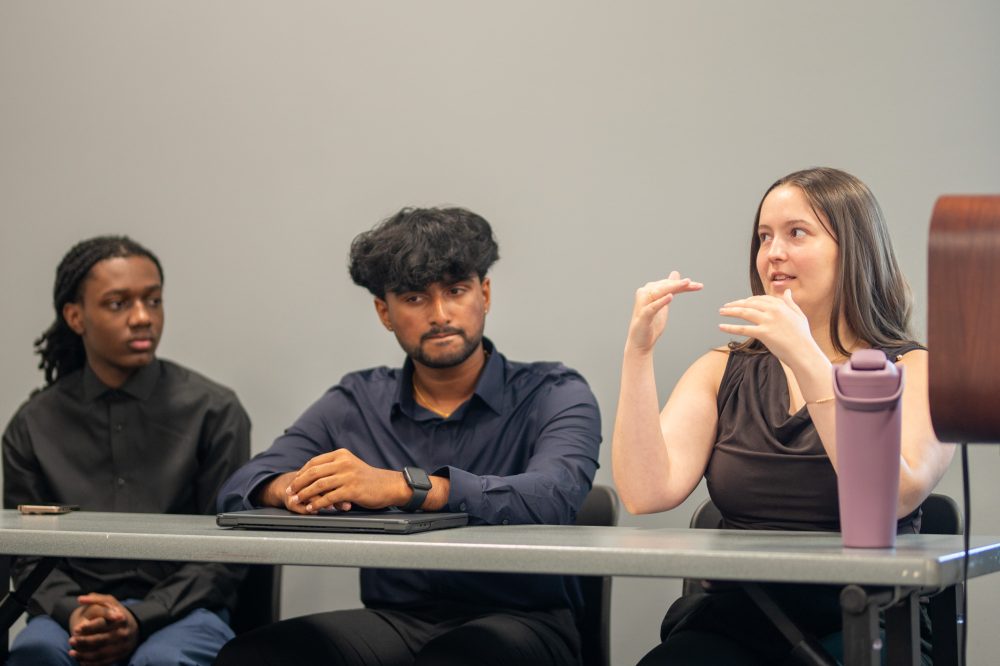
Rachel Bland: School of Social Work
| “This was an excellent opportunity to learn skills like negotiating with customers, listening to constructive criticism and problem solving with a group of different specialties. Not only did I learn soft skills, I improved my knowledge of multiple LLMs.”
Rachel Bland, a senior computer science major with a concentration in AI, robotics and gaming, developed an AI tool for the College of Health and Human Services, specifically, the School of Social Work, that can analyze and map similar learning objectives across different program syllabi to identify opportunities for interprofessional student co-learning experiences. The initial deliverable mapped these aligned objectives, and Bland has been hired to continue on the project for the department in the fall.
A Durham native, Bland chose UNC Charlotte because of the computer science program and the campus’ energy. Bland is passionate about learning the intricacies of AI and teaching others how to harness it in their work and personal lives. She applied to be a student AI fellow because of its mission and the opportunity to contribute to Charlotte’s AI adoption.
“This project has been an amazing partnership for CHHS,” said Shanti Kulkarni, associate dean for research and graduate studies for the School of Social Work. “Rachel’s AI tool will expand collaborative learning among our health and human services pre-professional students. The technical aspects of coordinating across all of our graduate and undergraduate programs and courses is daunting and this tool really addresses that technical aspect.”
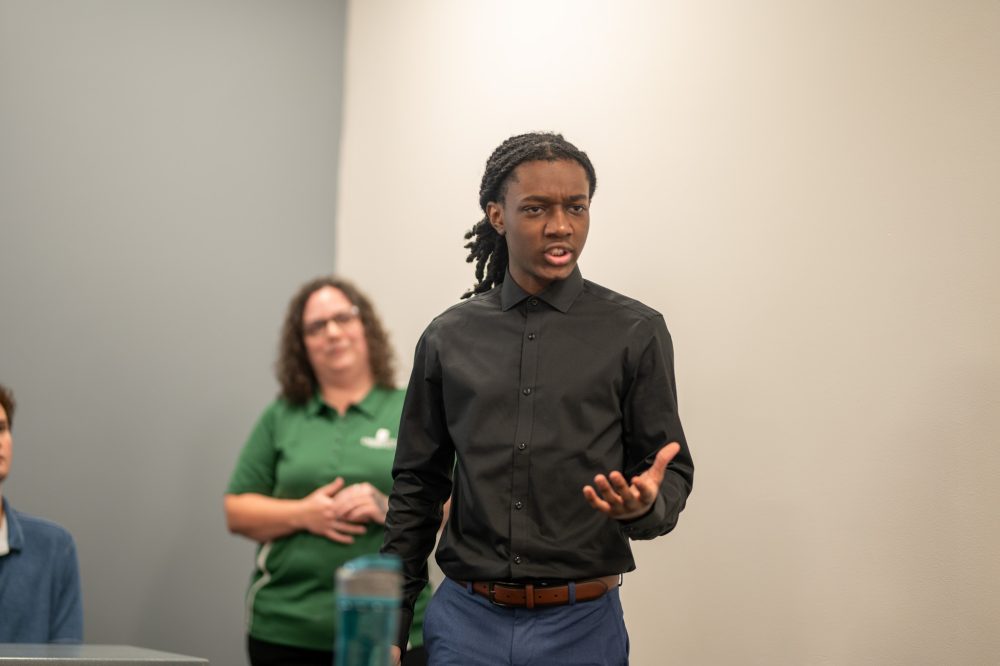
Jaylen Carroll: UNC Charlotte Botanical Gardens
| “The most rewarding part of the project was learning new AI tools and how they can be used within the workforce to get specific needs done. It gave me valuable experience and increased my confidence and ability to use AI effectively.”
Jaylen Carroll, a junior computer science major with a concentration in systems and networks, first connected with Jeff Gillman, director of the UNC Charlotte Botanical Gardens, when he enrolled in one of Gillman’s horticulture classes. As an AI student fellow, Carroll laid the groundwork for a digital map layer that shares information as Gardens visitors interact with plants — a development that will enhance guided tours.
“We’re excited about the groundwork Jaylen has laid and we’re looking forward to having an online opportunity that will help our over 64,000 annual visitors engage with the Gardens and local plants,” Gillman said.
Carroll created a plant inventory with NotebookLM, set benchmarks for development and created a plan for gamified virtual tours. He has been hired by the Botanical Gardens to continue the project in the fall semester.
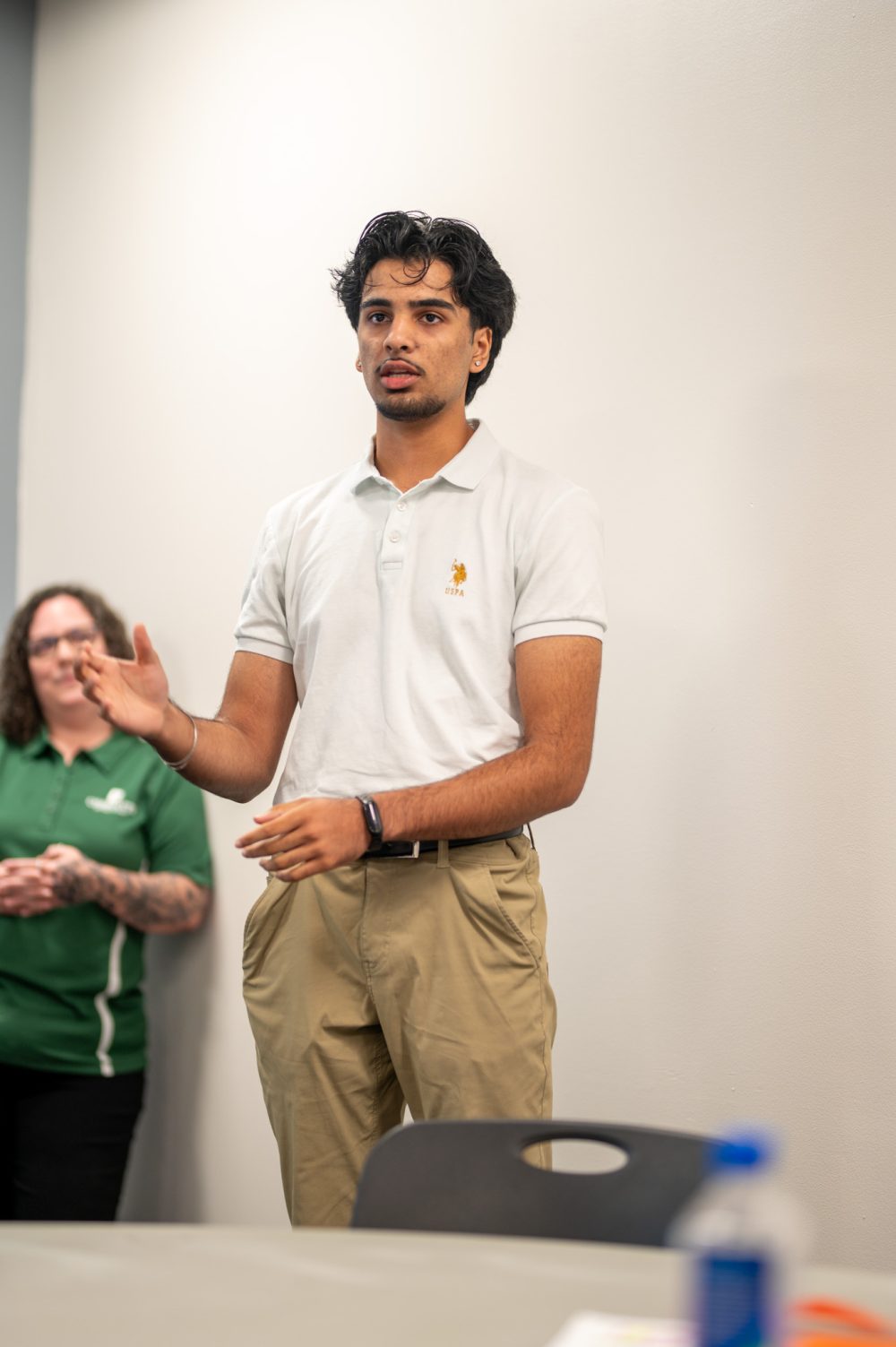
Ayush Patel: Klein College of Science
| “The fact that we’re the guinea pigs to see how available AI can be actually helpful to University staff and students is exciting to me.”
Ayush Patel, a senior computer science major with a concentration in cybersecurity, streamlined the review process for applications to EHRA positions in the Klein College of Science. The College intakes hundreds of applicants throughout the year, manually reviewing individual cover letters and resumes for minimum requirements, a time-consuming endeavor.
Patel helped develop a customizable Gemini Gem that ranked applicants based on application requirements. The Gem served as a proof of concept for how AI can assist the review process but still needs human intervention. Patel said throughout this process he regarded AI as an intern — constantly checking its work — something he learned from his research mentor, Cori Faklaris in the College of Computing and Informatics. For Patel, the AI student fellows pilot is an opportunity to empower undergraduates to initiate positive changes on campus.
“I was absolutely blown away by the result of this AI project,” said Lien Bailey, assistant dean of finance and personnel for the Klein College of Science. “While working with this GEM, the output was comparable to the hiring committee’s perspective of the candidates. It has the potential to streamline the candidate review process and function as a great tool for our department.”
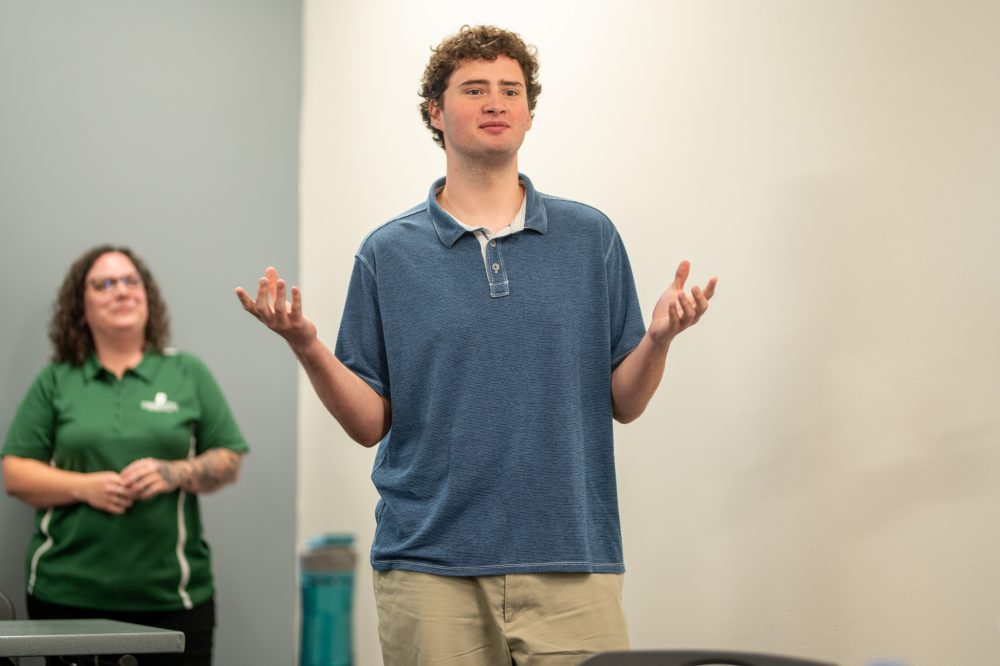
Cayman Powell: University Center for Academic Excellence
| “I was the high school student who showed my classmates and teachers what AI was capable of. That was when the models weren’t that amazing. My project makes me wonder how many repetitive tasks – weekly, semesterly or yearly – could be easily automated using generative artificial intelligence tools.”
Cayman Powell, third-year student triple majoring in computer science, data science and artificial intelligence, partnered with the University Center for Academic Excellence to automate scheduling for Peer Assisted Learning to maximize student attendance. He explained how using his workflow, which utilizes NotebookLM, reduces manual scheduling from more than 20 hours per semester to an hour or less.
Powell, a Charlotte native, was an early adopter of artificial intelligence. He remembers playing around with ChatGPT’s beta model in high school at Metrolina Christian Academy. His interest in machine learning prompted him to add the new artificial intelligence major. His experience as an AI student fellow has given him a new perspective on real-world AI application.
“Working with Cayman to leverage AI for scheduling our staff meetings and Peer Assisted Learning sessions was a privilege,” said Bettina Becker, assistant director of Peer Assisted Learning. “The project was handled with an impressive level of professionalism, care and expertise from start to finish.”
Powell is part of the University Honors Program and the College of Computing and Informatics Honors Program.
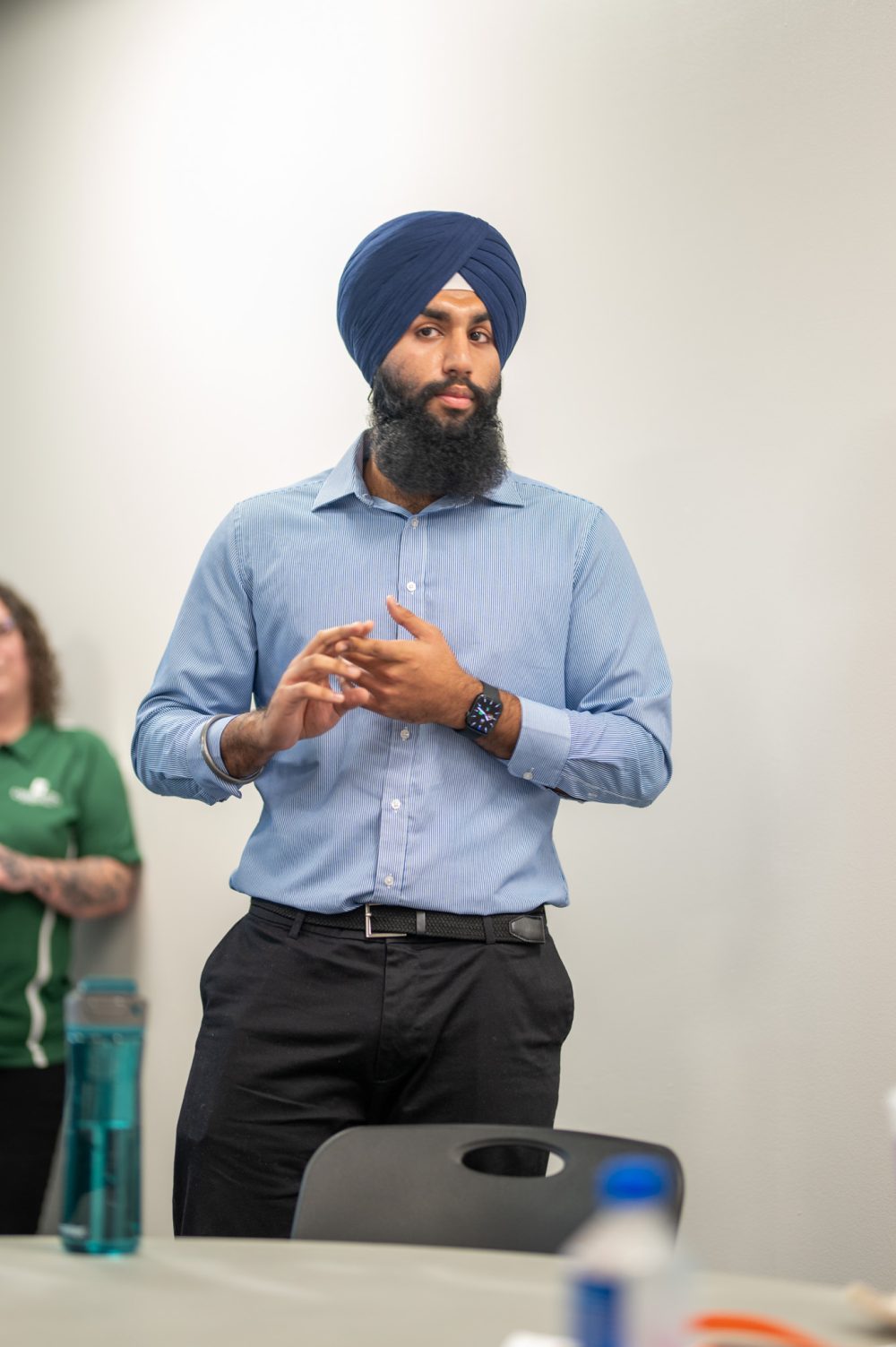
Japjot Singh: University College
| “Let’s say if you have to put a screw into the wall, would you rather use a screwdriver or a power drill? AI is like a drill, it’s more efficient than other tools, but it still needs a human to get the job done.”
Japjot Singh, a senior computer science major with a concentration in data science, created a proof of concept for a dynamic University College degree planner that personalizes an eight-semester plan for students — the “holy grail of advising.”
The standard eight-semester plan typically doesn’t work for students with transfer credits, minors or out-of-sequence courses, factors that affect enrollment and costs. Singh used Google Gemini and Microsoft Copilot to generate an editable Google Sheet for student use. Although the agent did not produce consistent results, particularly in cases with multiple majors and minors, Singh is confident that testing, validation and progression of the tools will lead to a usable product.
Singh’s relationship with AI began in high school where he saw the technology’s potential to help deepen understanding, serving as a “personal professor.” He teaches workshops on AI fundamentals, safe use and practical application at Making Future Better, a small, online nonprofit focused on AI literacy and demystifying AI for people. His pupils have included religious leaders, elderly community members and staff at the Carolina Refugee Resettlement Agency.
“It was really fascinating to see Japjot wrestle with AI to achieve our goals,” said John Smail, project supervisor and professor of history. “There is clearly huge potential in this project, but Japjot was constantly working to keep the AI agent inside the guard rails.”
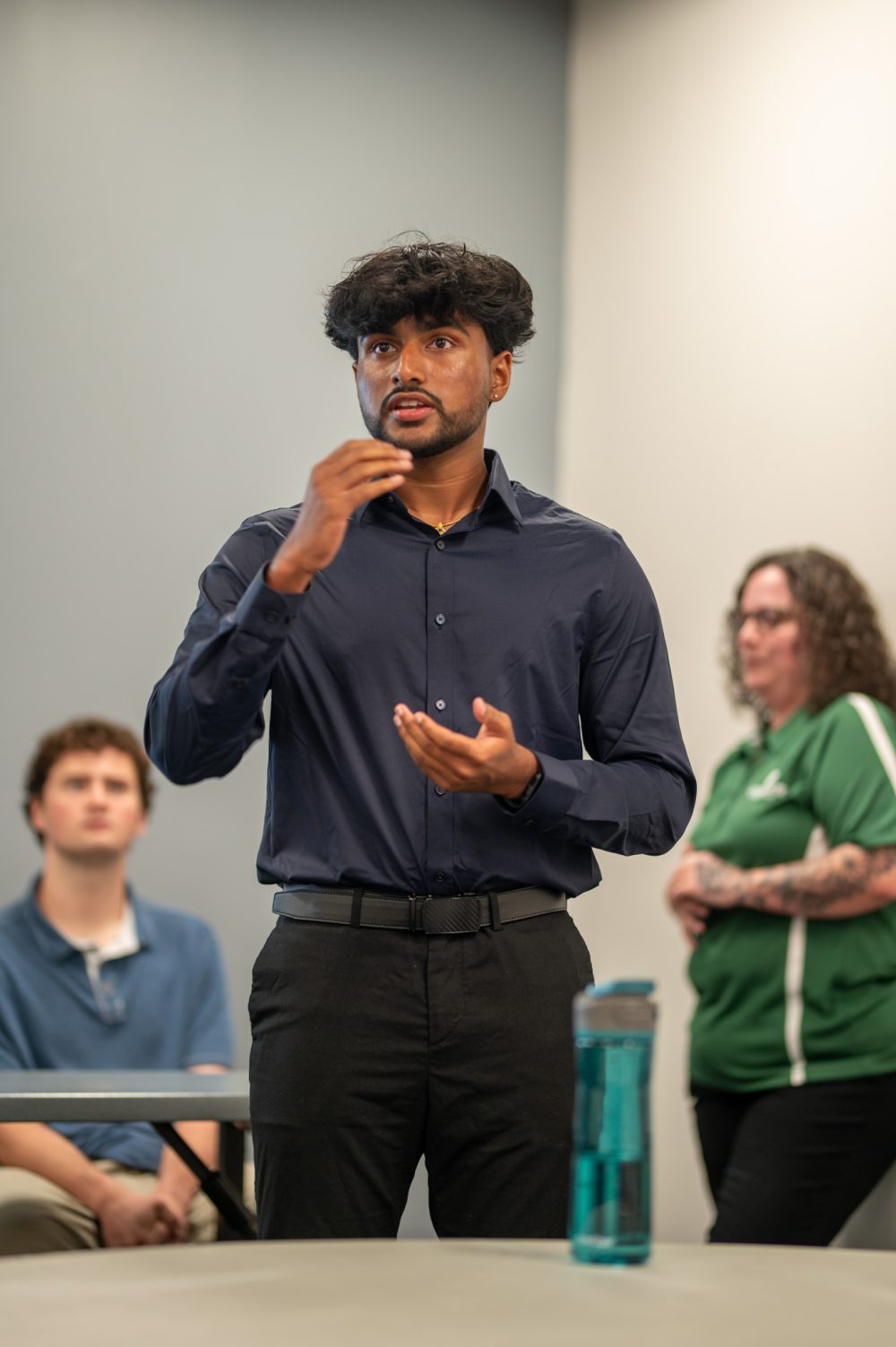
Vasista Vegesana: Klein College of Science
| “The biggest win was the amount of time the new product saves. At the end of the day, time is money; the hours we spend should result in something useful.”
Vasista Vegesana, a third-year computer science major with a concentration in AI, robotics and gaming, worked with the Klein College of Science to identify lapsed salary by position number, reconciling the amounts in a report and identifying the source of the lapsed amount.
Identifying lapsed funds requires time-consuming, manual report formatting and comparison. Vegesana created a Gem that performs the lapsed employee payroll calculation required by business officers, eliminating a step in the process, while ensuring accuracy. Vegesana said to achieve this he needed to produce a 20-page prompt and approximately 20 iterations, plus human validation.
While the project resulted in some efficiency gains for the College of Science, it shows potential for further scaling to other calculation units across campus. Key to continuing the work, according to Vegesana, is to create a hybrid approach that integrates a human workflow into the process rather than trying to offload all the work to AI.
“The meetings with Vasista emphasized AI’s potential to facilitate ongoing processes in our College’s functions,” Bailey said. “My work with Vasista also opened my eyes to the limitations of AI and how we are still building the knowledge to culminate GEM usage.”
Trailblazing Niners
While there were limitations to the University approved AI models, the inaugural cohort of student AI fellows were able to find creative solutions and prove LLMs can be deployed across campus departments to save employees time and energy. Many of the projects laid the groundwork for future iterations and are scalable to encompass more academic and administrative operations.
“I am incredibly proud of the student AI fellows and the trailblazing work happening at UNC Charlotte; we are forging new ground by placing our students at the heart of our AI strategy,” said Beth Rugg, assistant vice chancellor for client engagement and chief workplace AI officer for the Office of OneIT. “By pairing tech-savvy Niners with visionary leaders, we’re proving that adopting new technology doesn’t have to be daunting or expensive. As these partnerships demonstrate, everyday tools—powered by curiosity and collaboration—are more than enough to spark meaningful change.”
By Alex Reynolds
Photos by Alex Reynolds