
The Tick Hunters
UNC Charlotte research team expands tick surveillance through field work and lab expertise to improve public health in Mecklenburg County
KEY TAKEAWAYS:
- UNC Charlotte researchers capture ticks from local nature preserves and test them for pathogens, informing and protecting Mecklenburg County Parks and Recreation staff and visitors.
- Associate Professor Rafael Vieira partners with the county to expand an annual tick checkup into a robust operation with plans to cover 42 area parks and greenways.
Story by Pam Davis, Video by J.D. Angel, Photos by Kat Lawrence
Protected yet perspiring inside their bright white cotton jumpsuits, four UNC Charlotte students scan the tall grasses for tiny terrors.
It’s 90 degrees in the open fields of Cowan’s Ford Wildlife Refuge in northwestern Mecklenburg County, North Carolina. All sun, no breeze. The students — on this day it's one from public health, two from biology and one recent biology graduate — are hunched over scanning the grassland.
They are hunting ticks, parasitic arachnids about the size of apple seeds. Their hunting gear amounts to nothing more than a handmade flag — one square meter of white flannel attached to a wooden pole.
The students look like breadsticks poking out of a leafy, green salad as they gently sweep their flags back and forth across the foliage in hopes the ticks will attach to the fabric. This flagging method is one of the main ways to capture environmental ticks, which can’t jump or fly.
To find their prey, some tick species lie in wait until they sense body heat, breath or vibrations. When a potential host walks by, they reach out and stealthily connect. The victim doesn’t feel a thing.
You may never know ticks have securely anchored into your skin to feed on your blood until it’s too late. And they pack a mighty punch. They carry pathogens that may cause human disease such as Rocky Mountain spotted fever, Lyme disease and ehrlichiosis among others.
Advancing community health
Every week, rain or shine, hot or cold, members of UNC Charlotte’s tick surveillance team return to the same spots in the same nature preserves to collect ticks using the flagging method and record weather conditions, specifically humidity, temperature and wind speed.
Since April 2025, under the direction of UNC Charlotte Public Health and Health Administration Associate Professor Rafael Vieira, public health and biology students have been collecting, identifying and testing ticks for pathogens that cause tick-borne diseases in humans and animals.
Until now, Mecklenburg County has relied on tick data compiled by outside groups that visit the area once a year to conduct field sampling. This type of sampling, which targets micro-geographical zones in a single day, doesn’t accurately represent which tick species are found throughout the county and at what density.
“Pinpoint sampling can’t measure the real public health risk,” Vieira said.
To collect better tick data on a regular basis, Vieira is partnering with Mecklenburg County Park and Recreation’s division of Nature Preserves and Natural Resources to conduct tick surveillance at Cowan’s Ford Wildlife Refuge and Latta Nature Preserve in Huntersville and eventually at 42 parks and greenways across the county.
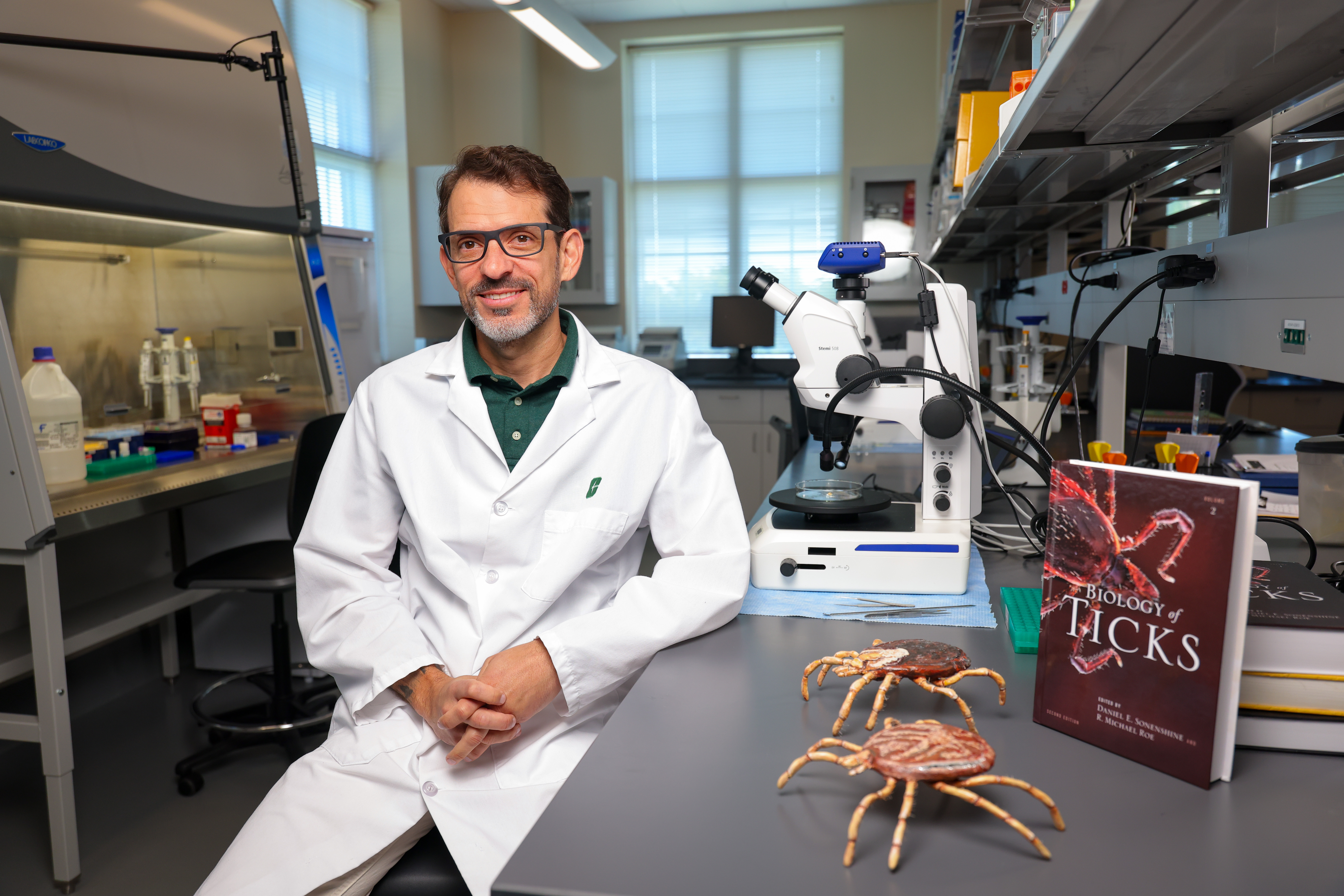
Associate Professor Rafael Vieira is leading a monitoring project to measure the risk of tick-borne diseases in Mecklenburg County, North Carolina.
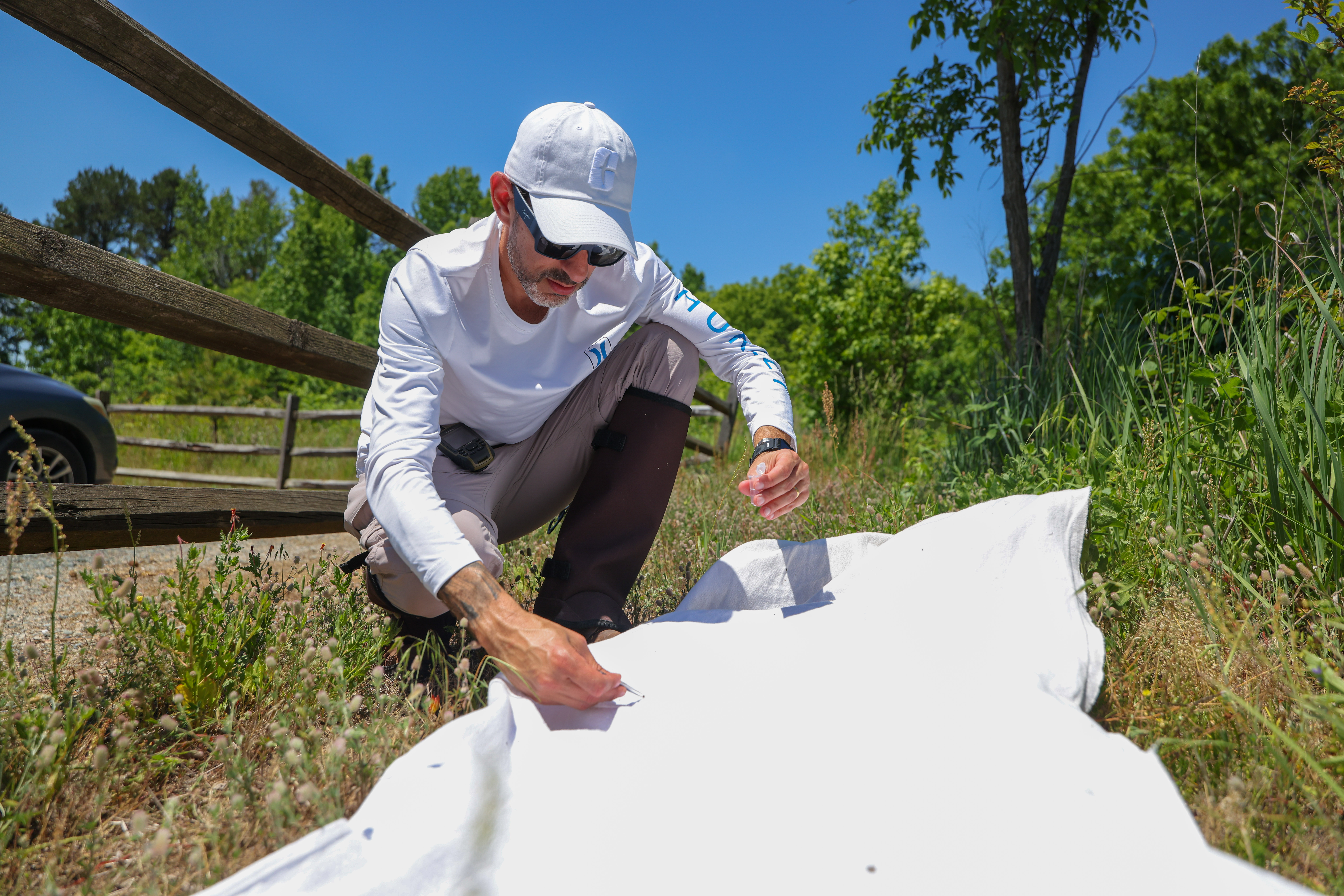
Vieira and his research team are currently collecting ticks at Cowan’s Ford Wildlife Refuge and Latta Nature Preserve in Huntersville, North Carolina.
The natural resources staff said Vieira’s research will give the county more insight into the effects and potential benefits of their conservation efforts and management practices as well as advise them in future nature preserve management decisions.
“It’s great to have a better understanding of the abundance and diversity of tick species on our properties not only for public knowledge, but also for staff health concerns,” said Abby Fry ’21, ’22 M.A., a natural resources specialist with Mecklenburg County.
Fry, who holds a bachelor’s degree in biology and a master’s degree in anthropology from UNC Charlotte, is no stranger to ticks. It’s a job hazard.
“I’ve been bitten three times in the past two months while doing small mammal surveys,” she said. “I find at least one tick crawling on me every time I’m out there. We find ticks almost every time we’re in the field, especially in the grassland at Cowan’s Ford Wildlife Refuge. They’re obviously very abundant in that area.”
In addition to hunting ticks in open spaces, Vieira has teamed with Mecklenburg County Natural Resources to collect ticks and tissue samples from harvested deer and is planning to collect ticks and draw blood from live rodents and other small mammals during the county’s wildlife management pursuits.
“Dr. Vieira is amazing for the work he’s done to build local connections and provide opportunities for his students to do research in their own community,” Fry said. “I think it’s so important for universities, nonprofits, local governments and other agencies to collaborate and work together towards a common goal.”
Student-powered surveillance
Vieira’s goal is to run a long-term monitoring project to measure the risk of tick-borne diseases in Mecklenburg County in hopes the findings will translate into public health strategies.
By providing localized data on where and when ticks are most active and which pathogens they are carrying, residents will be able to better protect themselves and their pets while outdoors.
The most prevalent ticks his team has found so far are the Gulf Coast tick (which can transmit pathogens that may cause spotted fever rickettsiosis) and the American dog tick (which can transmit ehrlichiosis and Rocky Mountain spotted fever). They’ve also found some lone star and Asian longhorned ticks and are evaluating their potential impact in the region.
Vieira enlists students as major contributors to the research project, many of whom come from the College of Health and Human Services, which offers degrees in public health, epidemiology and health systems management.
“I want the students to develop a passion for the full spectrum of this research, from the messy reality of the field to the precision of the lab and the critical task of translating the findings to our community,” Vieira said.
Some of the students who’ve recently participated on Vieira’s tick team or are current members include recent Master of Public Health alum Jackson Plemmons ’26 whose interest in vector surveillance was sparked after he conducted mosquito surveillance during an internship with the Cabarrus Health Alliance. This fall, he begins a Ph.D. in Epidemiology at the University of South Carolina’s Arnold School of Public Health.
“While working on the project, I expected standard epidemiology, but I was regularly exposed to a blend of field biology, veterinary science, bioinformatics and public health.
When you are working at the critical intersection of animal, human and environmental health, it is absolutely vital to break out of silos and operate across all of those disciplines simultaneously.”
Jackson Plemmons ’26
Public health undergraduate Ieman Khan joined the tick team this summer via the University’s Office of Undergraduate Research. As an aspiring physician, Khan wanted a research opportunity that combined disease prevention and community health.
“The project directly connects to topics I'm studying as a public health major, including disease surveillance, epidemiology, prevention and community health.
I’m applying classroom concepts in the real world and learning how research can influence health outcomes.”
Ieman Khan, undergraduate researcher
Involved since the project’s inception, Md. Mashfiq Hossain Khadem, who’s pursuing a Ph.D. in Epidemiology, had been involved in multiple research projects focused on vector-borne and zoonotic diseases. Participating in the tick sampling gives him the opportunity to hone his wet lab skills alongside his analytically heavy coursework.
“I enjoy being outdoors exploring different habitats while collecting data that has direct public health importance. It’s rewarding to know that every sample we collect contributes to a better understanding of local tick populations and disease risks,” Khadem said.
For the students, Vieira follows the CDC’s biosafety guidelines for personal protective equipment. Hence the jumpsuits. Ticks are easily spotted on the white fabric and can’t break through the thick cotton. And for an added layer of protection, he requires the students strap on gaiters in case they encounter snakes.
Safe yes, but in the summer, sweltering.
“My strategy is to dress in light, highly breathable layers beneath the white jumpsuit, while ensuring that I stay constantly hydrated during long sampling hours,” said biology alum Anton Nikolaev ’25 who is maintaining his spot on the tick team while preparing to take the Medical College Admission Test. “With my sun hat on and the jumpsuit zipped up, I always joke that I look less like a scientific researcher and more like a beekeeper who got lost in the woods.”
“The flagging method for catching ticks is slow and methodical, so I learned to treat it like a marathon, not a sprint,” Plemmons said. “I took my time, paced my walking, and carried plenty of water. It also helped to build in quick recovery breaks to cool off in the shade under a tree when needed.
Next steps: From field to lab
In the field, the students use tweezers to remove each tick from their flags and then gently place them into vials filled with ethanol.
“In the summer heat, when you’re wiped out and having a hard time maintaining your focus, it takes a lot of discipline to keep your eyes locked on the canvas looking for nymph-sized creatures,” Plemmons said.
As of the third week of June 2026, the team had captured nearly 500 ticks from Cowan’s Ford Wildlife Refuge and Latta Nature Preserve combined.
From the field, the vials are taken to Vieira’s Zoonotic and Vector-borne Diseases lab in UNC Charlotte’s CIPHER Center. Because summer is peak tick season, there are tons of ticks but not enough time to test them.
The students identify each tick under a stereomicroscope and later in the year, when there are fewer ticks to collect (ticks go dormant during prolonged freezing spells), they will hunker down to extract the ticks’ DNA and test it for dangerous pathogens.
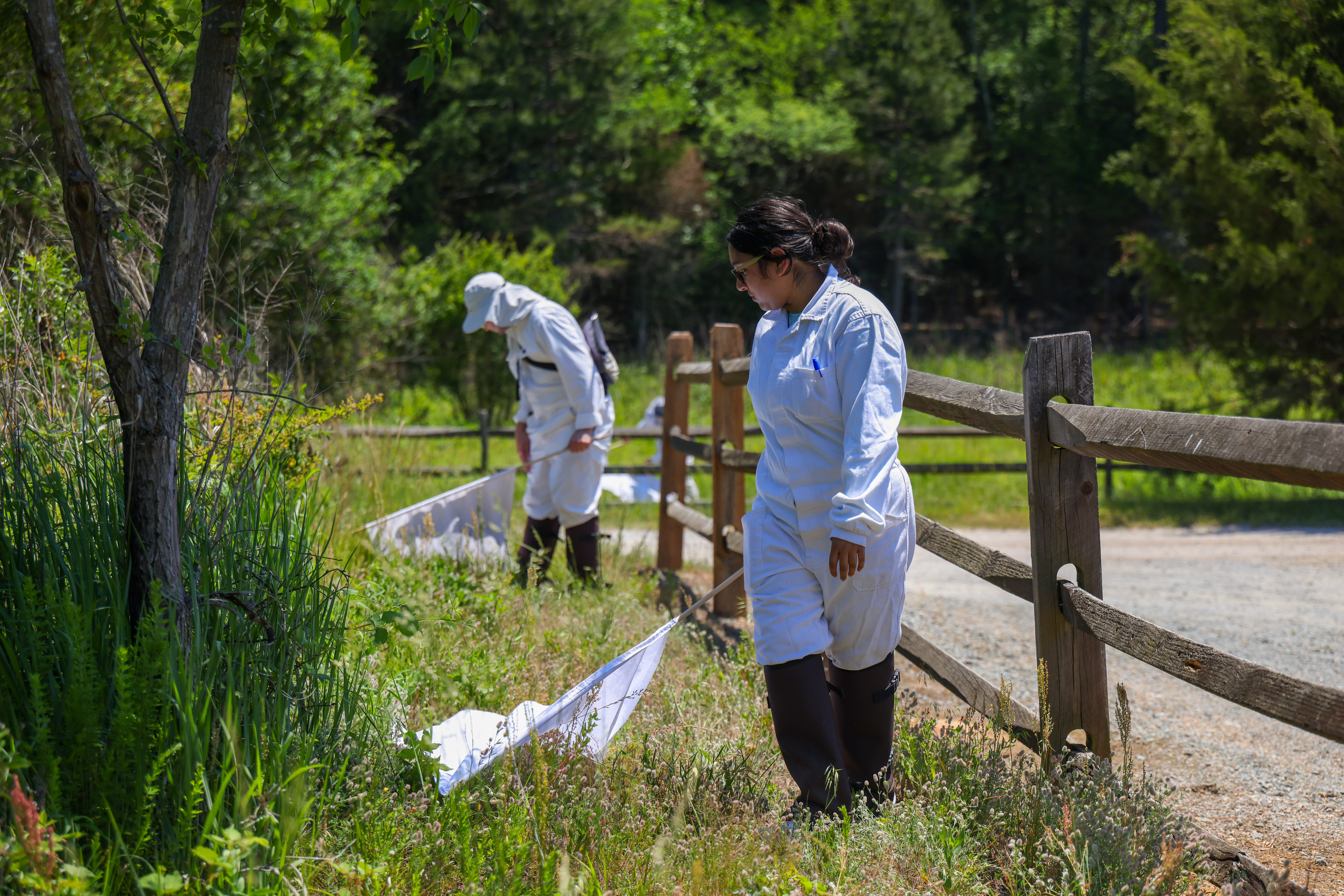
Students capture ticks using the flagging method where they sweep a white cloth across the foliage which causes the ticks to attach.
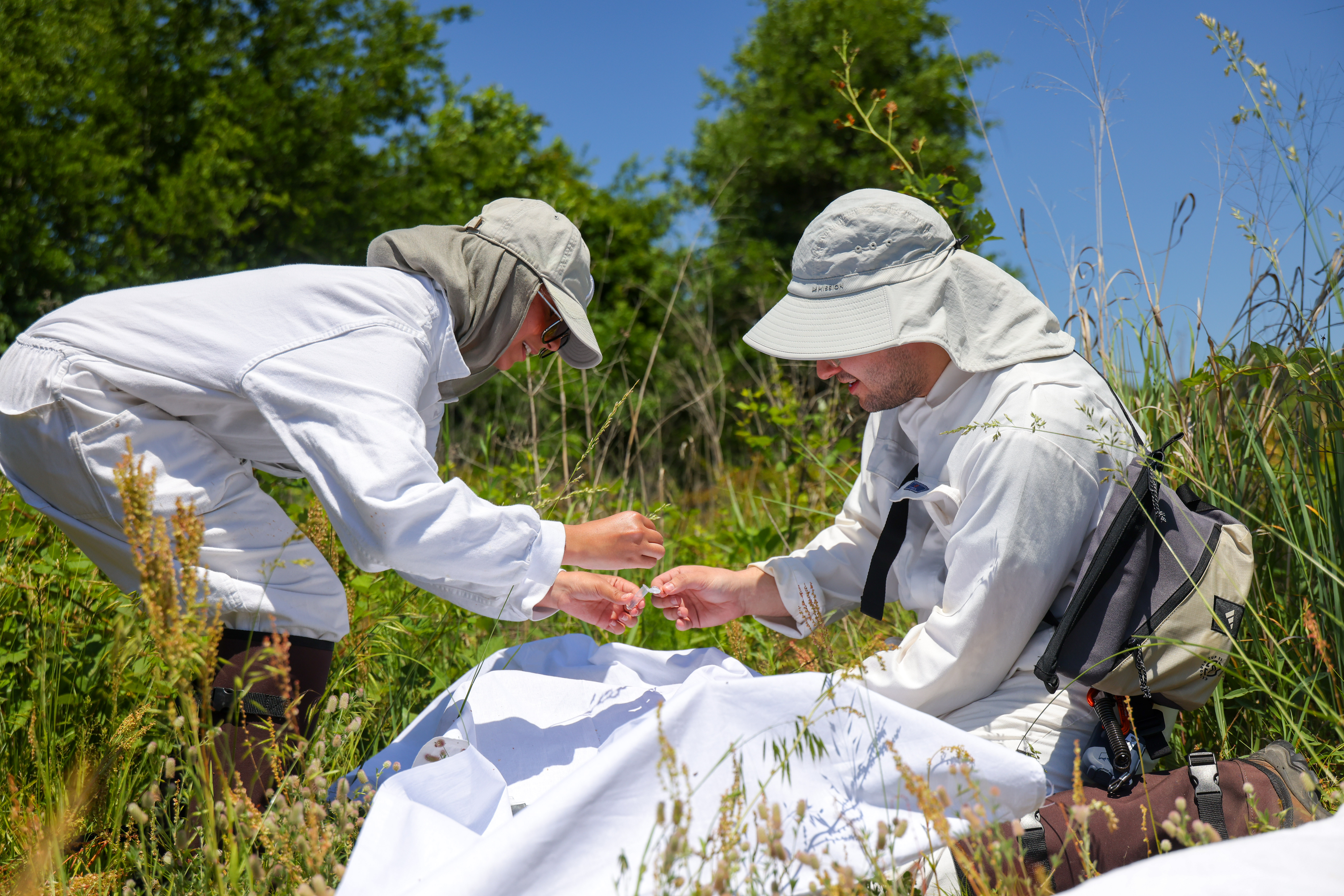
Every tick counts. The students place each captured tick into plastic vials filled with ethanol.
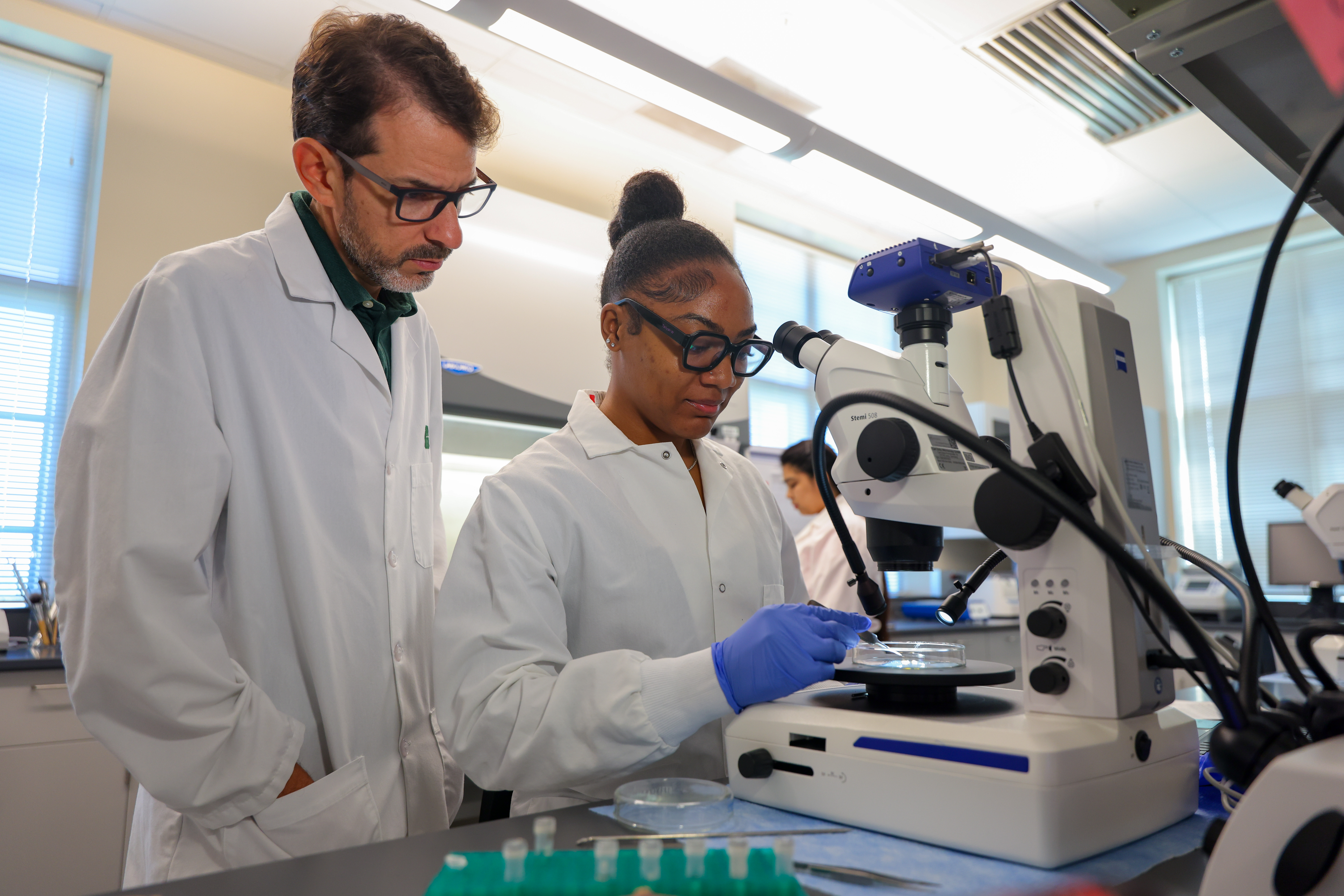
In the lab, Vieira teaches students how to identify ticks under a stereomicroscope.
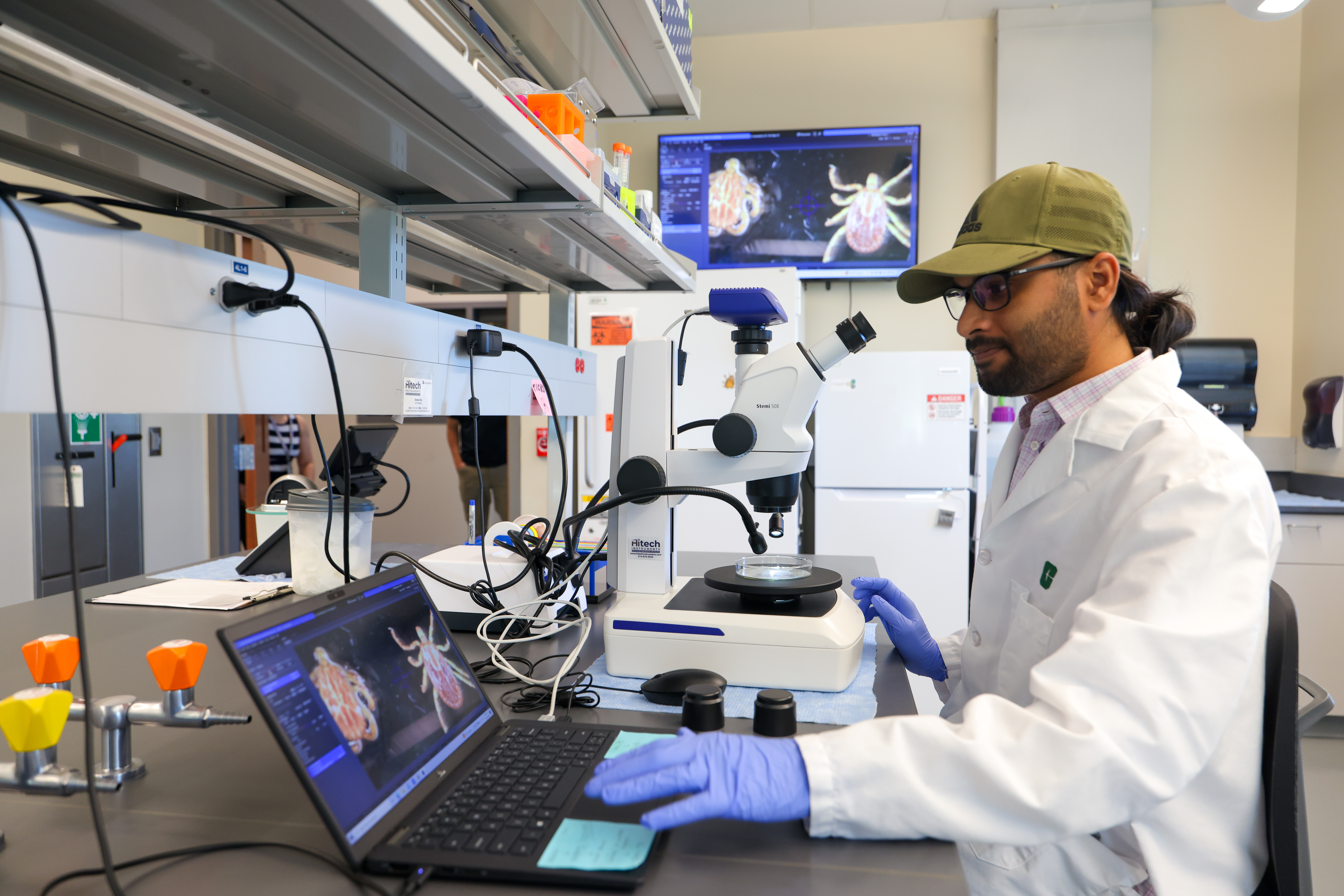
“This project has provided me with invaluable, hands-on experience in field surveillance, taxonomic identification, sample processing and robust research methodologies,” Khadem said. “These skills will be foundational for my future career as an epidemiologist researching the molecular epidemiology of emerging infectious diseases.”
The project is just getting started. More data needs to be collected and more areas across the county need to be sampled to get the full picture of which ticks are in the area and what diseases they can spread.
“Research depends on reliable data, so attention to detail is extremely important. I've learned even small mistakes can affect results,” Kahn said. “I’m seeing how field work and laboratory work come together to answer important questions.”