Simulation-based learning enhances classroom experience for nursing students
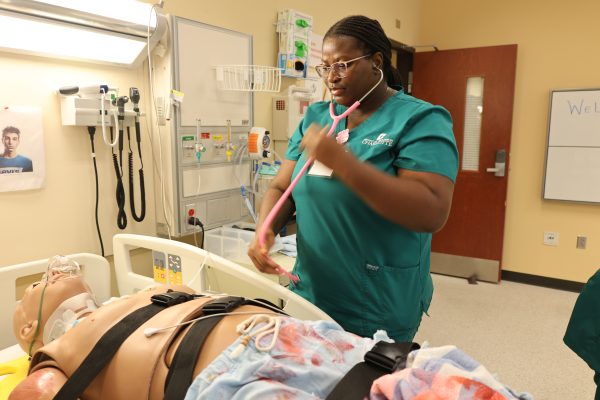
Novant Health recently announced a $500,000 investment in the UNC Charlotte School of Nursing’s simulation labs. The state-of-the-art labs give students hands-on experience as they learn and master nursing skills, medical equipment and the latest technology.
Melinda Pierce, simulation and interdisciplinary practice coordinator and senior lecturer in the School of Nursing, shares how simulation-based learning prepares nursing students to enter the profession ready to work with confidence from the first day of their careers.
What is a simulation lab and what do students learn in the labs?
In the simulation labs, we create an environment that duplicates what students would see in a hospital with a live patient. Except in the bed, there is either a high-fidelity patient simulator, which is like a life-size robot that’s computer controlled. Or it could be a live actor or actress who has been trained to portray a patient, depending on the intended learning outcomes and the student’s level.
What types of simulations are nursing students exposed to?
We can replicate any kind of a clinical experience our students are going to encounter in a safe, controlled environment. Imagine if you were a student nurse and you had a pediatric patient and you made a mistake that could be life changing for the patient and the student. In the simulation lab, we can allow those mistakes to be made because we consider mistakes as opportunities for enhanced learning.
What motivates you in your work?
I’m motivated by what I see reflected in the learning of the students and how they go into their clinical practice more confident, more competent and ready to work as a bedside nurse and keep patient safety at the forefront of their practice.
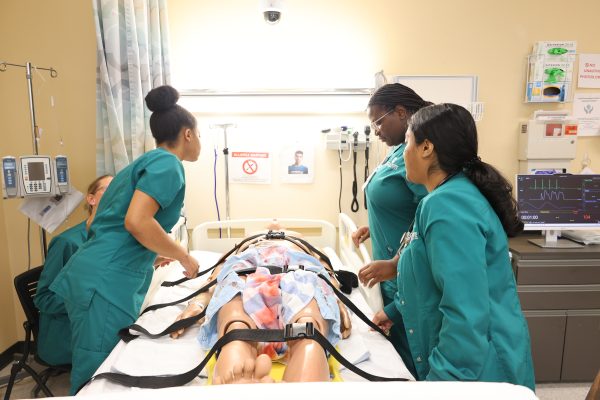
How does the experience in the simulation lab impact students in the live clinical setting?
During a simulation, students are able to get over their nervousness and learn how to talk to a patient simulator the way they would to talk to a live patient. Then we take them into the clinical setting and they’re able to go in on day one with the confidence to talk to that patient, start looking at orders and understand what’s in the computer because we’ve done that in the simulation lab before we go into the hospital.
Novant Health recently announced a financial investment to support UNC Charlotte’s nursing simulation labs and expand certification opportunities for faculty and staff in simulation-based education. In addition, the investment will support campuswide faculty and staff health and well-being efforts. What was your reaction when you first learned this news?
First I had to pinch myself to make sure I wasn’t asleep and having a really good dream. Then I was just so incredibly grateful and appreciative that they believe we can affect both hospitalized patients and community health through their investment.
Personally, Novant Health’s gift touches my heart because I graduated from its predecessor’s school of nursing. The only other nurse in my family, my Great Aunt Ruby, graduated from the same school in 1933. It’s hard to describe the warm, full-circle feeling I experienced when I learned of Novant Health’s generous gift.
Why are clinical partnerships so important to building a successful nursing program?
Without our clinical partners, we couldn’t do what we do. We depend on them to provide our student nurses clinical space where they can experience the different specialties within nursing – and to partner with us for research efforts.
Our clinical partners also employ our students when they graduate. The hope is if a student has done well in clinical rotations in that facility, they’ve noticed and they want to retain that student as one of their new graduate nurses.
Written by: Melinda Pierce and Andrew James