Recovering Hidden Histories
Helen Davies uses data science to unlock new insights from medieval texts
Story by Emily Hamm, photos by Kat Lawrence/Courtesy of Helen Davies, video by Harrison Hieb and Ozzie Hernandez
Medieval manuscripts and data science may seem worlds apart, but Helen Davies has built her career at the intersection of the two. So when she saw a job posting for a joint appointment with UNC Charlotte’s Department of English and the School of Data Science, something clicked.
“This opportunity felt like a way to finally feel at home in my research instead of trying to pull together different departments or methodologies,” said Davies.
For two decades, her research has stretched across methods and fields, including Latin, anthropology, medieval studies and digital humanities. At the University of Colorado Colorado Springs, where she served as an assistant professor of digital humanities from 2020 to 2025, she co‑founded and co‑directed the UCCS Center for Research Frontiers in the Digital Humanities, a hub for scholars who live, as she puts it, “in these academic in-between spaces.”
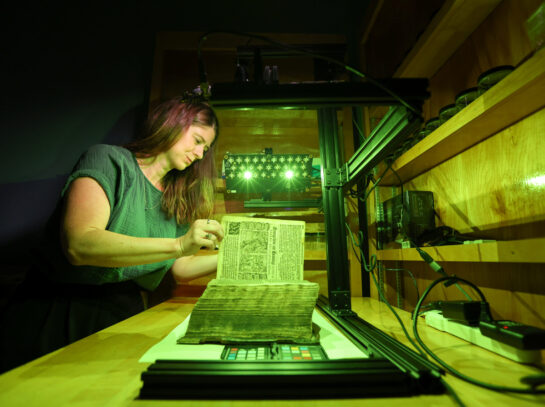
“My work has never fit neatly into a single discipline, but it’s all driven by the belief that history deserves to be seen, preserved and protected.”
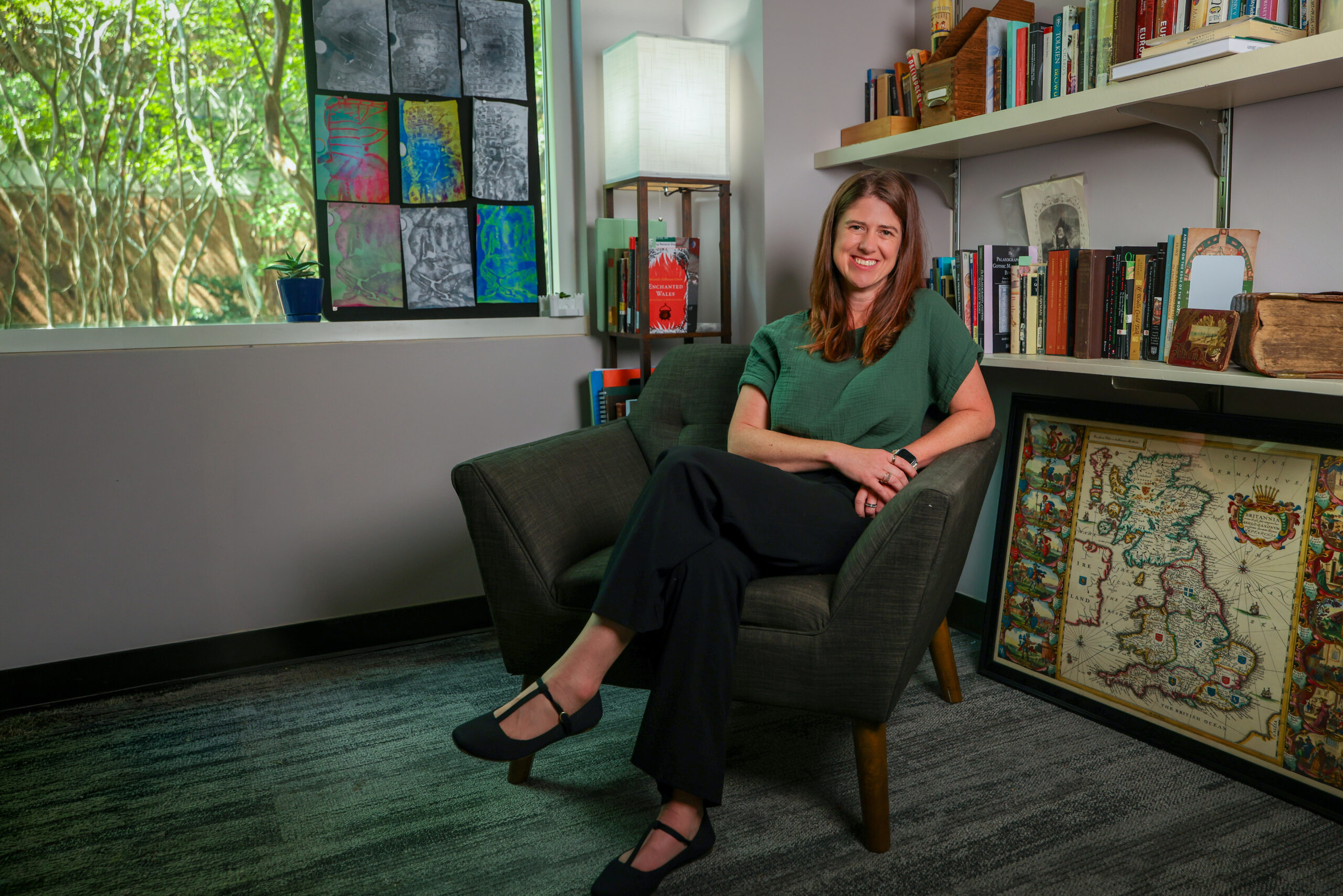
Helen Davies
Now, after completing a full year at UNC Charlotte and earning a Gambrell Faculty Fellowship to explore artificial intelligence and digital literacy in the Charlotte region with two other researchers, she feels fulfilled surrounded by colleagues who understand the multifaceted nature of her work.
“Being able to not only do interdisciplinary research, but being encouraged to do it and have that built into the structure of my job, is a real treat,” Davies said. “I’ve found an academic home. In some ways, ‘home’ sounds mundane, because most days I think, this is so much fun.”
By combining traditional research methods with emerging technologies, Davies is uncovering new insights while creating tools and resources that expand access to research for scholars and communities.
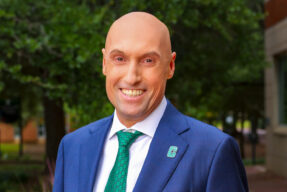
“Helen Davies’ scholarship – which bridges medieval studies, digital humanities and data science – exemplifies what makes CHESS distinctive: a commitment to humanities research that preserves human stories and embraces innovative methods. She demonstrates clearly how this work can generate knowledge, strengthen communities and create impact well beyond UNC Charlotte.”
Chris Boyer, Dean of the College of Humanities & Earth and Social Sciences.
Illuminating the past, reimagining the future
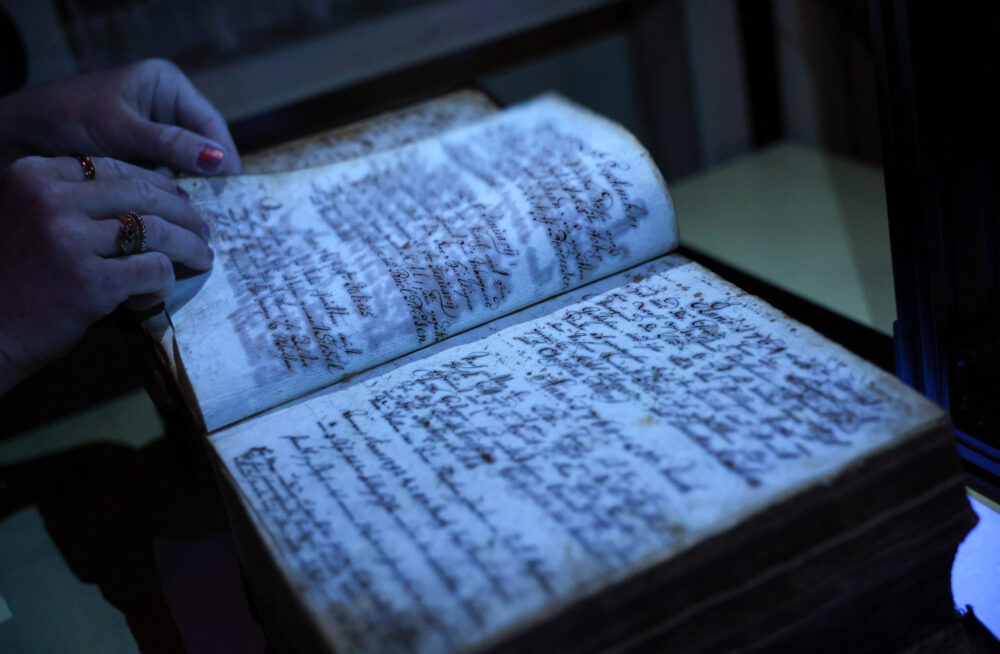
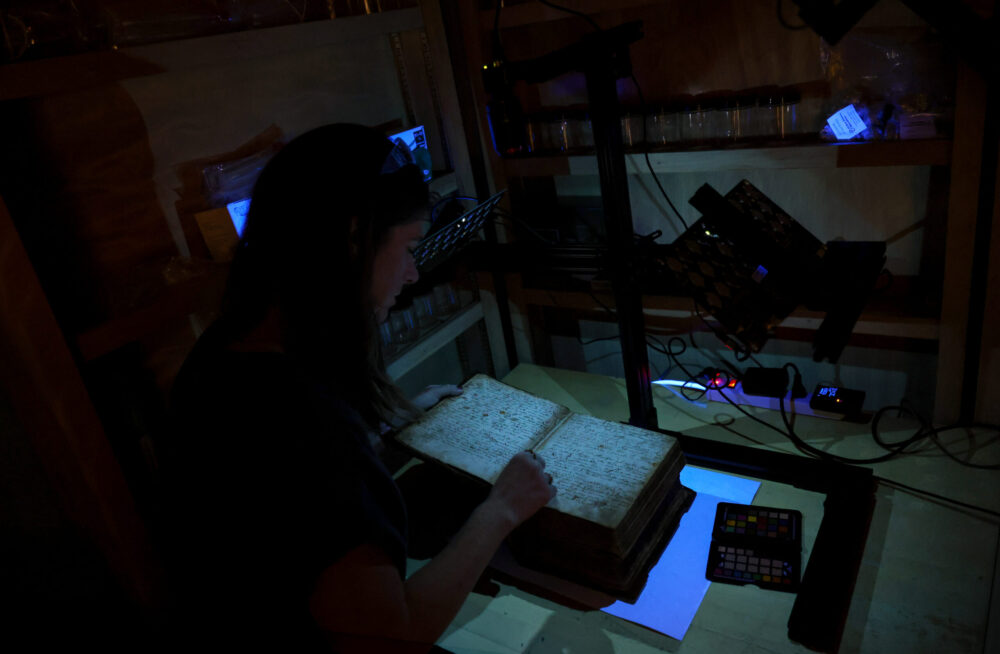
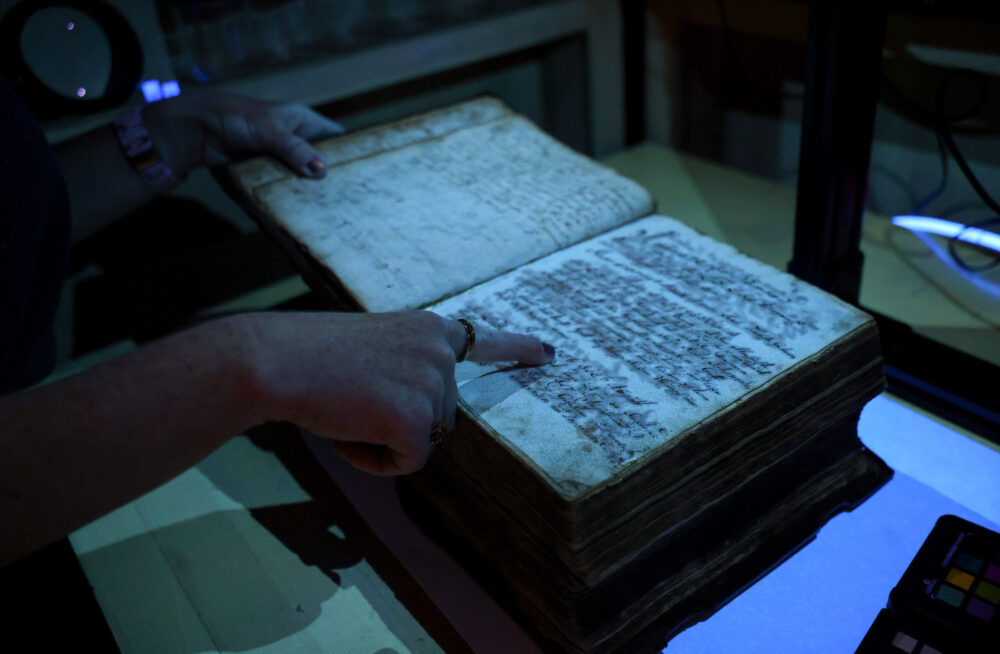
A rare book discovered in a German market by Kyle Huskin of the University of Hamburg. Knowing Davies was seeking rare book materials for students to study, Huskin mailed the volume to her as an unexpected gift.
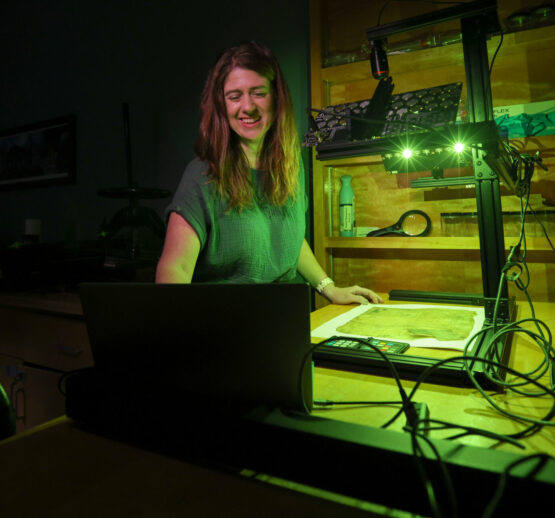
Davies’ research centers on multispectral imaging, a technique that uses specialized cameras and light to recover damaged, erased or illegible text.
The technology traditionally has been used on ancient or medieval manuscripts, but Davies is also interested in what she calls “everyman history,” the documents and stories that are overlooked, damaged or excluded from archives. She believes that imaging should be accessible, portable and community‑driven so local historians can conduct the work that is important to the historical record of their region.
While visiting an archive in Boulder, she examined manumission documents, the records granting freedom to enslaved people, where names had been scratched out. Using her imaging system, she was able to recover some of them.
“That experience reinforced how important it is to help people recover histories that have been physically erased,” Davies said. “You never know what you have until you can read or see it, or whether it’s going to have historical or emotional value.”

Teaching across centuries and disciplines
In the classroom, Davies’ teaching spans medieval literature, digital humanities and data‑driven cultural analysis. Last fall, she taught digital humanities in the Department of English.
“I would love for data science students to have more humanities exposure and for humanities students to understand more of the data side,” she said. “Bringing the two together gives students both the critical thinking skills to ask meaningful questions and the technical skills to find new ways of answering them.”
Her courses also include The Early North Sea: Vikings, Irish and English Literature and Medieval Travel Literature. She uses the texts not only to explore storytelling and cultural exchange, but to show students how different worlds speak to one another across time.
This summer, Davies was awarded a seed grant from the School of Data Science to develop accessible software for processing multispectral imaging data. Together, Davies and co-principal investigator Marco Scipioni with Daniel Sanky, a data science Ph.D. student, and Aubrey Chapman, a second-year English master’s student, helped finalize the Python code that powers Davies’ imaging software and tested its usability across disciplines.
“Going into this project, I didn’t know much about manuscripts or imaging them. I would have been happy just focusing on the manuscripts, but the experience pushed me to explore the technical side of imaging and interdisciplinary work with the data science team,” Chapman said. “It gave me a chance to dip my toes into the digital humanities and deepened my interest in manuscripts.”
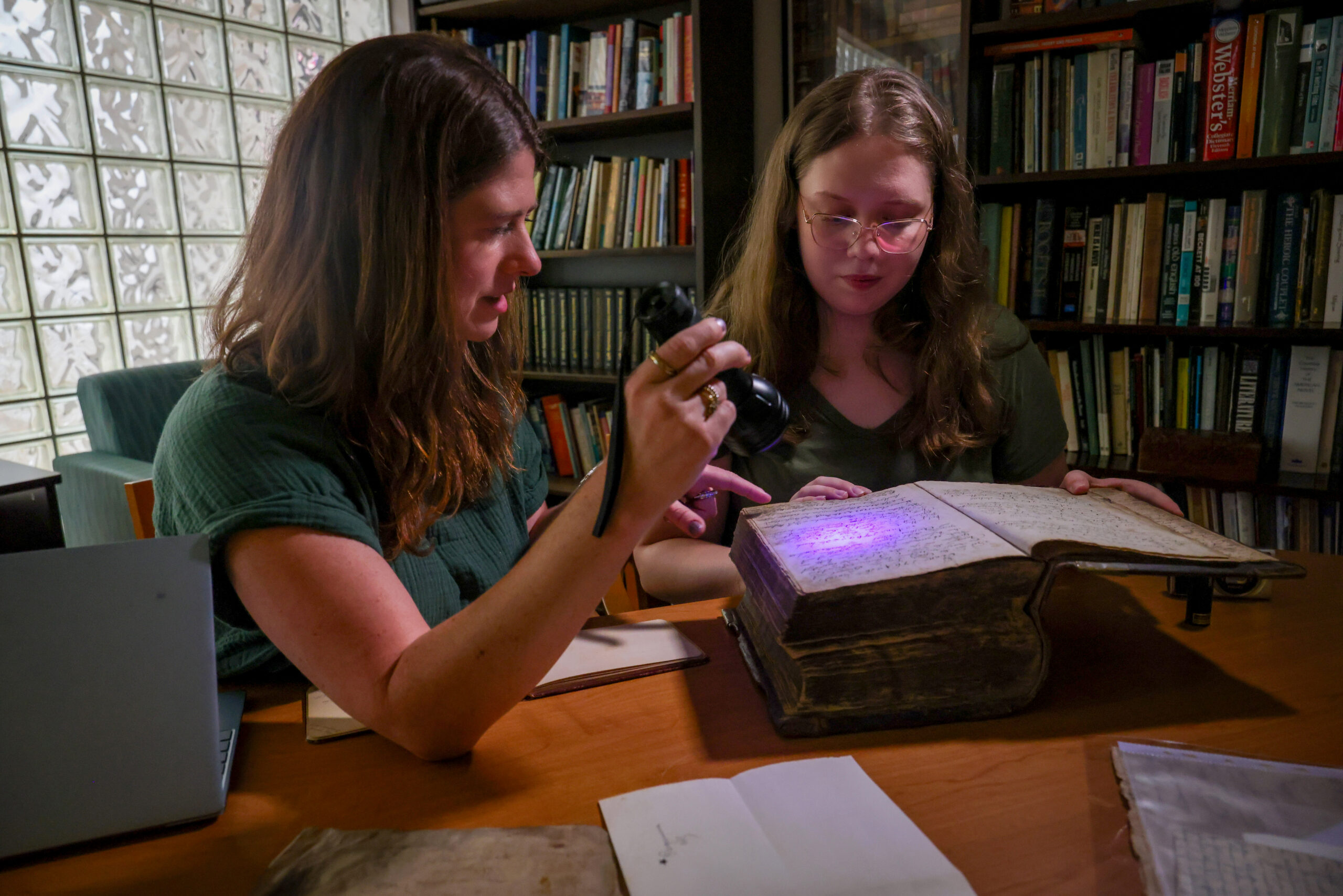
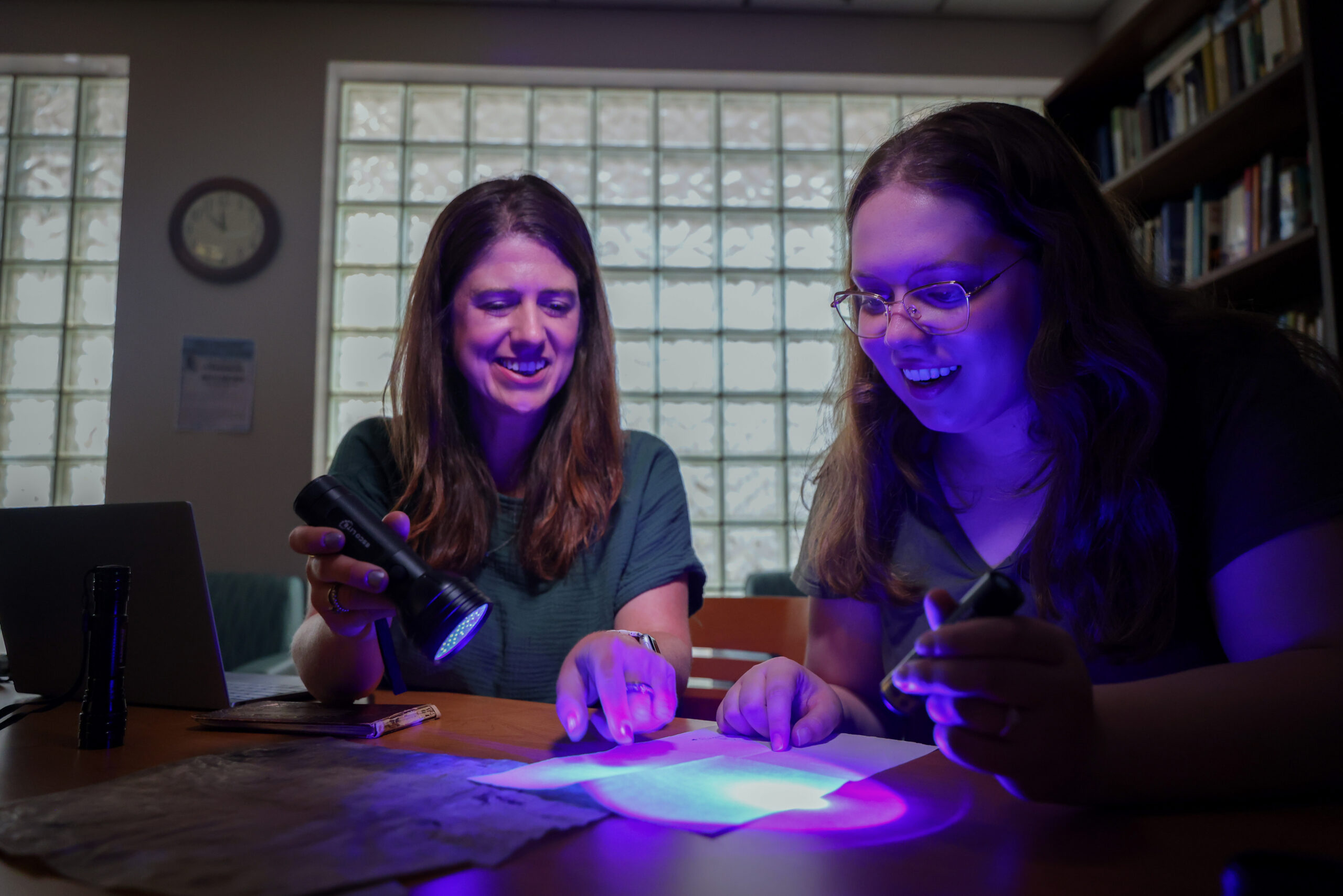
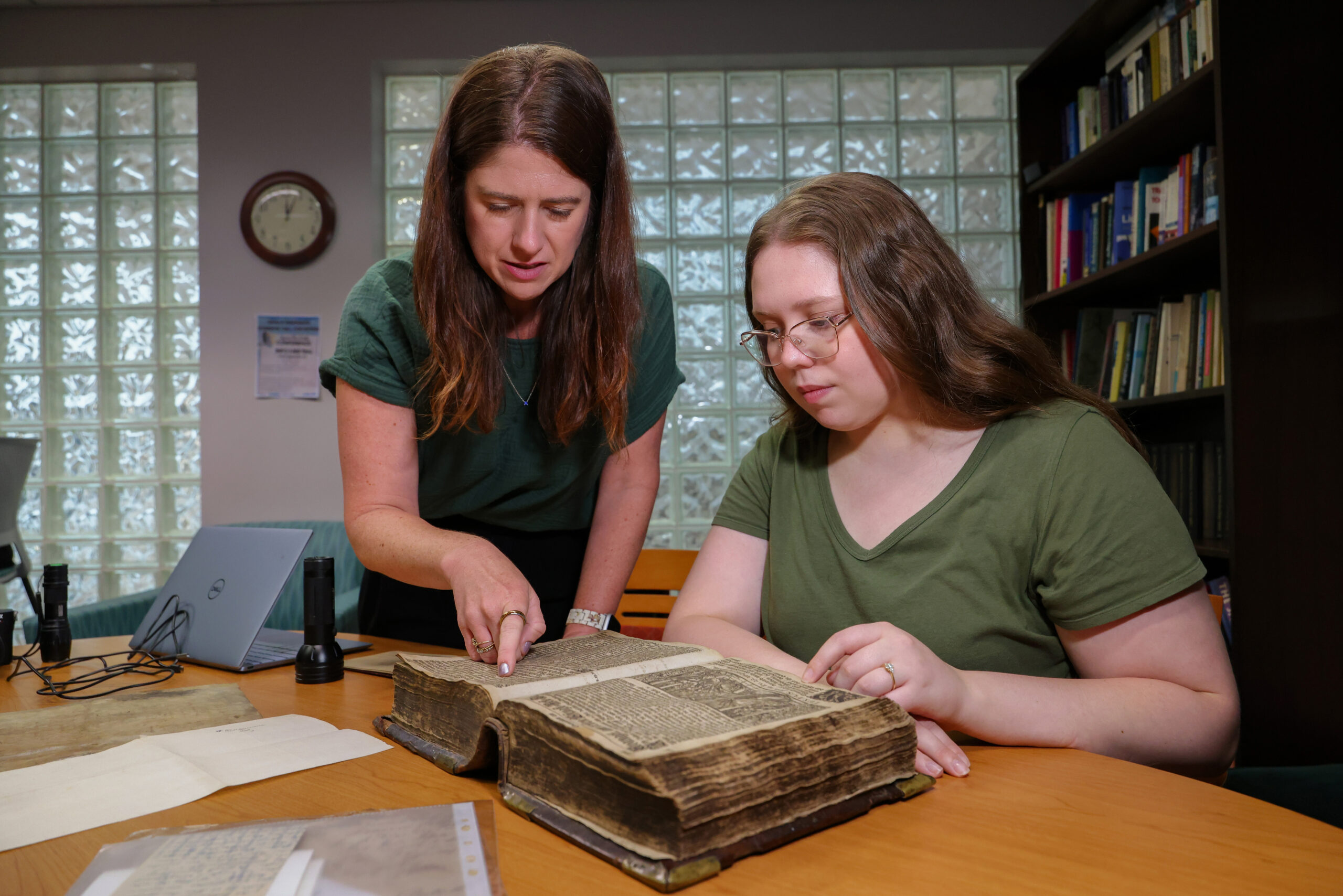
With an undergraduate background in English, German and history, Chapman came to UNC Charlotte looking to refine her interests while continuing to explore across disciplines. Davies’ Early North Sea course introduced her to multispectral imaging and a new avenue for research.
Building tools for communities
It is increasingly important to Davies to put relatively affordable imaging technologies and digital methods into the hands of institutions and communities that hold cultural heritage materials, rather than making this research dependent on a small number of highly specialized laboratories.
To that end, she developed a portable, affordable imaging kit, which uses modified point‑and‑shoot cameras. She built a reliable digital imaging system for under $500 that fits in a coat pocket and does not require a dark room. Her goal is expanding accessibility by providing them for free, and ensuring that no prior knowledge of the technology is necessary.
“I want anyone to be able to take one of these kits into whatever archive they’re digging around in, take pictures, press a button and get a set of processed images they can flip through,” Davies said. “I don’t want to do the digital equivalent of the British Museum; I want communities to be able to record and preserve their own materials.”
Through support from a National Endowment for the Humanities grant, Davies is preparing to lead a summer institute that will train librarians, archivists and scholars from across the country to preserve materials damaged by natural disasters, neglect and the passage of time. Participants will return home with their own imaging kits. Davies also plans to adapt that model through collaborations with Appalachian communities affected by Hurricane Helene, local archives in Charlotte and historical institutions across the Southeast.
Davies also recently taught four workshops as part of the second year of the CHESS Initiative of Lifelong Learning hosted by the Independent Picture House, and has plans to build a course where students partner with local organizations to help preserve historical materials. With the “CHESS Promise,” the College’s commitment to ensuring every student has an internship, she sees real potential.
“Students would get hands-on experience, and the institutions would get some much needed support,” Davies said.
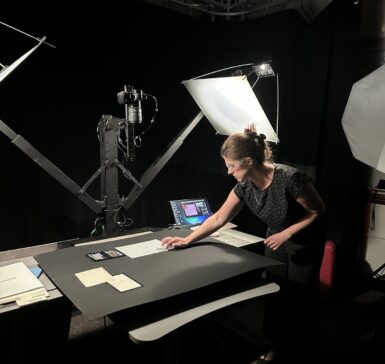
Davies traveled to the University of Illinois Urbana-Champaign in October.
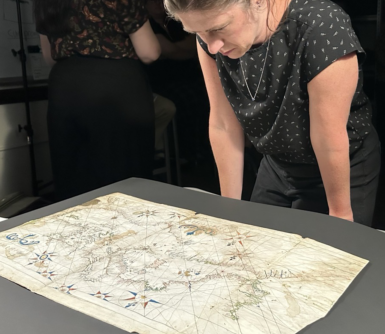
Davies examines a portolan chart from the collections of the University of Illinois Urbana-Champaign. These highly detailed medieval nautical maps were used to support navigation.
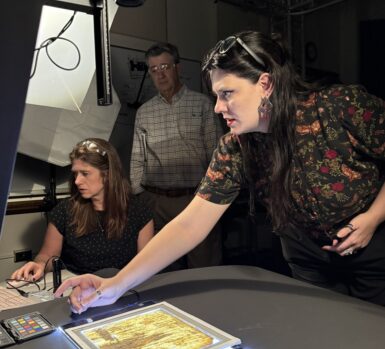
Davies and Katie Albers-Morris from the Rochester Institute of Technology conduct imaging work on a tourangeaux fragment.
A medievalist at heart
Even as her work expands into community preservation, Davies remains deeply rooted in medieval studies. She recently traveled to Germany to image palimpsested Irish materials, which are manuscripts where older texts were scraped off and overwritten.
“We know for a fact we’ve found two different undertexts so far,” she said. “Very early material, too, from around 6th–8th century AD with no spaces between words, no punctuation and one of the texts is in big Latin capitals.”
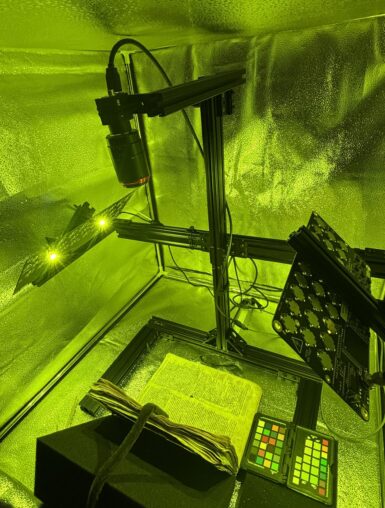
Davies traveled to Germany to conduct multispectral imaging of medieval manuscript fragments and palimpsest leaves.
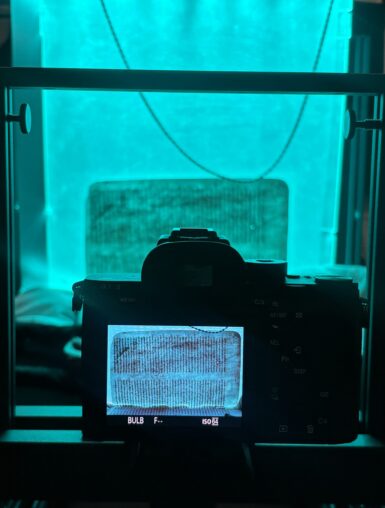
The work was completed as part of an international research collaboration with principal investigator Nicole Volmering of Trinity College Dublin and Alexander Zawacki of the University of Göttingen.
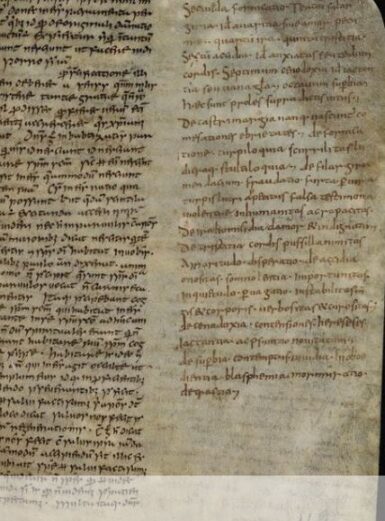
The team studied medieval Irish palimpsests dating to before the ninth century that are housed in the Baden State Library in Karlsruhe.
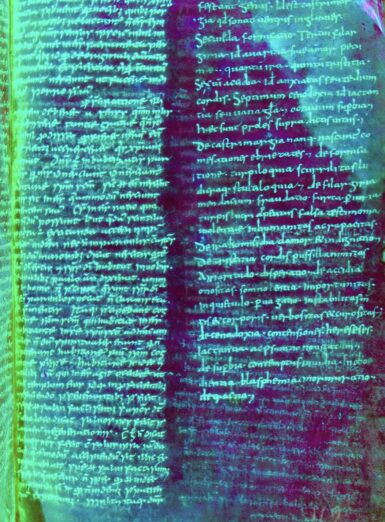
Using multispectral imaging, the team recovered the original erased undertext hidden beneath later writing.
Davies is also nearing completion of a major digital edition of the Vercelli Mappa Mundi, a medieval wall map in Vercelli, Italy, and one of only two surviving large maps of its kind. The project builds on research that began with her dissertation, “Translating Space: The Vercelli Mappa Mundi and Visual Pedagogy,” which explored how medieval maps teach, organize and transmit knowledge.
Over the summer, she returned to Vercelli to complete three weeks of imaging and archival work. A book proposal on medieval maps is under review, and Davies has been selected for a CHESS Initiative on Very Important Questions Research Award alongside Carlin Crisanti. She will also speak at TEDxUNC Charlotte 2027.
But whether Davies is recovering erased names, decoding medieval maps or building tools for local archives, her work demonstrates how data science and the humanities can work together to uncover the past and create new possibilities for the future.
“Davies’ work reflects the interdisciplinary culture we cultivate in the College, where scholars are encouraged to bridge fields in pursuit of society’s most important questions,” said Boyer.
Learn more about Helen Davies’ multispectral imaging research this summer.