Changing the game:
Varsity esports arrives at Charlotte
Key Takeaways:
- UNC Charlotte Esports is leveling up with a University-backed, varsity program.
- The campus’s state-of-the-art Esports and Gaming Arena gives student-athletes a space to train and grow the gaming community.
- A dynamic program director, supported by the University, is setting a new vision for collegiate esports.
Story by Alex Reynolds
Photos by Kat Lawrence, Alex Reynolds and Amy Hart
Ian Escalante recognized as far back as 2016 the potential for esports to take off. A graduate student at the time at Florida State University, he asked a sports management professor, “Why aren’t we talking about esports?” when discussing the ‘next big thing’ in sports.
Fast forward to 2024. After leading esports programs at Florida State, Savannah College of Art and Design and the University of Arizona, Escalante arrived to do the same at UNC Charlotte just as Niner Esports was hitting its stride.
“I wanted to be in an institution that reflected my values for what esports is about — the community, the students and creating a meaningful experience,” Escalante said. “UNC Charlotte’s values, especially the way it views esports, align with my vision and I'm more excited than ever to be in this field.”
Leveling Up the College Game
Growing up in South Florida, Escalante played sports, which fueled a passion for competition but also resulted in some injuries. During this time, he turned to another love — video games, which for gamers elicit a competitive spirit comparable to that of traditional sports, but without the usual barriers to participating.
As a grad student, Escalante observed esports tournaments in South Korea that had been drawing massive crowds with prize pools for more than a decade. In the United States, professional esports was in its infancy, and the collegiate landscape essentially was a desert.
“I remember my professor’s response to the question about esports. He said, “Nobody's asked before; if this is something you want to do, turn it into a directed independent study.’”
Less than a year later, he founded Florida State’s Esports Board. From there came Savannah and Arizona, where his vision for collegiate varsity esports took shape — a vision that is materializing at UNC Charlotte.
Ushering a new era at Charlotte
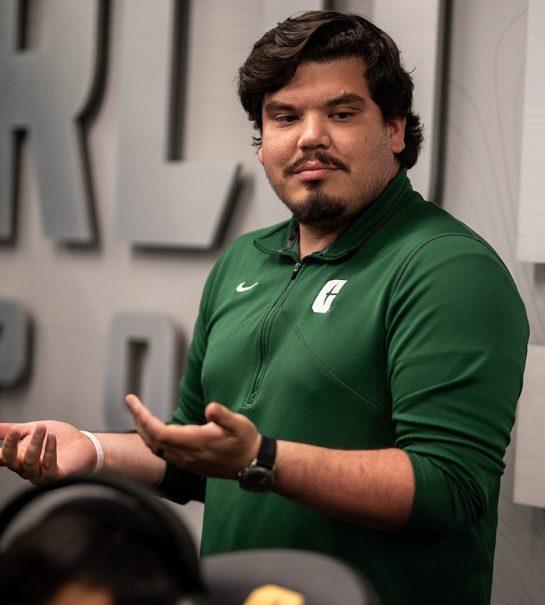
Escalante has seen the evolution of collegiate esports from grassroots, student-led clubs to university-backed varsity teams. UNC Charlotte has had an esports realization of its own.
Niner Esports, Charlotte’s gaming and esports club — in place and steadily rising in presence since 2013 and eventually with over 700 members — won Club of the Year at the EsportsU’s 2023 Collegiate Awards. Later that year, the University secured a $1.5 million allocation for an on-campus esports space, putting Charlotte Esports, the varsity program, into motion. During his Charlotte interview, Escalante saw how his vision for an esports program and the University's aligned.
“I really wanted to be at an institution that sees this as a tool for students to have meaningful experiences and connect with the University,” Escalante said. “Esports students who find their purpose become better athletes, sure, but they also are happier, graduate and go on to become interesting, fun professionals."
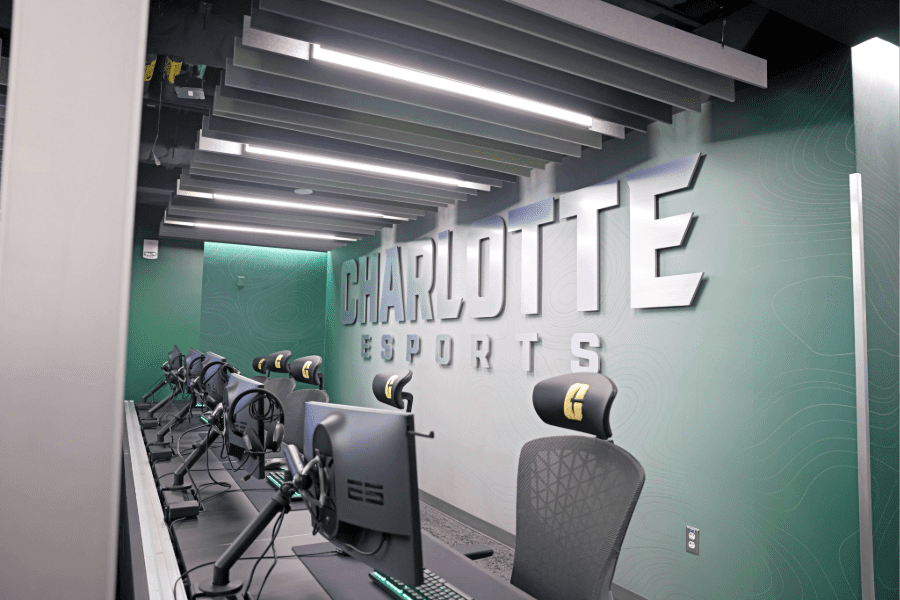
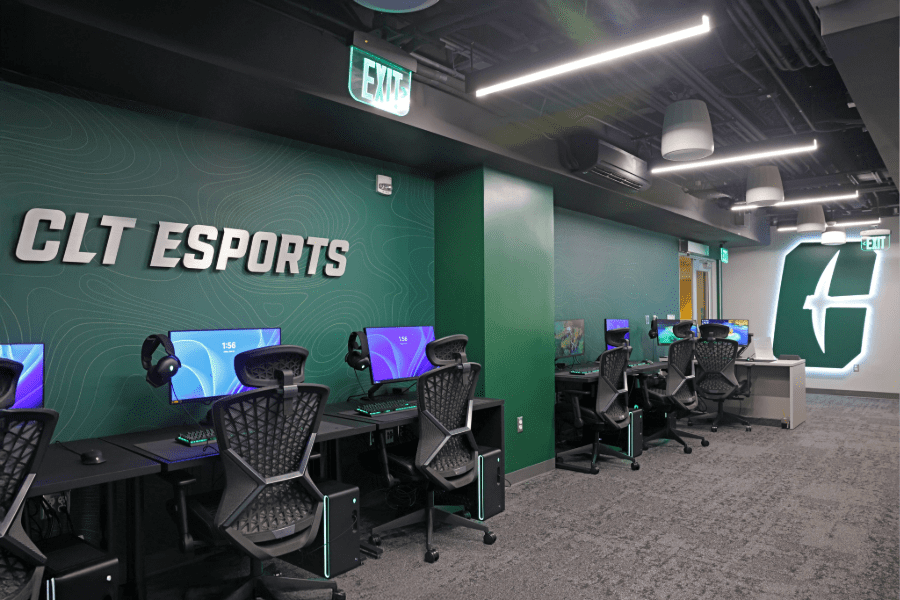
In August 2024, Escalante was named UNC Charlotte’s first esports program director. He redesigned the competitive program structure and oversaw the construction of the Esports Arena, which held its grand opening a year after his arrival on Sept. 4.
With a clear vision for the program and the backing of the University, Escalante needed to find the players to set the standard for Charlotte Esports — and fill five varsity teams: League of Legends, Rocket League, Valorant, Overwatch 2 and Rainbow Six Siege.
The inaugural 31
Escalante took an unorthodox approach to select the first 31 Charlotte Esports student-athletes. He conducted one-on-one interviews with 80 students who attended tryouts before sitting them in front of a PC to test their skills. The player’s “rank,” a status tied to proficiency at a given game, was not taken into consideration. Escalante was looking for culture-setters who could set up Charlotte Esports for long-term success.
“Rank can tell you a lot, but not necessarily who is the best student-athlete,” Escalante said. “It might reveal the most talented player, or realistically, who plays the game the most, but it doesn't tell you about a player's character.”
Jax Romero, a League of Legends player, emerged as a standout despite having a lower rank. The senior, who once sought to establish an esports club in community college, is now a part of esports history at Charlotte.
“I feel almost like a pioneer,” said Romero, one of the six League of Legends players in Charlotte’s first-ever varsity esports program. “I feel like I'm part of a new era of people who are showing others that gaming can be more than recreational. It can be competitive; it can be fun to watch; and you can have somebody to root for, even though you might not know them.”
After the recruiting process was over and teams were set, Escalante was satisfied with his first varsity esports roster.
“They have so much passion for being student-athletes and for representing Charlotte,” Escalante said. “They were longing for something that would be representative for them; they've really taken on the responsibility of setting the culture for Charlotte Esports.”
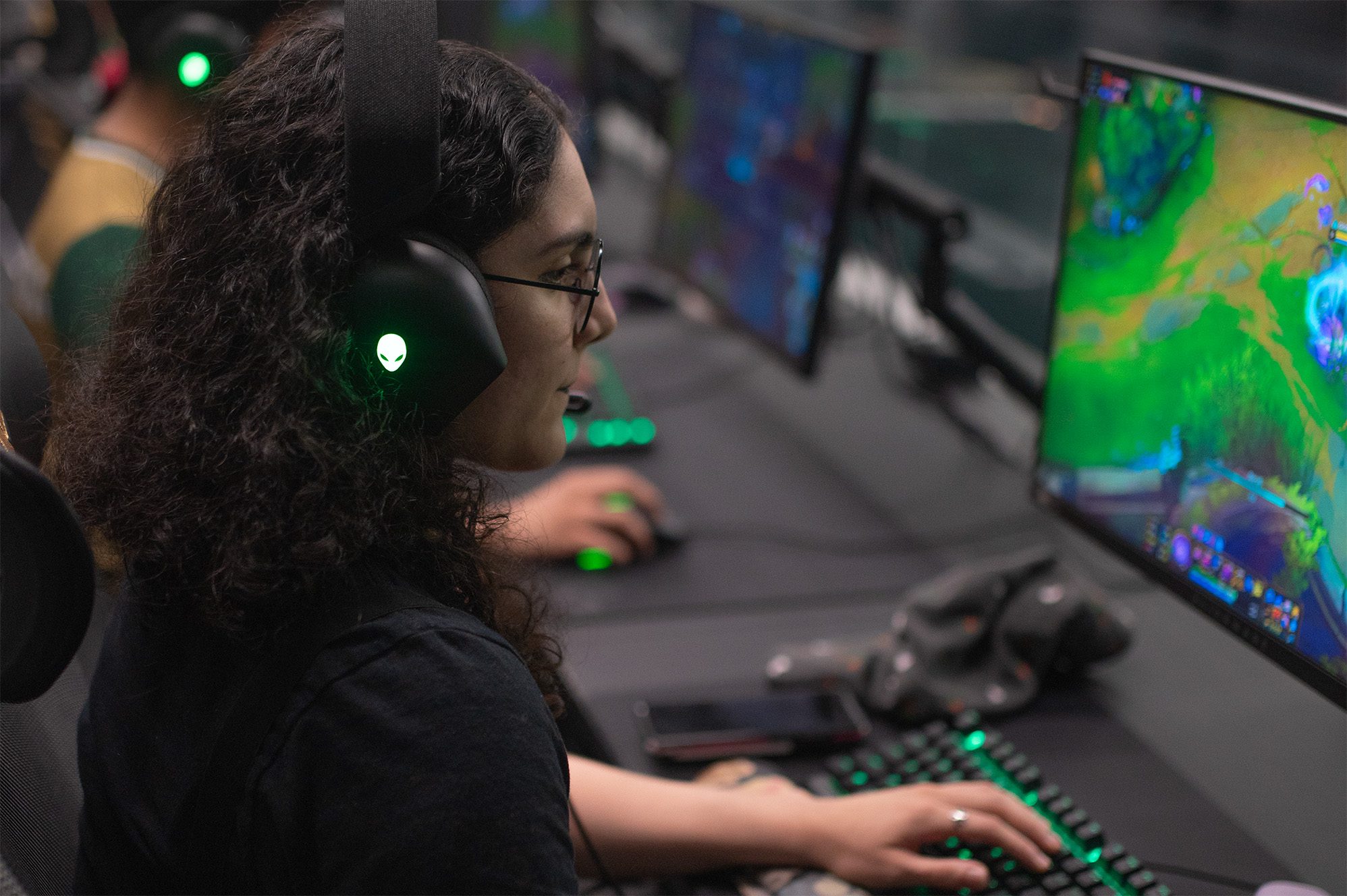
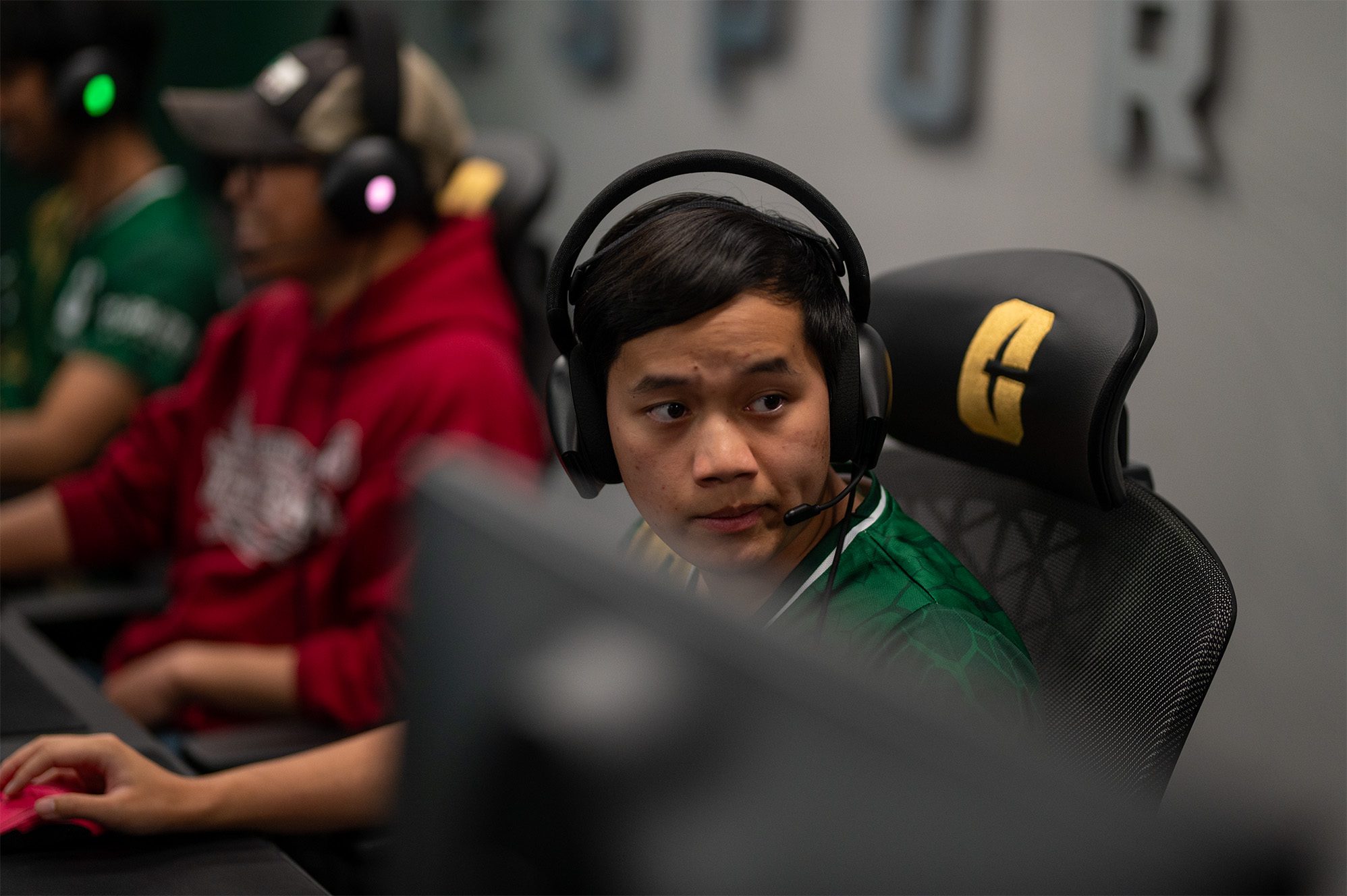
Jax Romero, left, and Sean Nguyen were members of the inaugural varsity League of Legends team.
Looking Forward
As a University-backed entity, Charlotte Esports seeks to be more than a collection of teams, but a collaborative and embedded part of the UNC Charlotte community.
The Esports Arena, located in the heart of campus in the Popp Martin Student Union, is already an attraction for prospective students, a place to build community and a venue for the entire campus community to share a love of video games.
Beyond expanding the gaming community, Escalante aspires to connect the esports community to gaming-related research, Greek life and more.
“Esports is just a tool,” Escalante said. “It's a great way to introduce our community to others. We don’t want to tuck ourselves away, we want to foster an open and welcoming environment, which can add so much value to the institution.”
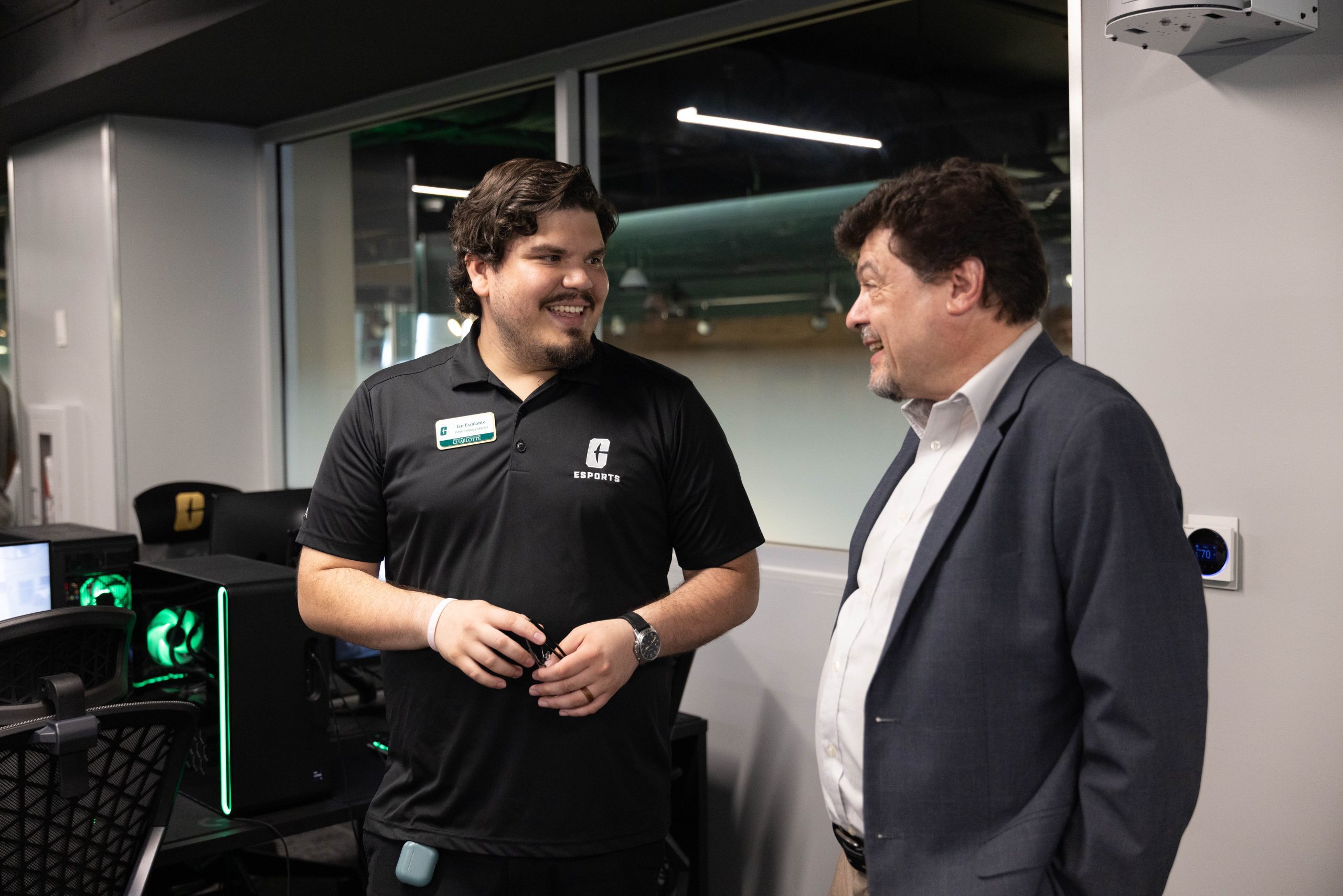
A grand opening ceremony and ribbon cutting for the Esports Gaming and Competition Arena took place on Thursday, Sept. 4 in the Popp Martin Student Union. Attendees included Chancellor Sharon L. Gaber, Vice President for Student Affairs Kevin Bailey, Dean of the College of Computing and Informatics Bojan Cukic (pictured with Ian Escalante) and many others.
Escalante arrived at Charlotte after years of contemplating what a holistic collegiate esports program could look like.
As collegiate esports has evolved during the past decade, Escalante has advanced his conceptions of what an esports program and a program director should be.
“I've progressed from seeing myself as an athletic director to a professional working in higher education, where I can be a mentor focused on enhancing the student experience,” Escalante said. “I understand esports is one part of students’ lives for four years, but I hope that we have them for life. I want them to feel that they always had a place at Charlotte and can return throughout their lives.”
Escalate arrived at Charlotte with a vision. Like the Esports Arena, the doors of opportunity have opened. Now the grind begins.