The Technical Heart of Charlotte
Inside America’s first public-university Super Fab Lab
By Monica Hughes
KEY TAKEAWAYS:
- UNC Charlotte — the nation’s first public university with a Super Fab Lab — is making a powerful impact on the city of Charlotte and its industries.
- Now a Fab City, Charlotte aims to achieve a circular economy by 2054 through partnering with the Charlotte SFL.
- The Charlotte SFL is building a generational bridge by training a workforce that can navigate tomorrow’s democratized manufacturing landscape.
- Charlotte’s manufacturers are invited to learn more about partnership opportunities with the Charlotte SFL.
The air hums with the high-frequency whine of precision machinery inside the Charlotte Super Fab Lab, the first at a public university in the United States. At the William States Lee College of Engineering at UNC Charlotte, students aren’t just learning to use equipment. They’re using the equipment to help build a new model for the city of Charlotte’s future in manufacturing.
At the Haas CNC mill, a computer-controlled machine, mechanical engineering senior Brett Wilson removes a glistening metal block from the chamber, holds it up and inspects the details. He has transformed a concept into a custom aluminum mold made entirely in the SFL using advanced equipment and industry-grade tools. This process required mastering advanced computer-aided manufacturing software, toolpath planning and prototyping — skills he applied to create a component that would be used for local production.
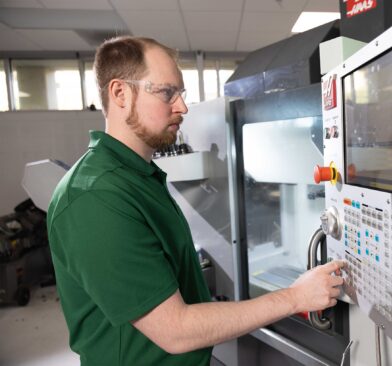
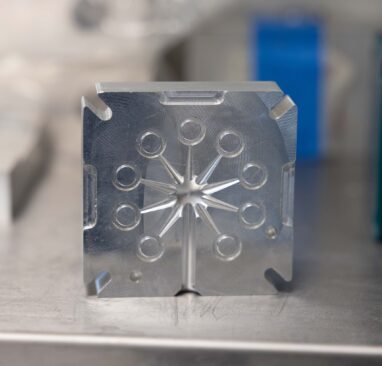
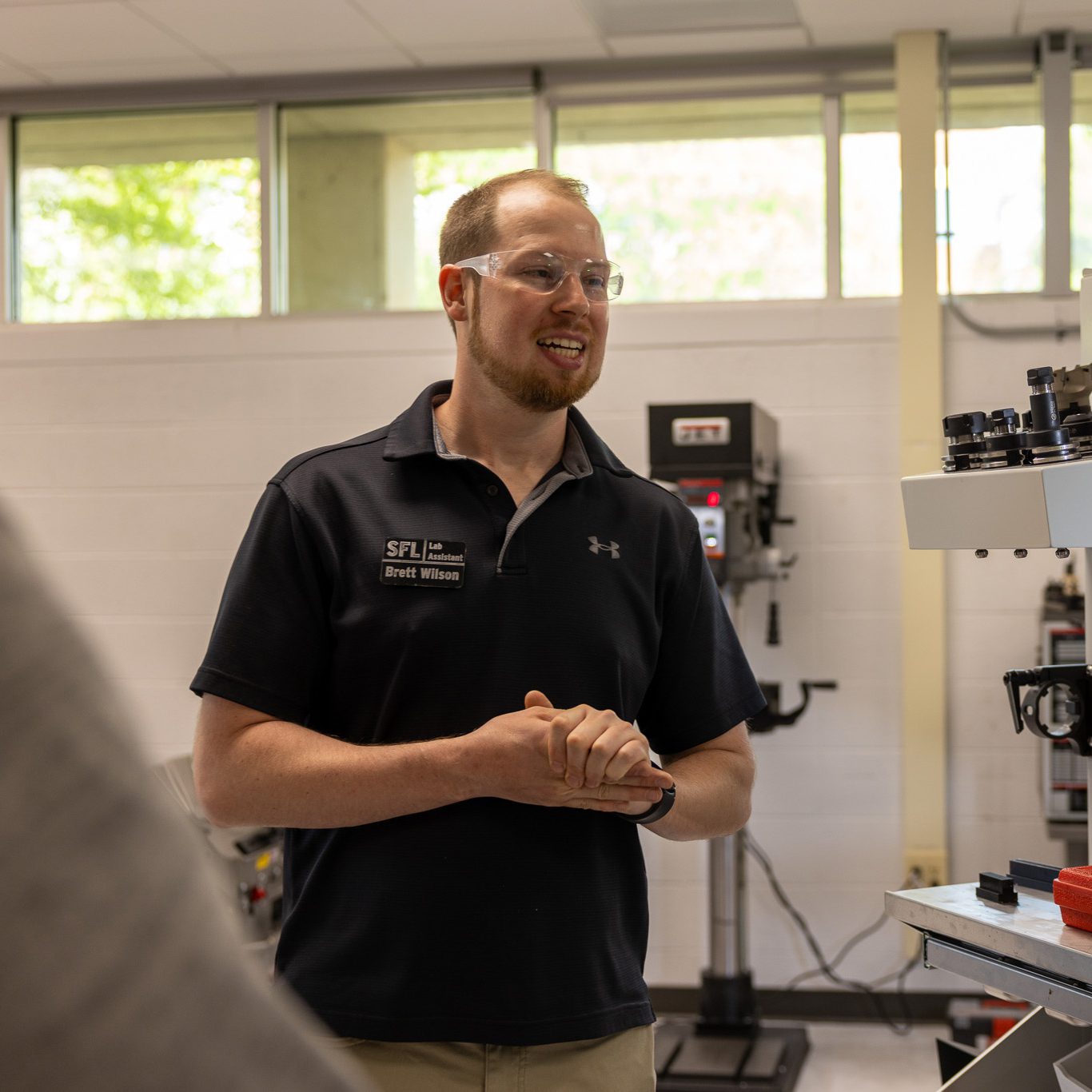
Brett Wilson, a UNC Charlotte graduate student, works at the Haas CNC Mill in the SFL machine shop where he designs and fabricates aluminum molds and similar pre-manufacturing materials.
Wilson, a military veteran who chose W.S. Lee College of Engineering to shape his next chapter, knew a Charlotte degree would help him contribute to something larger than himself. “I realized Charlotte was a good fit for me because it is much more hands-on than other universities,” Wilson said. “There is access to machines and methods unlike anywhere else.”
As he turns back to the CNC mill, Wilson isn’t just completing an assignment. He is part of a broader effort that positions UNC Charlotte — and its students — at the center of a new industrial ecosystem. The Charlotte Super Fab Lab is a design and manufacturing hub that connects industry partners with emerging talent to transform concepts into scalable solutions, shaping the future of advanced manufacturing, computing and digital design.
INTERNATIONAL ADVANTAGE
UNC Charlotte's Super Fab Lab is one of only six worldwide.
INDUSTRY FOCUSED
The world's only SFL with an emphasis on manufacturing is the first resource to facilitate concept-to-production in one shop for the manufacturing industry.
CITY ALIGNED
In 2025, the SFL became a driving partner with the city of Charlotte when it was named the nation's fifth Fab City.
Super Fab Lab, the vision and the visionary
During the COVID-19 pandemic, Associate Teaching Professor Terence Fagan demonstrated the power of "democratized innovation" — a model that expands creative capabilities from corporate to consumer — by designing and producing clear face masks for medical workers. This experience sparked an ardent interest in the Fab Foundation’s Super Fab Labs.
While standard Fab Labs focus on small-scale prototyping, SFLs provide expanded capabilities for industrial R&D and "concept-to-production" workflows, similar to face masks production. At the time, only five of the higher-status, “super” versions of the Fab Labs existed globally.
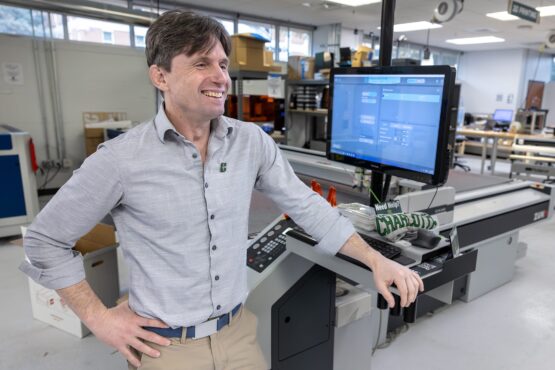
We’re helping change the shape of manufacturing.”
Terence Fagan, director, Charlotte Super Fab Lab and associate teaching professor, W.S. Lee College of Engineering
Through years of strategic planning with Rob Keynton, dean of the W.S. Lee College of Engineering, Fagan’s vision for a Charlotte SFL materialized. Fagan enhanced the base model by integrating a specialty focus on advanced manufacturing, effectively bridging the gap between initial prototyping and full-scale production.
In spring 2025, the Charlotte Super Fab Lab – led by the W.S. Lee College of Engineering with support from the College of Computing and Informatics – launched.
Investment: Tools, tech and talent

$1.5 million investment
SFL is funded by W.S. Lee College of Engineering via Engineering North Carolina’s Future to drive regional economic growth. By contrast, standard Fab Labs require an investment of approximately $100,000.

Digitally connected
Students access the global digital network of over 2,000 Fab Labs worldwide.

11x
Charlotte SFL is 11 times more densely equipped than a standard Fab Lab, providing the ability to turn ambitious concepts into repeatable, scalable outcomes.
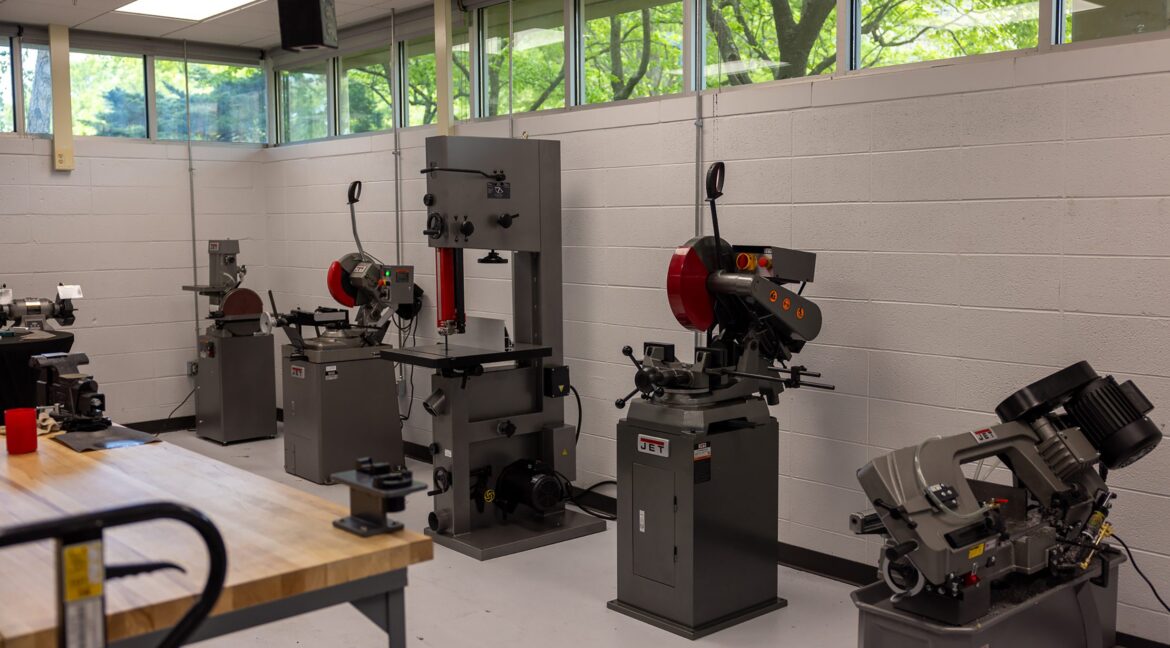
Machine Shop: Dedicated space with equipment for high-precision machining and fabrication
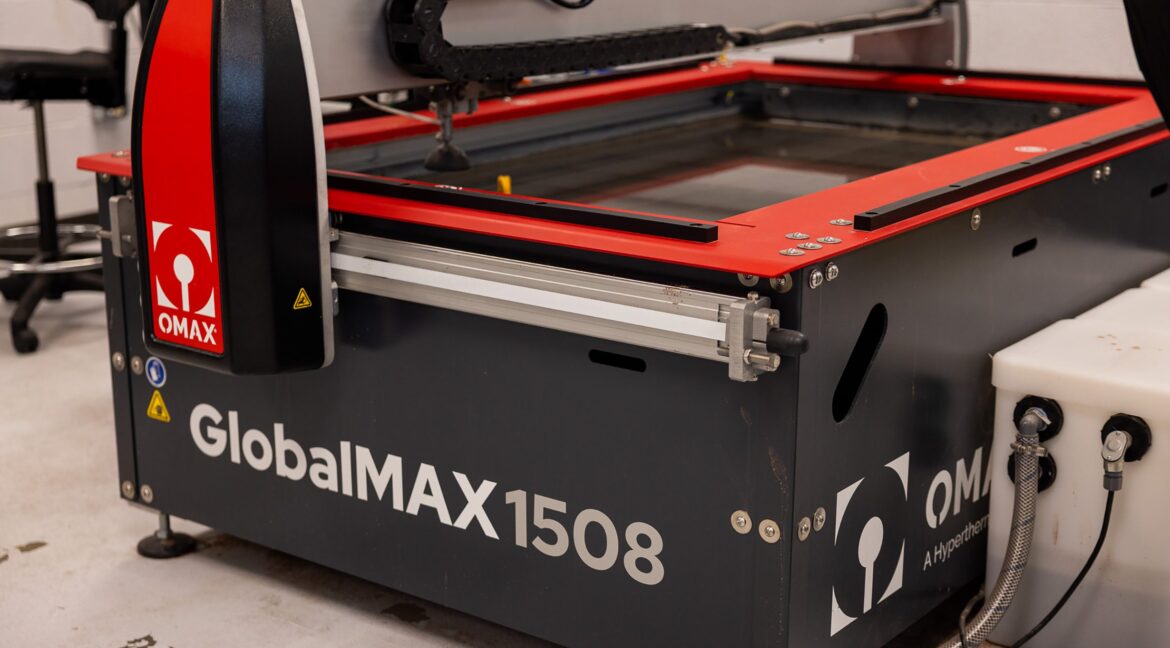
30,000 PSI Water Jet: Precision cutting for steel, stone and composite materials
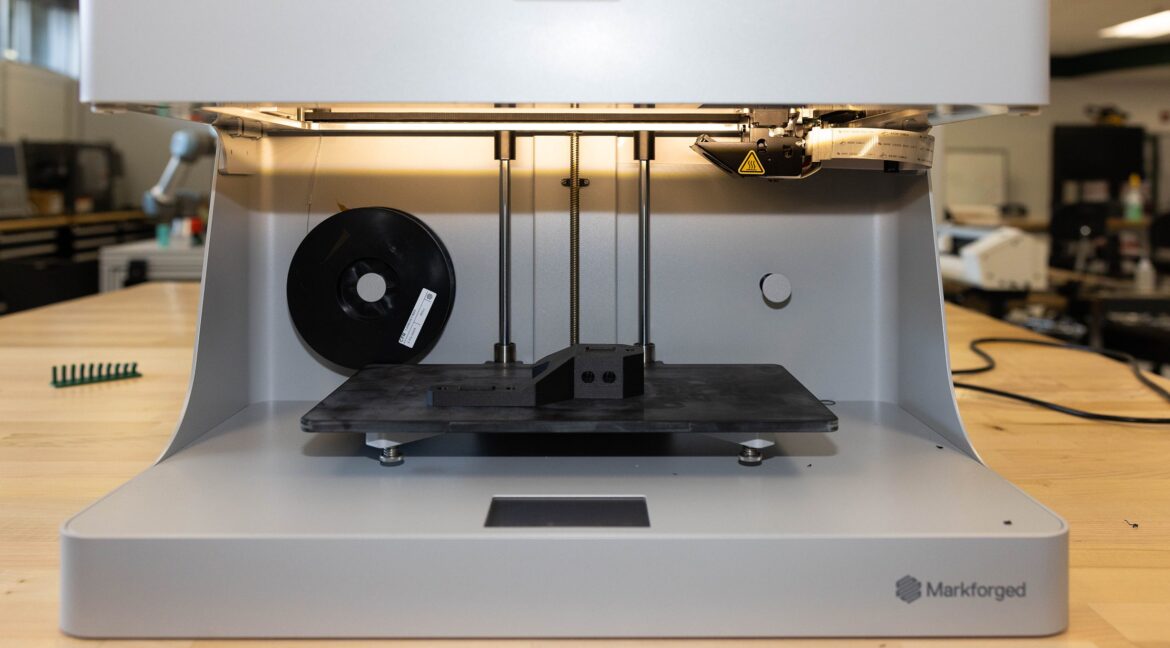
Carbon Fiber 3D Printing: Advanced additive manufacturing for aerospace and medical-grade parts
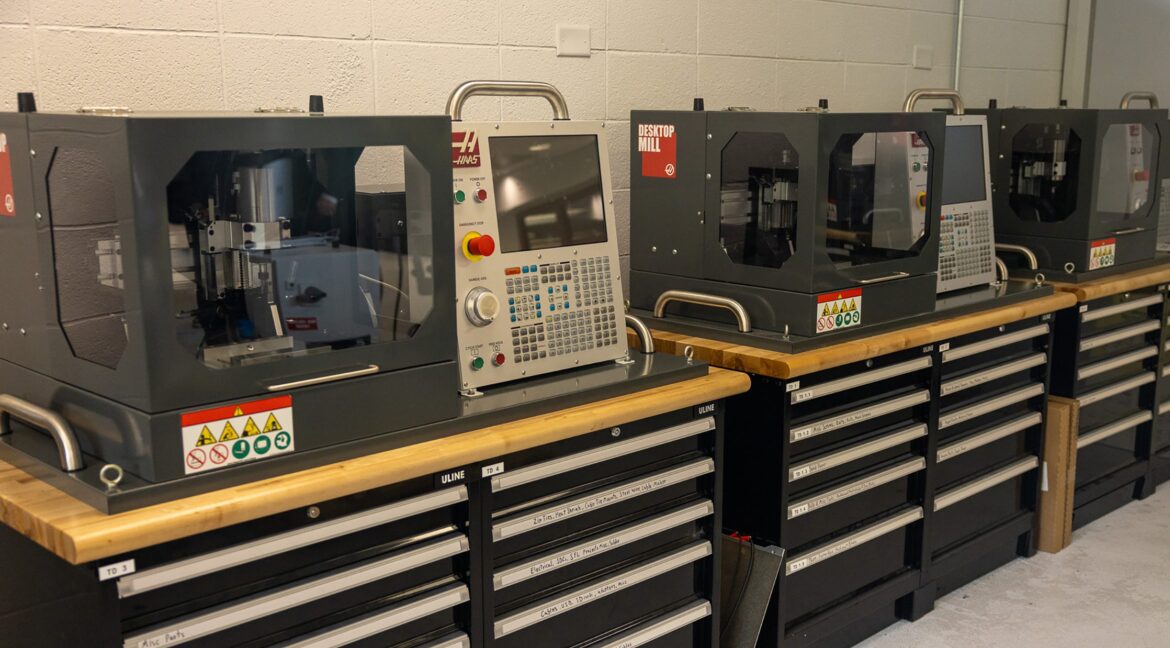
Haas Desktop Mills: Industry-standard subtractive manufacturing for high-tolerance metal blocks
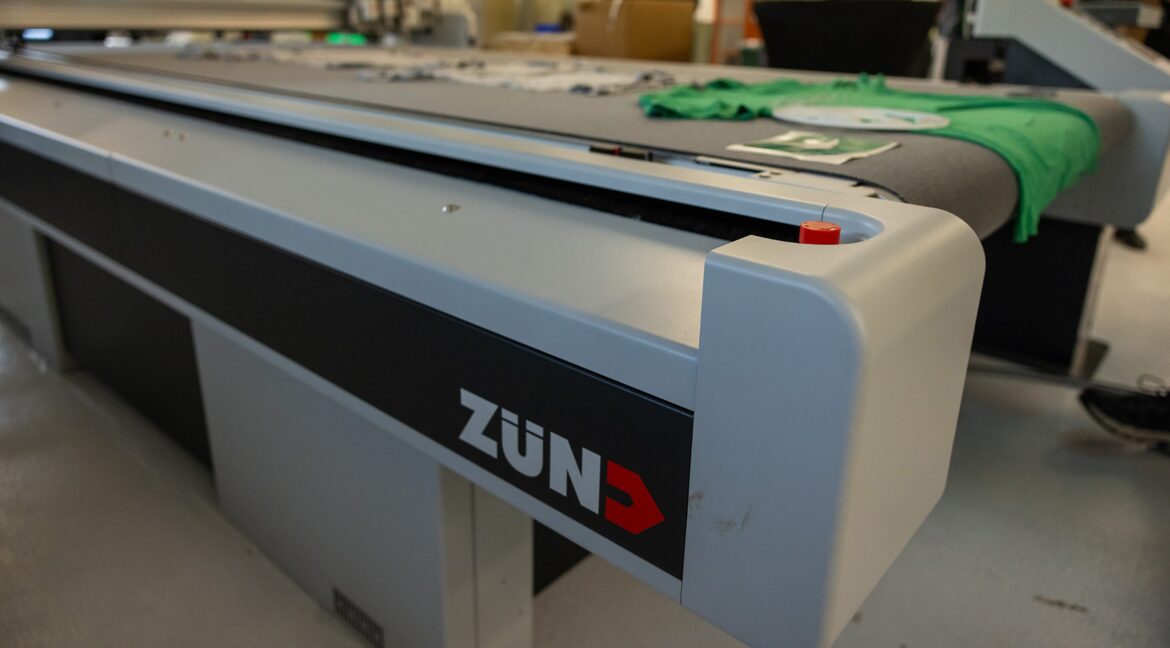
Zünd Digital Cutter: High-speed, automated cutting for textiles, graphics and packaging
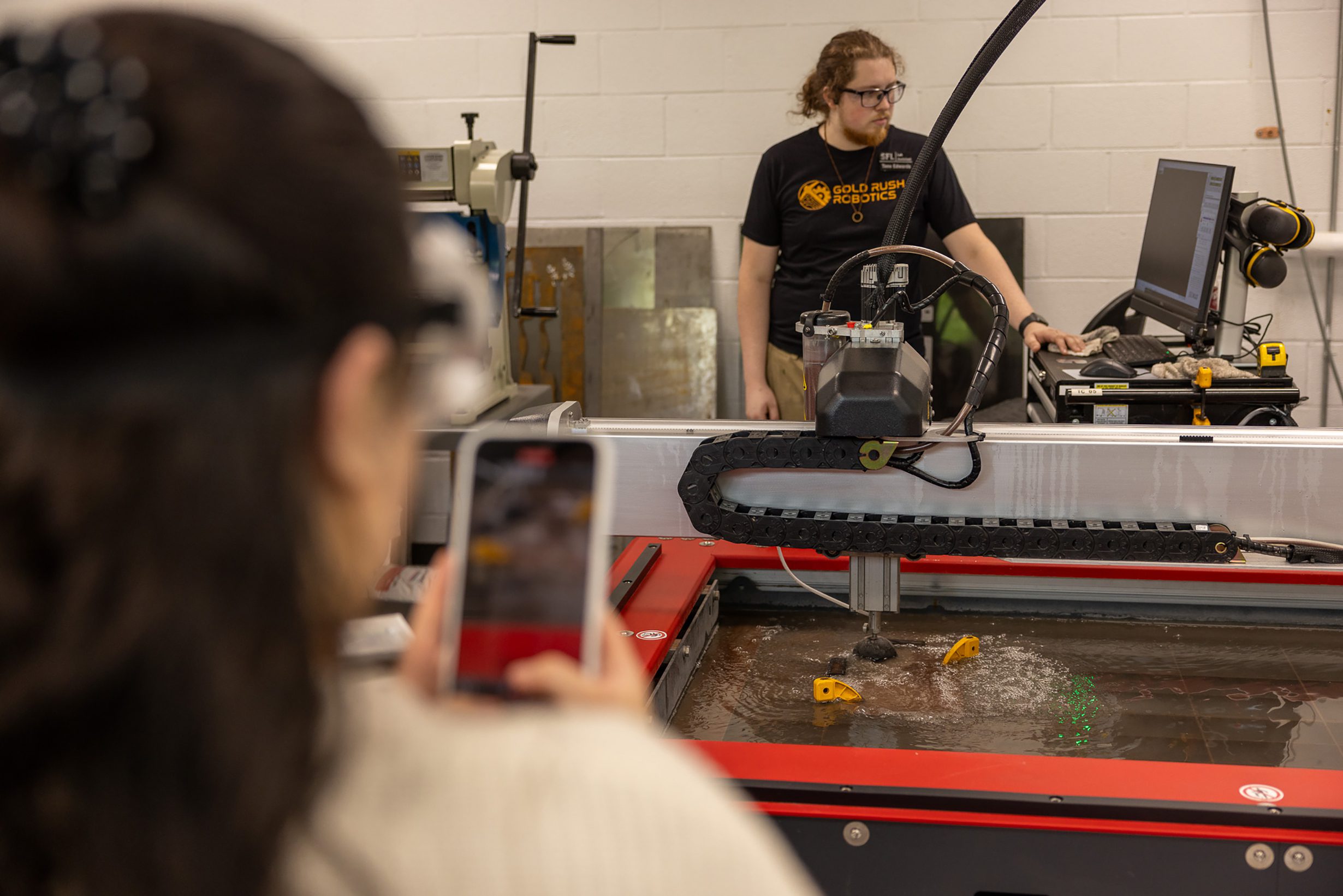
With technical training on the equipment, students serve as lab assistants and run the facility’s day-to-day operations. They have been involved from the set-up stage and now manage key SFL processes, from equipment support to lab safety. They are even equipped to guide faculty, staff and peers in the lab.
By uniting young talent from engineering, computer science and other majors, this cross-disciplinary environment enables students to build class projects and portfolios. Faculty and staff from multiple fields can accelerate research and instructional labs. Industry partners can explore feasibility, process development and workforce engagement.
"The magic happens at the SFL because the talent and the equipment are all in one place,” Fagan said.
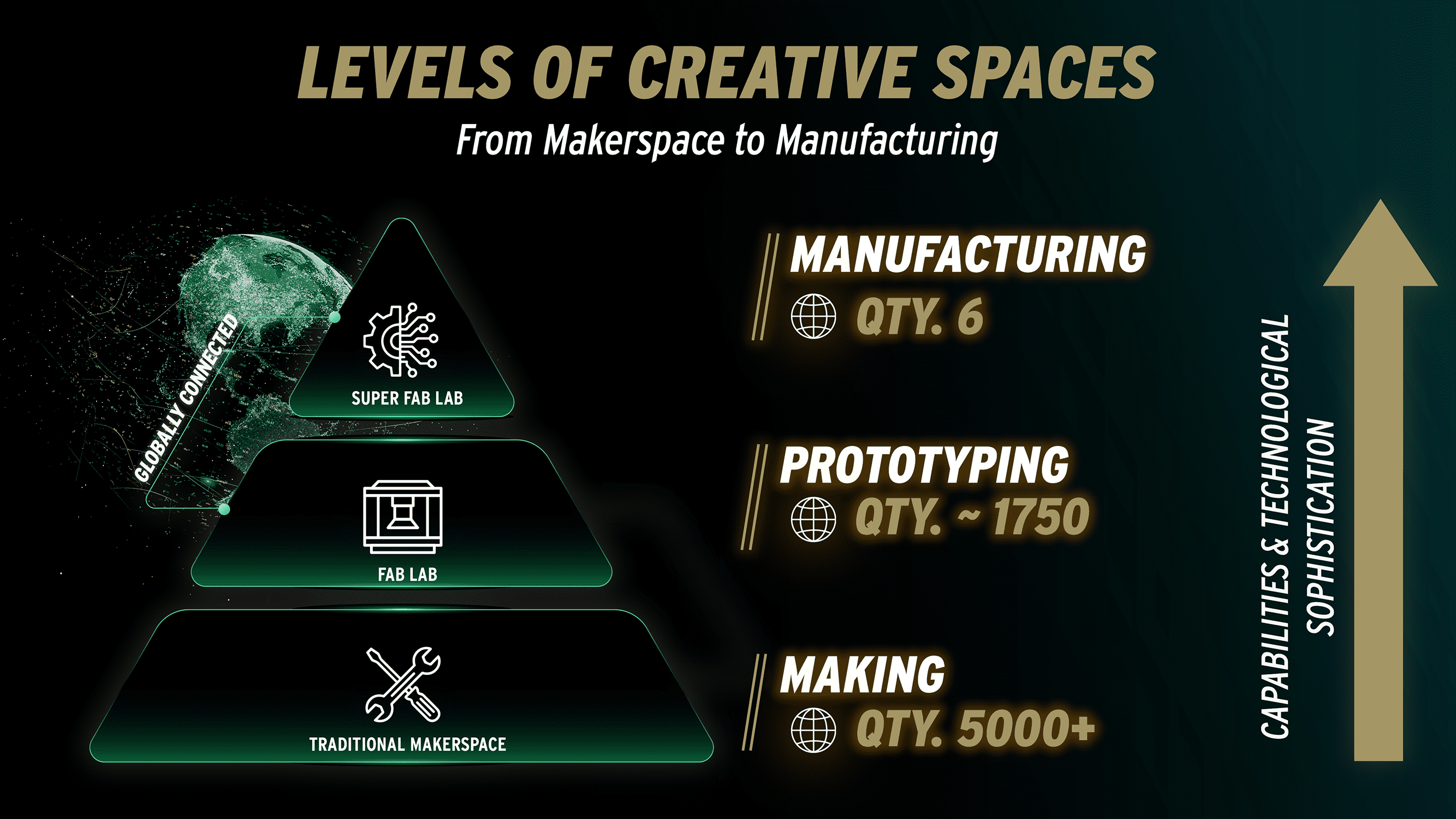
From making to manufacturing, the Super Fab Lab sits at the top — turning prototypes into production.
The lab’s concentration of talent, supported by digital links to a global technology network, enables immediate, democratized innovation. It stands ready as a vital resource for Charlotte’s manufacturing community. “Our lab provides local industry with creativity, design, development, prototyping and low-volume runs to innovate without the overhead of maintaining their own advanced labs,” explained Fagan.
Targeting fall 2027, the SFL will move across campus to a new, state-of-the-art facility created by industry partner Honeywell. The Honeywell Innovation Hub will provide greater square footage for more students and leading-edge technology.
With this forward-focused trajectory, the SFL ensures the next generation of workforce talent, like Wilson, is prepared for real-world challenges.
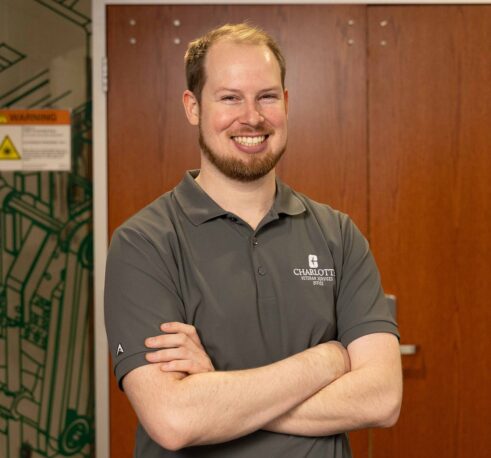
“At Charlotte, I’m involved in something much bigger than myself.”
Brett Wilson, a military veteran who traded his uniform for a UNC Charlotte engineering degree always sought to be part of something that makes a difference. Drawn to the hands-on approach at the W.S. Lee College of Engineering, he found a home in the Charlotte Super Fab Lab.
The Fab City Challenge
Jeremy Losaw, SFL manager and a sustainability champion, has already helped drive the city of Charlotte toward a bold, international sustainability commitment. Using his years of industry experience, Losaw led the lab to play a pivotal role in Charlotte becoming a Fab City.
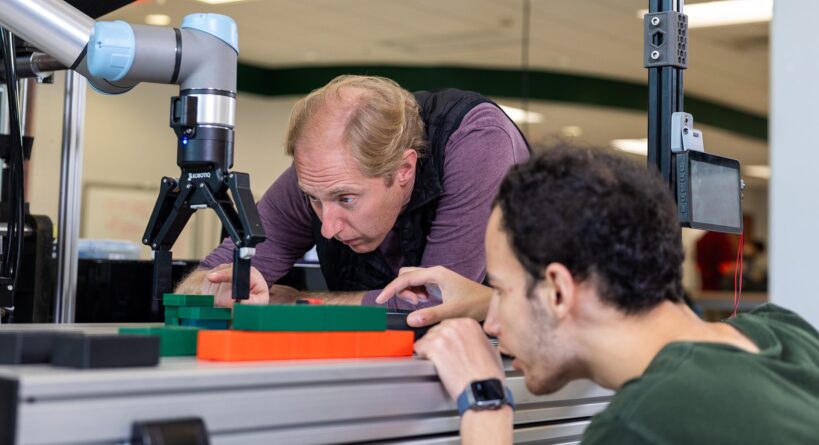
Jeremy Losaw, left, discusses a robot finger grasp with student.
Losaw explained the designation’s significance. “It is more than a title,” he said. “‘Fab City’ is a globally recognized pledge to achieve a circular economy — a model where the urban region produces everything it consumes locally — by 2054.”
Traditionally, manufacturing and consumption cycles follow a dated production model reliant on fragile global supply chains and a linear product life cycle. Under the Fab City initiative, Charlotte is working to shift that paradigm toward hyper-local solutions. The initiative’s goal is to move from an inefficient, linear import-export system to manufacturing self-sufficiency, where products at the end of their lifecycle are captured and transformed into new products entirely in Charlotte.
Envision Charlotte oversees the transition to a circular economy through the Innovation Barn, the nation’s first-of-its-kind sustainability project located in uptown Charlotte. “In its simplest form, a circular economy is a society of zero waste. You’re keeping everything out of the landfill,” explained the nonprofit organization’s executive director, Amy Aussieker. “With the deadline looming, a key component is making manufacturing more local.”
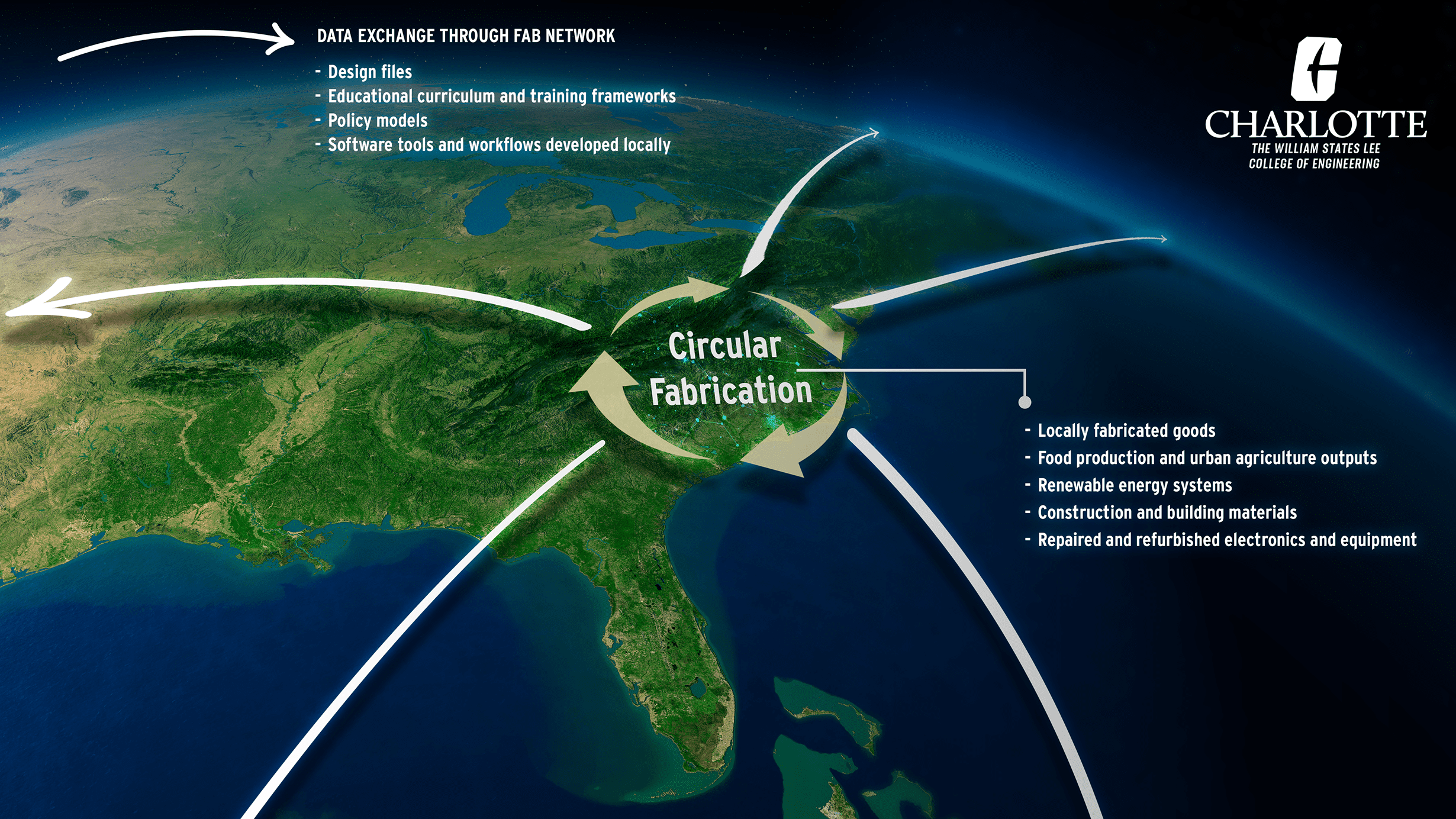
A circular model powers Charlotte’s Fab City vision — sending communications and information rather than materials and products.
The Charlotte SFL serves as the city-aligned resource, or the technical sidekick, during this ambitious, decades-long transition. While the city addresses the sustainability challenges at sites like the Innovation Barn, the University provides intellectual capital and the high-tech capabilities necessary to find solutions. This partnership among the University, Envision Charlotte and the city creates a distinct advantage in proximity, technology and talent.

Charlotte is ready to take on this challenge while also creating jobs and innovation. That's why this is such a great partnership. Bringing in a world-class university like UNC Charlotte helps us create the products and the systems we need.”
Amy Aussieker, executive director, Envision Charlotte
A Global Hub for Local Solutions
The SFL already has been involved in several Charlotte-based projects, from mobilizing glass recycling equipment (“the crush truck”) to optimizing a 3D printer design that gives users the ability to rapid prototype their own 3D printer. These real-world solutions demonstrate a fundamental shift: The University is expanding beyond a place where students learn to a place where industry solves pressing manufacturing problems.
The Charlotte Super Fab Lab is set to generate a significant, long-term global influence that reaches far beyond local borders. According to The Fab Foundation, an organization originating from Massachusetts Institute of Technology to drive international innovation, the facility is positioned to catalyze immediate advancements and meaningful change on a worldwide scale.
For Fagan, the creative space is more than a lab. It is a high-octane engine for the city, helping deconstruct the traditional walls between academic study and the industrial world.
Learn more about the launch of the Charlotte SFL.
An open invitation to Charlotte manufacturers
From Lab to Line: Charlotte’s Manufacturing Evolution
The Charlotte Super Fab Lab’s concentration of talent and technology provides a new resource for the region’s 3,500 manufacturers. It is a permanent platform designed to help Charlotte manufacturers solve production challenges, develop new technologies and train the next generation of workforce talent.
Graduates flood the industry as a technologically intelligent workforce with real-world experience. Brett Wilson is an example of student talent in demand, having secured a co-op with GE Nuclear, an opportunity he attributes to the uniquely connected and hands-on environment at UNC Charlotte.
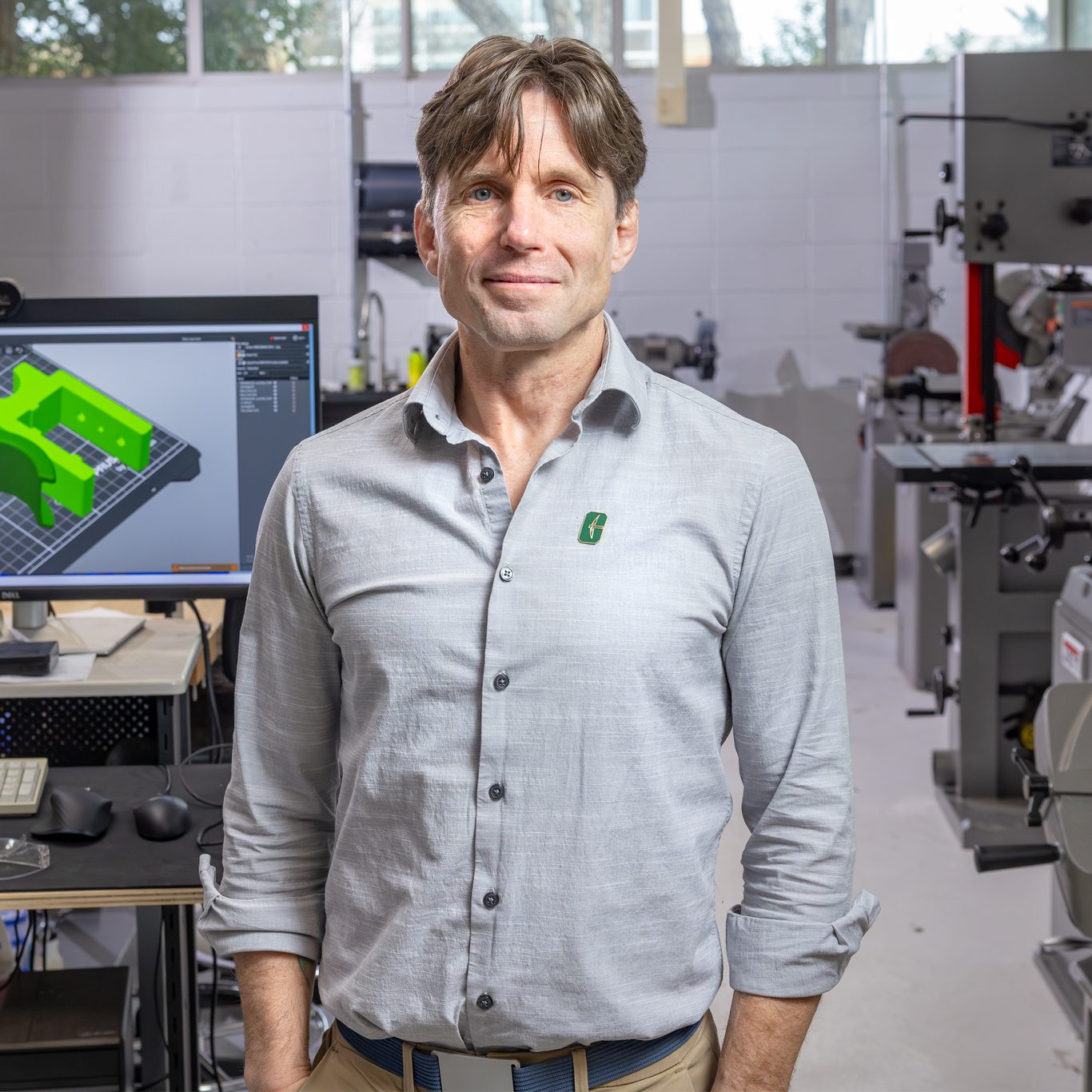
Terence Fagan, right, SFL’s director, prioritizes industry partnerships alongside workforce development. “We have a service available to industry that supports partnered solutions for their projects,” he said. Through a funding agreement, local companies can access the lab’s resources, helping improve workflow and accelerate their manufacturing process. With an emphasis on the full design-to-manufacturing lifecycle, SFL and its students stand ready to tackle manufacturing challenges in the Charlotte region.
To explore industry partnerships, contact Super Fab Lab Director Terence Fagan.