Charlotte’s zero-waste playbook:
Inside the stadium's sustainability strategy
Story By Alex Reynolds
Photos by Kat Lawrence, Video by Whitney Wilson and Harrison Hieb, and Graphics by Ti Crowell
Key Takeaways:
- Since 2013, Charlotte’s Jerry Richardson Stadium has operated as a zero-waste facility, setting a standard for long-term success.
- Eighty-four percent of recycling and compost collected is diverted from the landfill, preventing more than 128 tons of waste since the program started.
- This largely unseen process includes collaboration from dining partners, students volunteers, staff and industrial processors.
Picture yourself inside the Charlotte 49ers’ Jerry Richardson Stadium. In addition to taking in the sights and sounds of college football, you grab some food and a drink from the concession stands. You enjoy both, and on the way back to your seat, you toss the trash — perhaps never thinking about it again.
That moment is just one part of the zero-waste process — a program in place since 2013 and one that Charlotte executes better than most college stadiums.
While the name "zero waste" implies that no trash from a stadium goes to waste, the accepted definition is aiming to divert at least 90% of waste from landfills. The U.S. Environmental Protection Agency estimates the national average for communities is 32% diversion of solid waste. As a whole, UNC Charlotte’s diversion rate is only slightly better than the national average. The zero-waste stadium initiative is an effort to move the needle at the University and beyond.
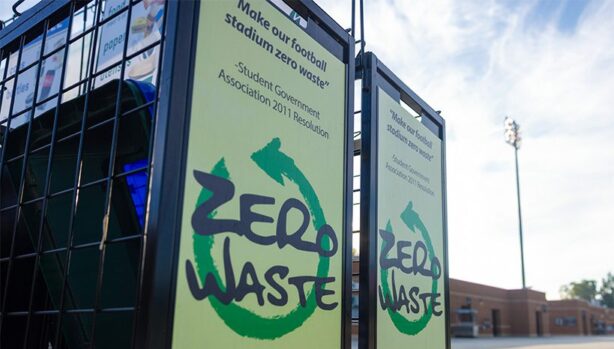
Charlotte’s zero-waste program began when the University broke ground on Jerry Richardson Stadium and the Student Government Association passed a resolution calling for the new facility to meet that standard.
Shannon Caveny-Cox, zero-waste coordinator, has been involved — both officially and unofficially — since the start. She says the program’s longevity and student involvement sets it apart from other universities that have tried to divert stadium waste.
“We're a leader now in the college arena because we do it consistently for every game and we’re getting over 80% diversion per game,” Caveny-Cox said.
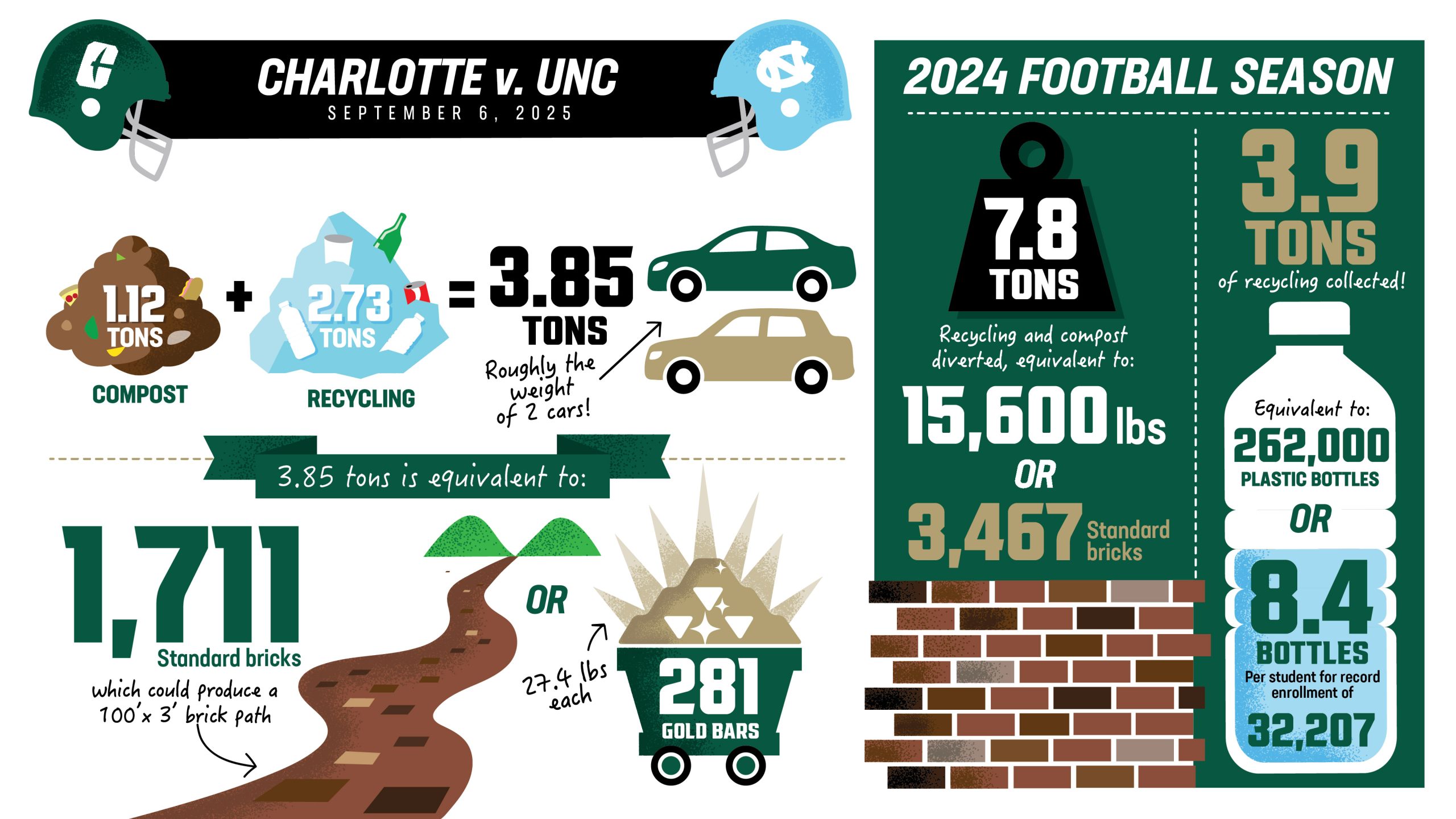
Since its launch, the program has diverted more than 128 tons of recycling and compost. This year, when the 49ers hosted North Carolina and expanded stadium capacity, the zero-waste team diverted 2.73 tons of recycling and 1.12 tons of compost — more than 8,000 pounds of repurposed waste.
Some schools designate specific games for zero-waste campaigns as part of the Campus Race to Zero Waste GameDay Challenge. Charlotte is one of the few universities nationwide committed to diverting waste at every home game. That level of coordination is rare and has led Caveny-Cox to field questions from other schools about how to launch similar programs.
“It’s really impressive how far we've come and although it can be exhausting, it makes me feel really good to know we do it better than a lot of other campuses,” Caveny-Cox said.
How It Works
A sustained zero-waste program requires significant planning and forethought. The University works with dining partner Chartwells to ensure that the many items sold — including food, paper boxes, utensils, cans, straws and bottles — can be recycled or composted.
There are no trash bins on the concourse at Jerry Richardson Stadium. Instead, fans must pause and make intentional choices between compost and recycling bins.
We learned if we have trash bins out there, then people just throw everything into the trash. With recycling and the compost bins, fans may not get it into the right container every time but it forces them to at least try and think about where their waste goes.”
Shannon Caveny-Cox, zero-waste coordinator
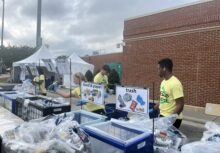
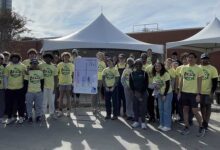
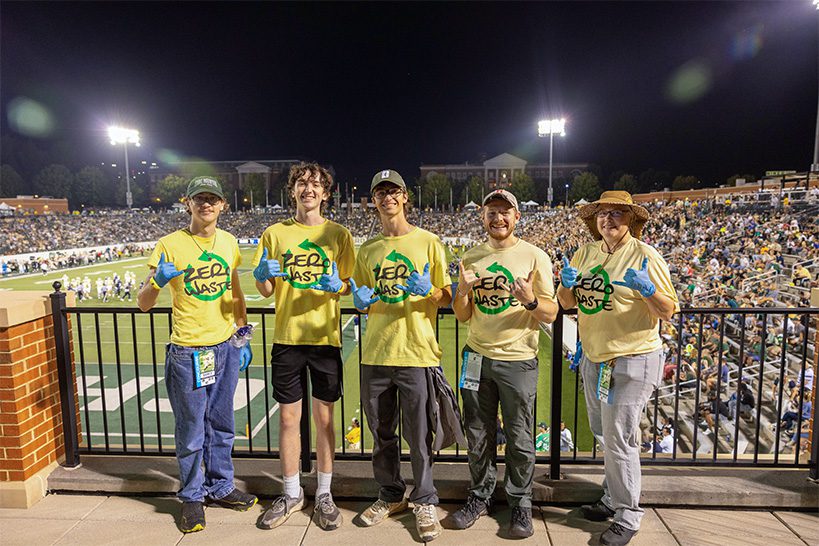
Zero-waste stewards, paid student employees, and Office of Sustainability staff arrive hours before kickoff to set up bins around the concourse, field and specialty seating areas. During the game, these volunteers — easily spotted in bright yellow “Zero Waste” T-shirts — monitor bins, empty them as needed and answer questions from fans.
Logan David, a junior civil engineering major and former marching band member, now serves as one of the Office of Sustainability’s zero-waste stewards.
“I've always loved the atmosphere of football games,” David said. “As a zero- waste steward I get that experience plus the rewarding aspect of making a difference, too.”
Throughout the game, the team empties bins until long after the final fans exit. They return at 8 a.m. the next morning to set up tables, bins and signs to welcome a registered group of volunteers from the campus community at 9 a.m.
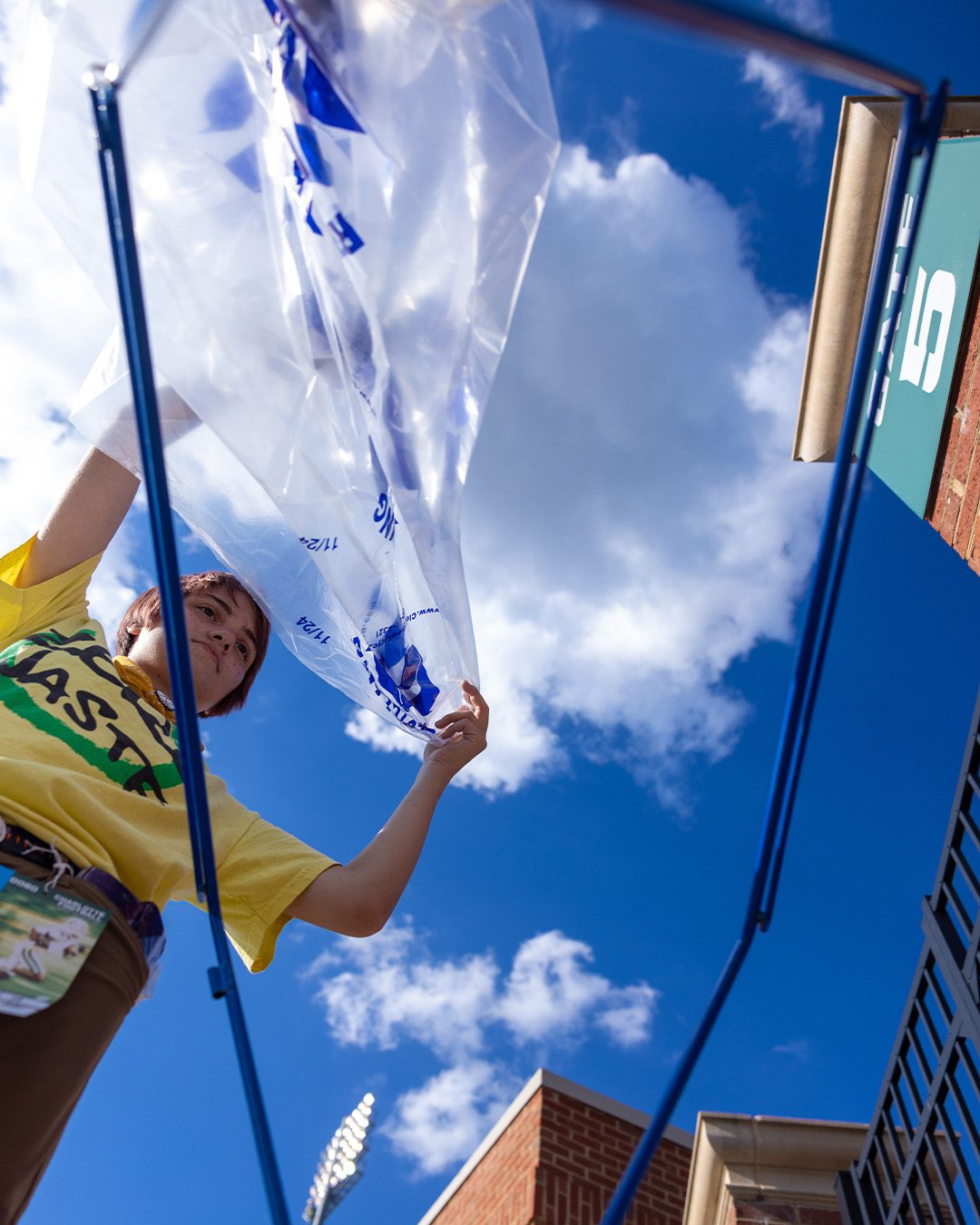
The team quickly trains the volunteers to meticulously sort bags of beer cans, half-used souvenir cups, paper towel waste and food scraps — dumping liquids and organizing the rest into marked bins for redistribution. It’s messy work, but it matters.
“When I'm working, I don't really notice the impact because I'm running back and forth from the trash cans, moving bags and sorting trash,” David said. “It doesn't really hit until someone sits down and does all the numbers and they realize we stopped three tons of waste from going to the landfill.”
Zero-waste In Action
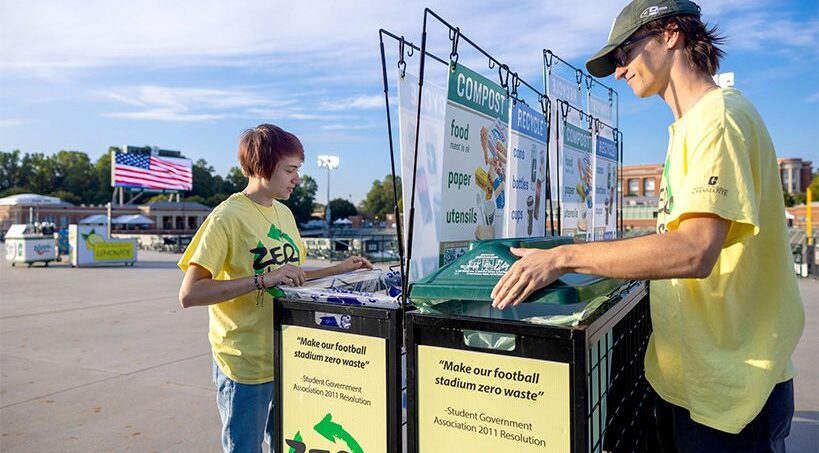
Before home football games, zero-waste student workers and staff set up recycling and compost bins around the stadium.
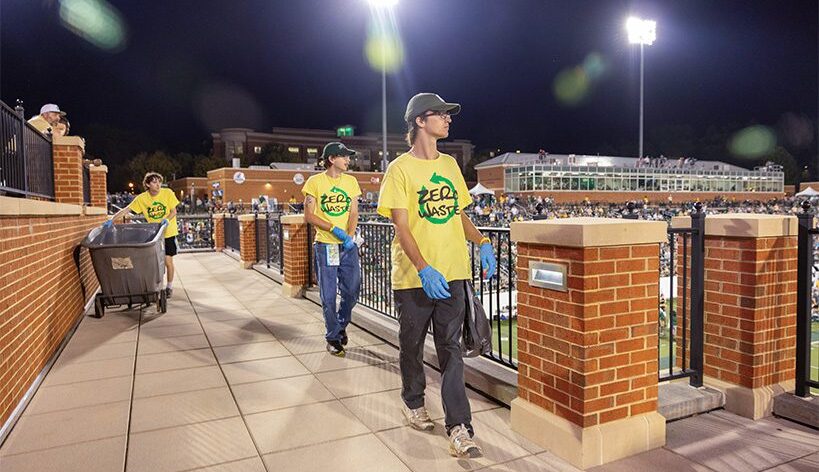
Crews patrol the concourse to ensure operations run smoothly — and catch glimpses of the on-field action when they can.
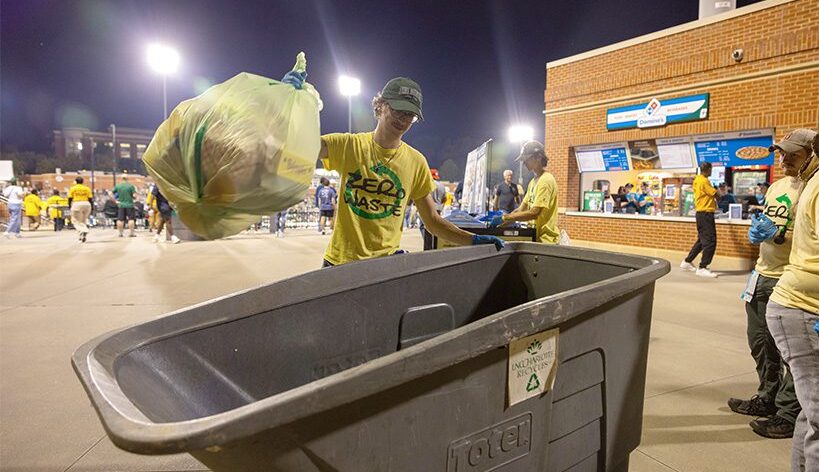
When bins fill up, workers grab bags of compost and recycling, then wheel them to a storage area near the commissary gate.
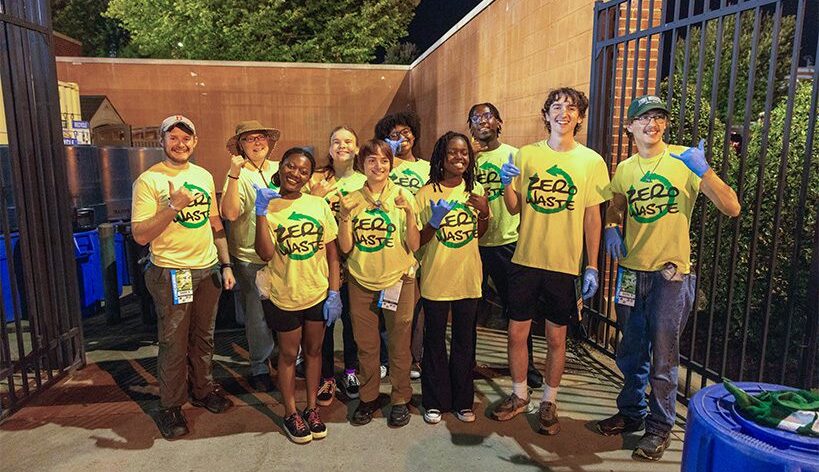
Post-game cleanup is one of the busiest times for the zero-waste crew. They collect waste from exiting fans and transport it to overnight storage.
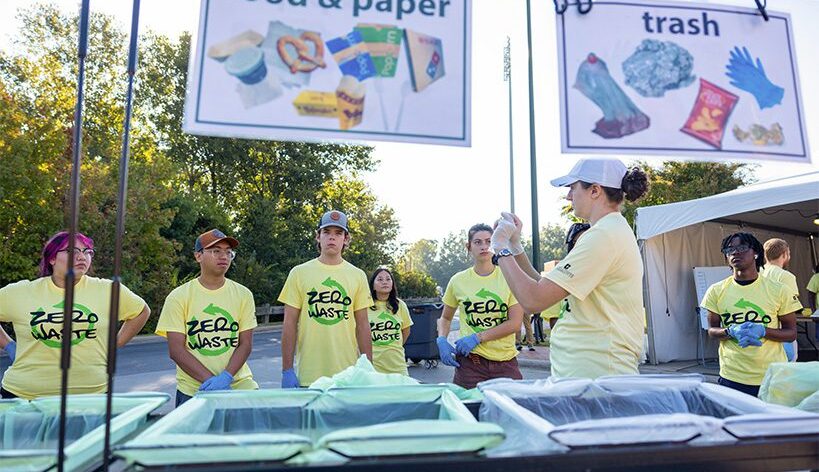
The following morning at 9 a.m., student volunteers join staff at the commissary gate to sort waste from the previous night’s game.
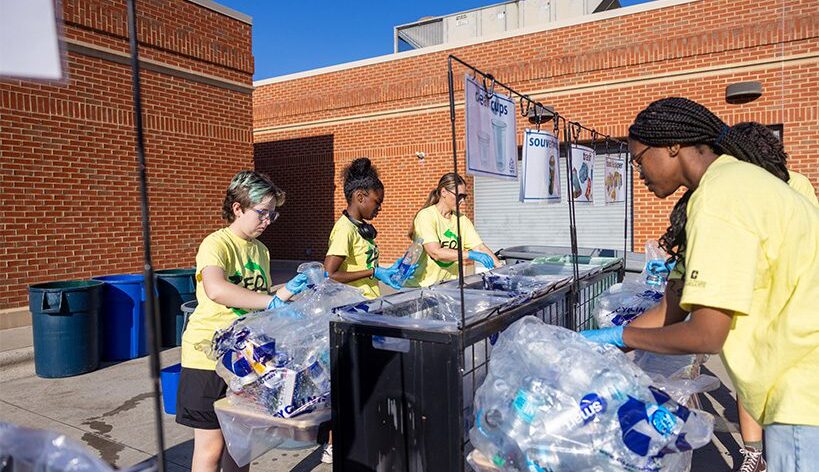
Volunteers separate materials into containers: cans, bottles, clear plastic souvenir cups, cardboard, trash, food scraps and “other” unexpected items.
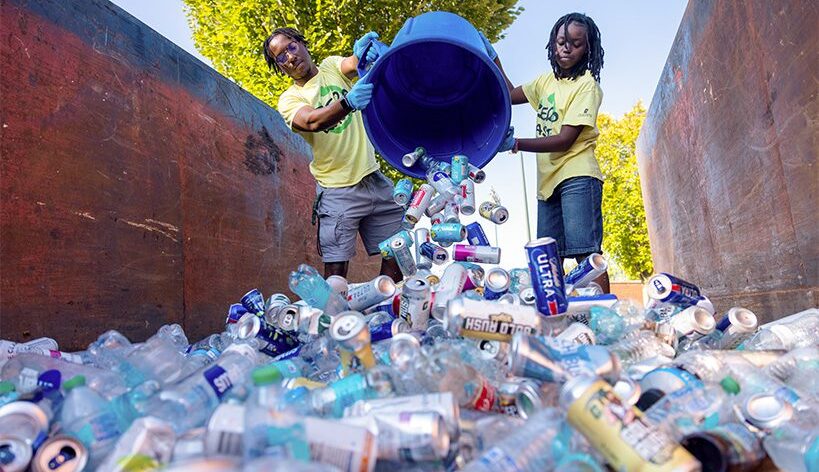
Emptied cans and bottles fill a dumpster for shipment to an industrial recycling plant.
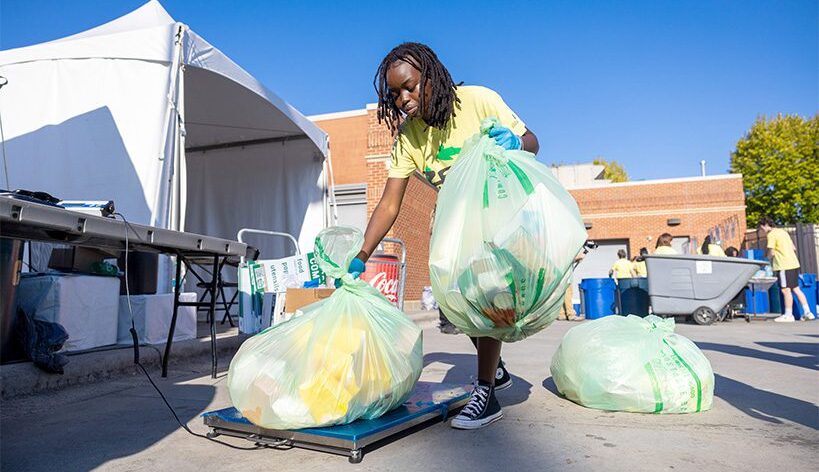
Compostable waste is bagged and weighed by the zero-waste team.
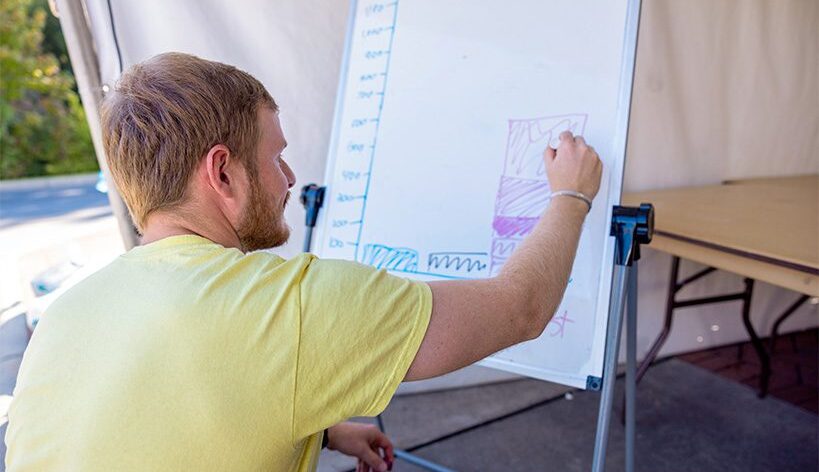
The weight data for recycling and compost is tallied and shared with the volunteers.
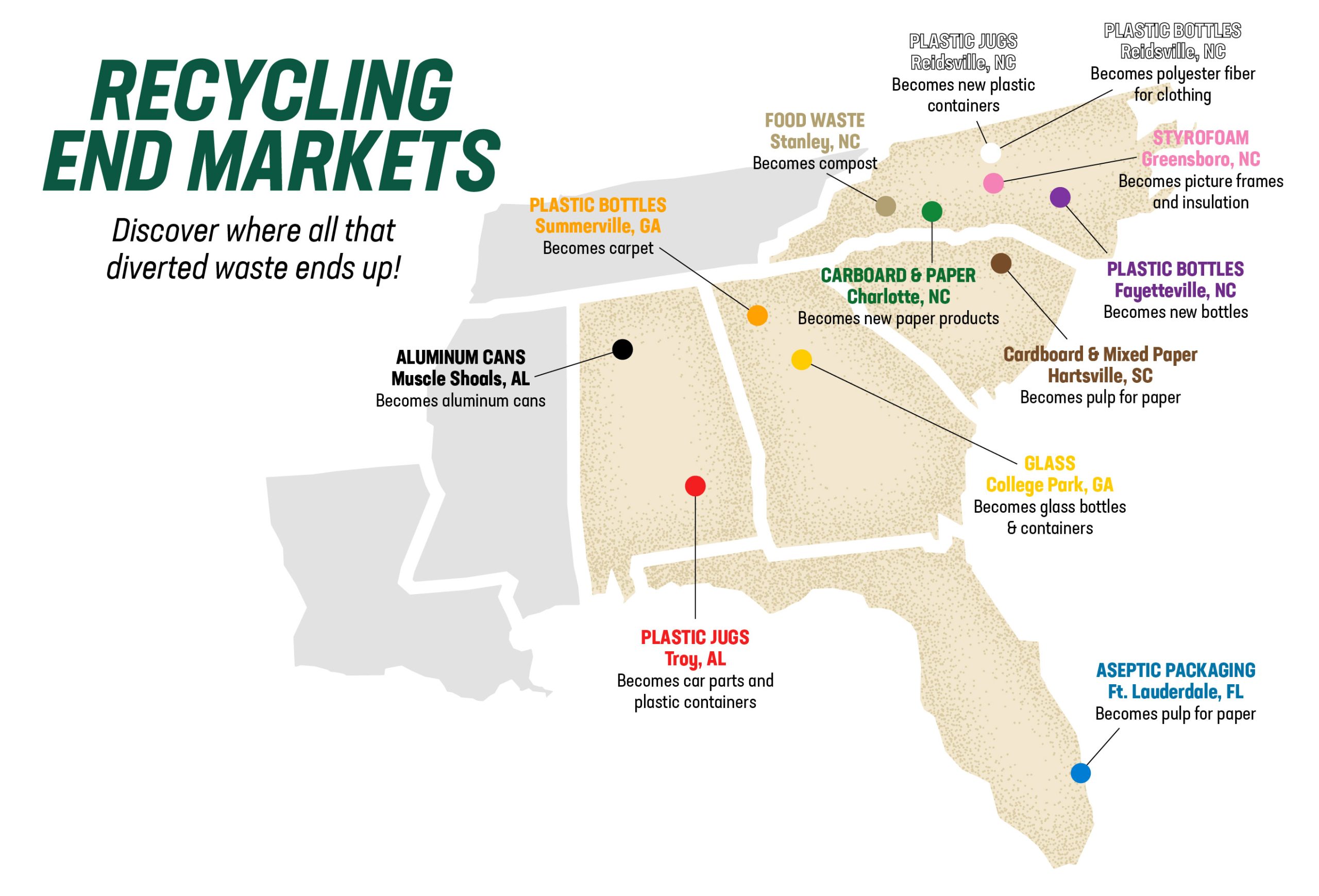
After the recycling and compost is sorted it is shipped off to an industrial facility to be returned to local economies. UNC Charlotte's waste supplies materials to specialized firms across 5 states, but most of the material goes to local companies to reduce shipping costs and pollution. Many materials collected and diverted get a second life — such as cardboard and steel cans that are processed locally and turned into new paper and steel products. Others are transformed into completely new items. The #1 polyethylene terephthalate from the stadium’s plastic bottles are transformed into polyester fibers for clothing and carpets. The styrofoam collected from games is sent to Greensboro to be processed into insulation and picture frames.
In practice, the zero-waste program reinforces a circular economy — minimizing waste by keeping products and materials in use. The student government that championed the resolution in 2011 and the staff who maintain it understand the value of applying this concept to a football stadium — a major waste generator.
Caveny-Cox notes that Charlotte’s zero-waste efforts are especially critical as the region grows and local landfills are filled and closed.
“There’s not a place to build another facility that large,” Caveny-Cox said. “If we start running out of space in the landfill, then we have to figure out, are we trucking it to another place or can we actually reuse our waste?”
The People Behind It
Sorting tons of waste into the right bin is a collaborative effort. The zero-waste program relies on support from the campus community. Since the pandemic, it has refocused on student engagement. Partnerships with the Honors College and other student organizations help sort waste more efficiently and offer students volunteer hours and a unique educational experience.
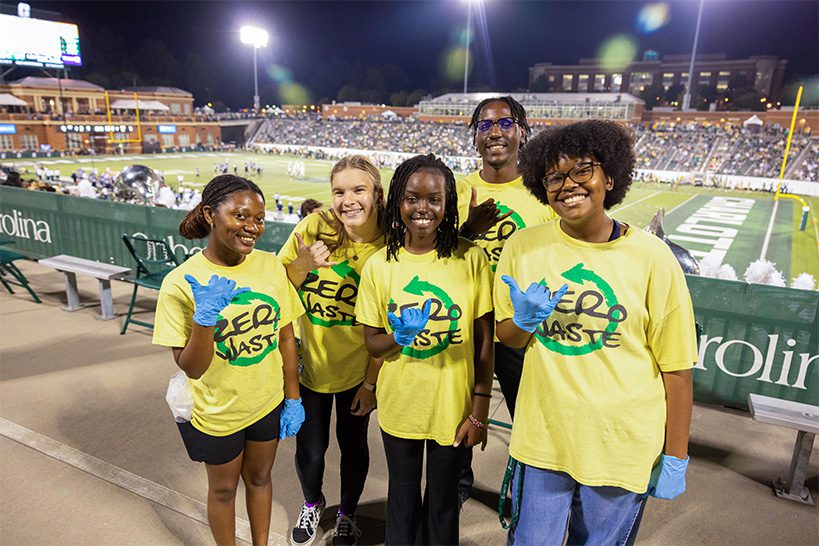
Mason Wood, a junior civil engineering major and member of the University Honors Program, is one of the Office of Sustainability’s zero-waste stewards. He began his journey as a freshman, volunteering for a post-game cleanup with the Honors College. Sustainability was important to Wood growing up in Monroe, North Carolina, so seeing the program up close inspired him to get more involved.
During a sophomore design course for his major, Wood wrote a grant proposal for the Charlotte Green Initiative — UNC Charlotte’s green fund which allocates approximately $60,000 a year towards sustainable projects on campus — to add zero-waste bins to Transamerica Field, Charlotte’s soccer stadium. After the proposal for six new bins was approved, Wood volunteered to assemble and install them. When the stadium hosted a men’s and women’s soccer doubleheader, he was there to help collect and divert as much trash as possible.
“As someone who grew up playing soccer and cares deeply about sustainability, this was more than just a project for me,” Wood said. “I wanted to see it through to make sure it actually came to fruition.”
For David, the impact of the zero-waste program — and its commitment to sustainability — is personal.
“I come from a smaller town, everything feels a lot bigger when you're in a small town from trash on the road to the way certain environments are treated,” David said. “I just want to have a positive impact on the people and the places around me.”
To learn how to make an impact on the Charlotte community and volunteer for a zero-waste clean up, visit the office of sustainability website.
Related Stories