KEY TAKEAWAYS:
- AI technology can help diagnose ophthalmic diseases years before symptoms emerge
- Earlier treatments — prompted by image and language-based models that predict ophthalmic disease progression — could positively affect patient outcomes
- UNC Charlotte researchers are meeting the region’s demand for biomedical engineering solutions
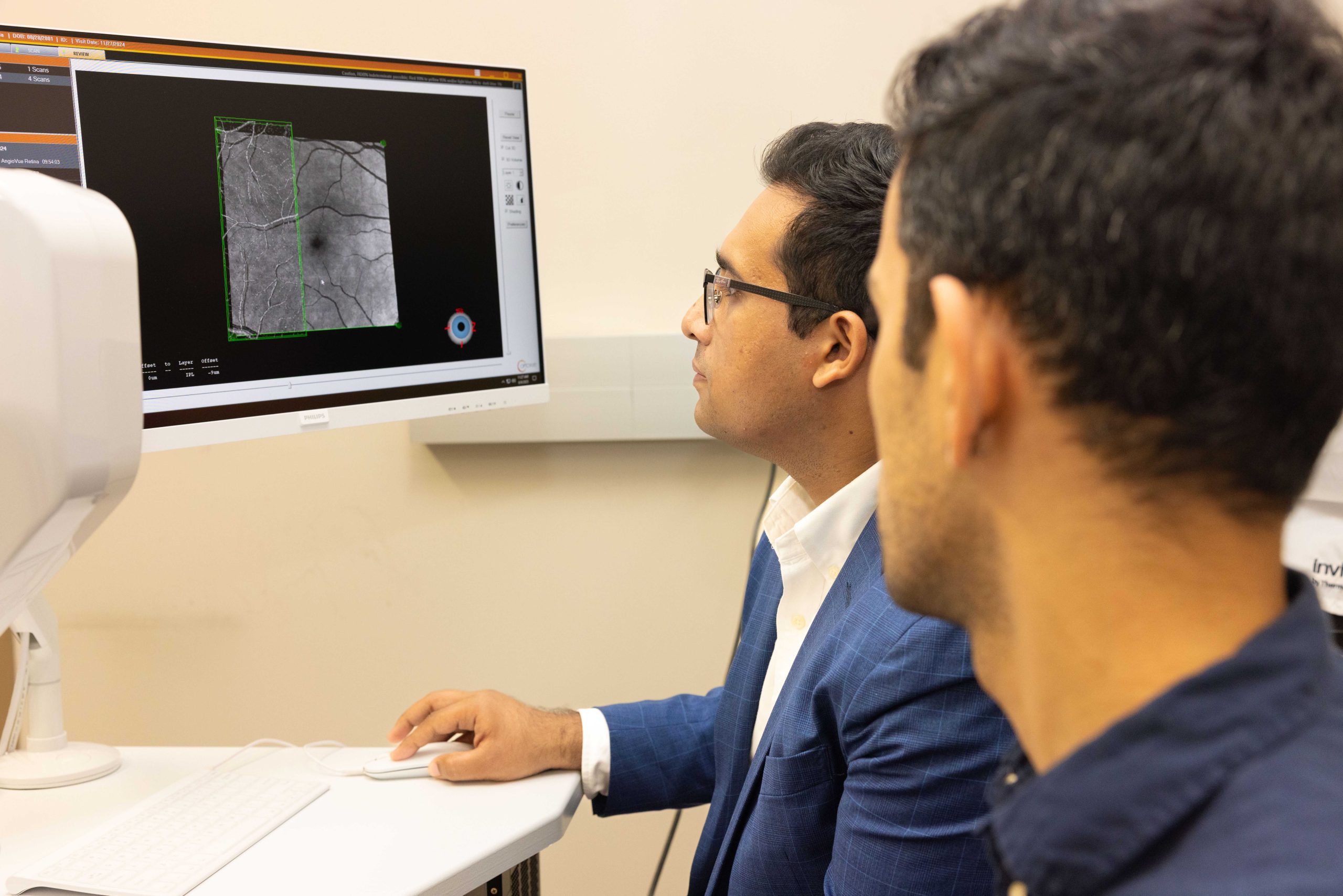
To diagnose retinal diseases in progress, a physician reviews hundreds of images of a patient’s retina taken by an optical coherence tomography scanner during a routine eye exam. Up to 10% of a physician's day is spent reviewing such images for their patients.
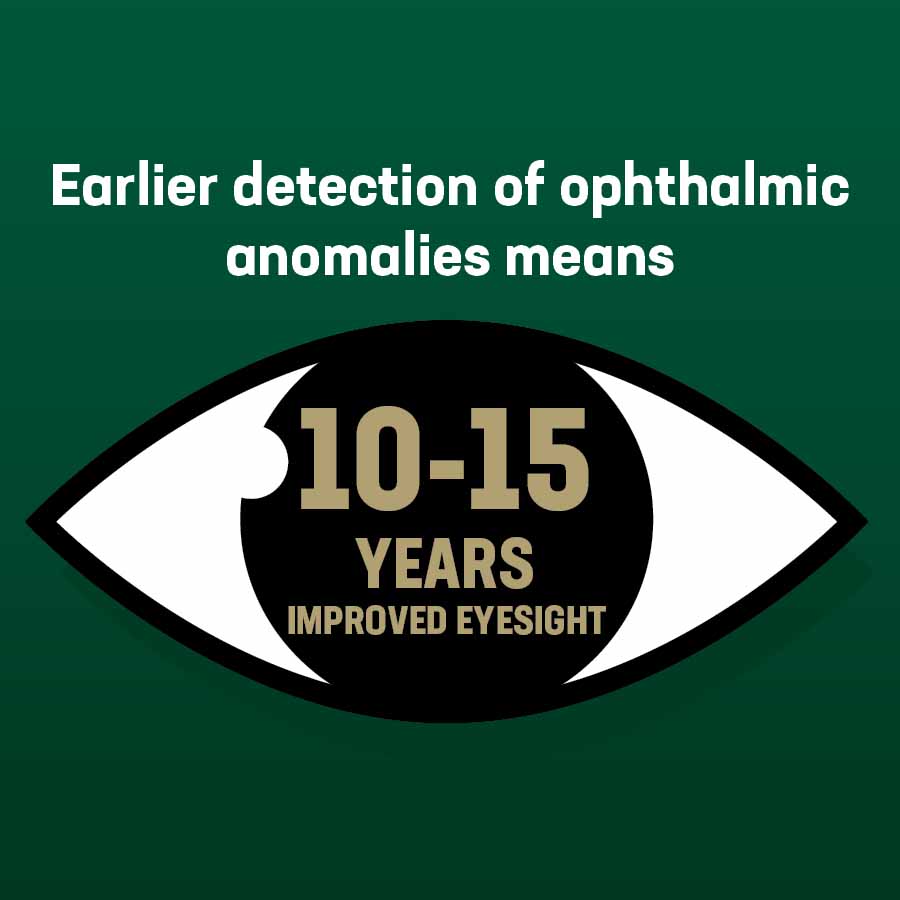
Imagine that an AI assistant can help review the scans to identify even the slightest changes in retinal patho-physiology in mere seconds, alerting the doctor — years before the patient’s vision begins to deteriorate — to the onset of macular degeneration or another anomaly. And that the use of this technology paves the way for the start of targeted, disease-mitigating care.
That’s the goal for UNC Charlotte researcher Minhaj Nur Alam, assistant professor of electrical and computer engineering. His research in this area builds upon foundational doctoral studies at the University of Illinois at Chicago, followed by a postdoctoral fellowship at Stanford University’s School of Medicine.
“Early in my Ph.D. studies, I began studying biomarkers and developing engineered imaging biomarkers for our AI models to use to identify distinguishable patterns in scanned retinal images of patients with a particular eye disease versus those of non-diseased patients,” Alam explained.
Data Sharing for Better AI Modeling
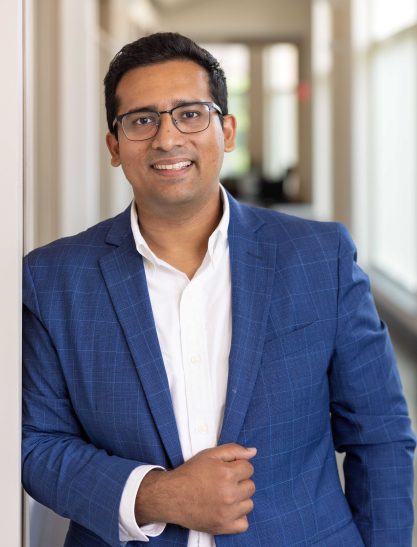
Alam directs the Quantitative Imaging and AI Laboratory in the William States Lee College of Engineering. Several undergraduate and graduate students are engaged in research alongside Alam, including Ph.D. student Sina Gholami.
Among the team’s priorities as they build and train robust and predictive machine-learning models is maintaining patient privacy. Top of mind are situations where individual eye doctors could have patient data that emphasize certain populations or demographics, or an AI model that produces reliable results locally but may not be globally representative due to a lack of shared data.
With funding from the National Institutes of Health, Alam and his team are investigating federated learning, which enables collaborative AI model training where data can be stored locally on hospital or clinic databases without violating patient privacy.
“Learnings from data that come from individual databases or computers can be aggregated to a cloud server essentially as cryptic numbers, which can appear as gibberish,” said Alam. “But the model aggregates from those learnings, referred to as weights in machine learning language, without actually accessing the data from local sources, and it becomes more generalized to better predict results from different populations.
Alam explains that textural and functional changes in the retina due to disease often occur over time. Assistive technology benefits patients and doctors in the treatment of systemic eye conditions such as diabetic retinopathy or macular degeneration by identifying and predicting the onset and progression, which allows for better treatment management.
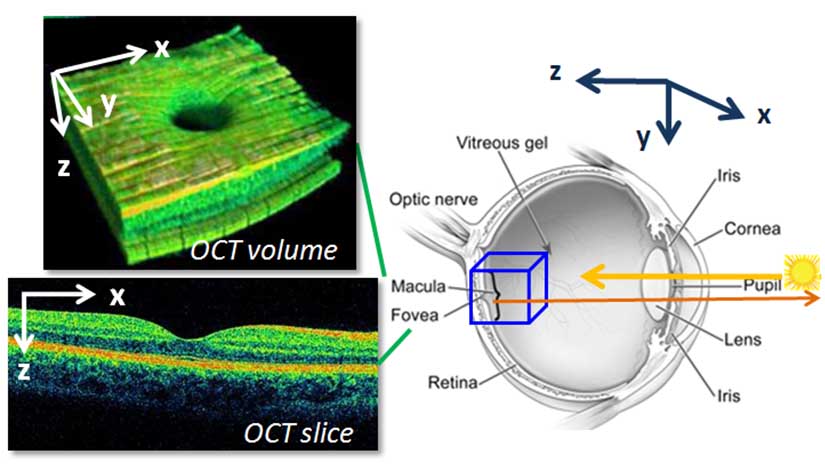
Professor Alam and his team use an optical coherence tomography scanner, which acquires 2-D cross-sectional images (slices) of a patient’s retina. These slices are combined to create 3-D representation of tissue being examined. This 3-D image, or volume, allows a more comprehensive view of the tissue's structure and any abnormalities.
“Our goal is to deploy our AI models in point-of-care facilities to assist eye doctors during patients’ annual checkups,” said Alam. “We want to help doctors identify risk factors for potential vision loss as early as possible so patients can be referred to ophthalmologists for more specialized care.”
A New Engineering Passion Begins in Bangladesh
As an undergraduate and master’s student in Bangladesh, Alam knew engineering was his path. He expected to focus on power systems, a common interest among his peers.
However, a visiting researcher from the United States, Kaiser Alam (no relation) would influence a different career trajectory. A native of Bangladesh, Kaiser Alam worked for Riverside Research in New York researching breast cancer, and he was developing an image processing system to study ultrasound scans to identify possible malignancies in breast tissues.
“We started to create algorithms using image processing, and that really influenced my interest to pursue the medical imaging field,” said Charlotte’s Alam. “So, when it came time to work on my Ph.D., I focused on universities with strong biomedical engineering programs.”
At the University of Illinois at Chicago, Alam worked with Xincheng Yao, now the Richard and Loan Hill Endowed Professor in the Department of Biomedical Engineering. UIC is affiliated with the University of Illinois Medical Center, and Yao had a strong record of NIH funding for ophthalmology research.
“Dr. Yao is an engineer, too, but he worked closely with ophthalmologists in one of the nation’s largest retinal clinics, which provided us access to large amounts of data,” Alam explained.
After completing his Ph.D., Alam undertook a two-year postdoctoral fellowship at Stanford University, conducting research with its School of Medicine’s Department of Biomedical Data Science.
“UNC Charlotte’s growing research portfolio is important to the city and the region. There is a huge demand for professionals with training in engineering and health sciences to meet the demand of the region’s growing portfolio of biomedical engineering concerns."
Building a Lab, Mentoring Up-and-Coming Researchers
Since he joined UNC Charlotte in 2022, Alam founded the Quantitative Imaging and AI Lab to develop AI models for medical applications in ophthalmology and radiology. As the lab’s leader, he leans on lessons learned from his own supervising faculty members, especially UIC’s Yao, to balance his roles as instructor, researcher and mentor.
“Dr. Yao really prepared me for my academic career. Applying for and obtaining grant funding is critical for researchers. He encouraged me to ask questions, especially in meetings with physicians and collaborators. He also shared his approach to writing grants and creating budgets,” said Alam.
Yao’s influence extends beyond the lab. Alam and his wife, an assistant professor of mechanical engineering and engineering sciences in the W.S. Lee College of Engineering, have adopted a practice of his mentor that they appreciated as graduate students at UIC.
“A couple of times each semester, Dr. Yao and his wife would host students in their home. They have two sons, and it was really refreshing to observe their family life and not talk about just research,” Alam said. “Now, we do something similar by inviting students to our home every Thanksgiving.”
Undergraduate and graduate students motivated to join Alam’s lab will benefit not only from his research expertise but his visionary stance to be at the forefront of AI to transform health care.
“UNC Charlotte’s growing research portfolio is important to the city and the region,” stated Alam. “There is a huge demand for professionals with training in engineering and health sciences to meet the demand of the region’s growing portfolio of biomedical engineering concerns.”