A Constellation of Mentorship
Faculty research aims to elevate the Niner experience
By Caroline Freeman
Photos by Amy Hart; Graphics by Myron Macklin
KEY TAKEAWAYS:
- Peer mentorship makes a positive impact on student success, so UNC Charlotte's Division of Student Affairs aims to better tap into that resource to elevate the Niner experience.
- Carmen Serrata, assistant professor of higher education, is uniquely equipped with both personal experience and research expertise to uncover the "why" of peer mentorship success at Charlotte.
- New research will inform a mentorship program accessible to all students, with peer mentors serving as guides for fellow Niners.
Peer mentorship is one of the most consistent indicators of positive influence on student academic performance.”
Dennis Wiese, associate vice chancellor for student affairs, UNC Charlotte
UNC Charlotte’s commitment to student success begins in the classroom – but in no way does it end there. Leadership development, internships, study abroad, mentoring and more all contribute to a well-rounded student experience. Across these factors, Charlotte not only is taking the lead in integrating them into a comprehensive web of support for optimal student outcomes – but also taking steps to do it better.
For example, the University hosts 46 distinct peer mentorship programs across various colleges and organizations. Even so, many students miss out on the vital guidance and support mentors can offer because a cohesive, University-wide strategy is needed to deliver it.
The Division of Student Affairs aims to bridge the gap. As the inaugural student affairs faculty fellow, Carmen Serrata, an assistant professor of higher education in the Cato College of Education, is researching a central question:
How can Charlotte optimize these programs to ensure equitable access to mentorship for every student — essentially building an interconnected network of relationships, or constellation of support, to help them achieve their goals?
The What: Research Methods
While the student affairs team links its engagement data like involvement activities and event participation to broader institutional data like enrollment and GPA through its new data lake, Serrata’s qualitative approach digs deeper. She prioritizes intangibles like student sense of belonging and career progression over traditional metrics. By conducting focus groups and interviews, Serrata uncovers the lived narratives that data points alone cannot capture.
According to Associate Vice Chancellor Dennis Wiese, Charlotte invests $3 million in staffing and 300,000 student hours annually into mentorship programs. The next step is using Serrata’s narrative research to make that investment even more effective on an institutional scale.
Wiese shared that the student affairs committee chose Serrata’s proposal because of her ability to bring out the stories behind emerging patterns. “We’re going to make sure next steps include what we learn from these stories of positive student impact. Some of our longstanding programs — UTOP and SAFE, for instance — have completed alumni surveys and implemented changes, but to be able to do that on a macro level across campus and say, ‘This is what peer-to-peer mentorship means to our students…’ that’s very powerful.”
The Who: Mentorship ‘Me-search’
Serrata’s interest in researching mentorship stems from a deep, personal understanding of how it affected her own career. She is a part of her family's first generation to graduate from college, and later, to earn a Ph.D.
“I am number six of 10, so much of my orientation to higher education came from my siblings’ experiences," she said. "Though they all had different experiences themselves, I collected a lot of the capital they were passing down. I really developed an understanding of what the challenges were, but also what opportunities there would be. I was able to envision a pathway through higher education for myself that was shaped by their collective experiences.”
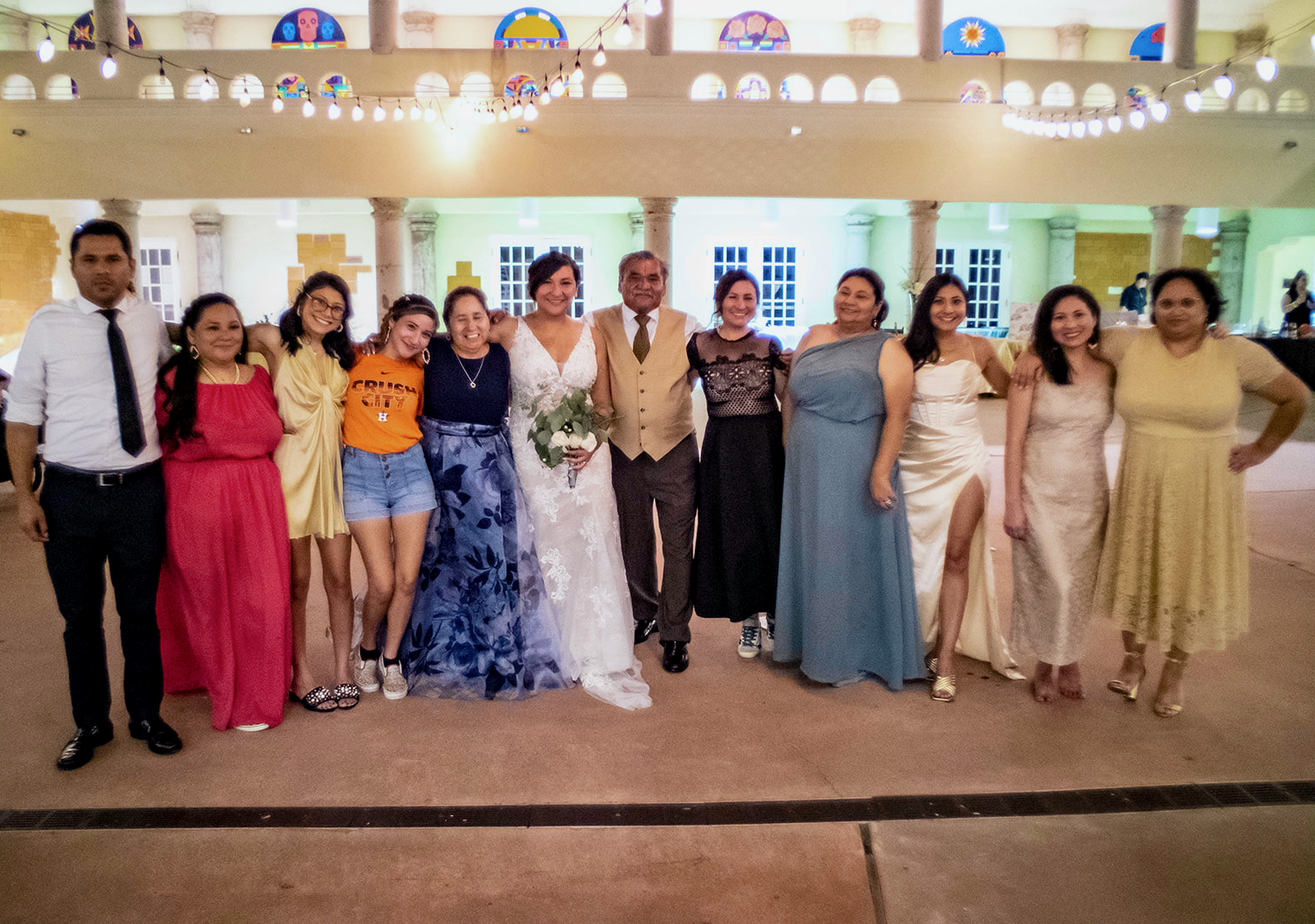
Serrata, second from right, grew up in a family of peer mentors; her siblings, all pictured here, served as her north star through her education journey.
After completing her education, Serrata became a higher education administrator, working with access programs that assist underrepresented groups of students in coming to college, and later pursued a role as a professor. She gained new peer mentors that shared this new career-centric cultural context, receiving advice from faculty a few career steps ahead who had once been in her shoes. Even today, heading into her fifth year at UNC Charlotte, she still leans on fellow professor of higher education Cathy Howell, one of her earliest professional mentors at UNC Charlotte.

Student Affairs Faculty Fellow Carmen Serrata, right, benefits from her own peer mentorship with fellow professor of higher education, Cathy Howell
These shared lived experiences meant she didn’t have to overexplain her cultural context; her mentors knew her hurdles. It’s this relational trust she sees reflected in her research: it’s the bedrock of what makes peer mentorship effective.
The Why: Peer Mentorship Matters
Shared lived experience isn’t limited to heritage or majors, it includes hobbies, economic backgrounds, or academic and career pathways.
Shared experiences are so valuable because they give us a shared vocabulary, and they start from a place of relational trust.”
Carmen Serrata
Serrata’s study of transfer students highlights this. While institutional policies matter, they cannot replicate the trust found in a mentor who has walked the same complex path. She’s conducted hundreds of interviews as part of a longitudinal study surrounding community college students transferring to four-year institutions like UNC Charlotte.
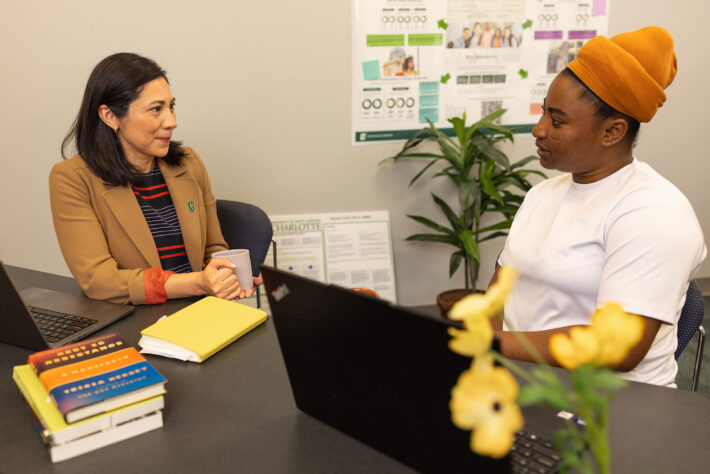
“The persistent theme is that transfer is a very complex system, and they really value the experiences of those who have already been through it. Policies and partnerships matter, but they can’t replicate the trust and support from someone who’s been through the process, who can share exactly what path to take and what resources helped the most. That’s a key source of information and support for many students who are navigating transfer pathways.
But students are never defined in just one way. A transfer student might also be a first-generation college student, an international student or any number of other groups that could benefit from mentoring support. And one mentor can’t have all the answers. So how can a student best be supported?
The How: A Constellation of Mentorship
Serrata, like other scholars, describes mentorship as a constellation, a network of mentors who offer different kinds of support through the relationships they’ve cultivated with the student.
“Peer mentors guide through shared experience, faculty and staff provide academic and career expertise, and family or community mentors form the student’s foundation. With the student at the center, these relationships help them grow until they can eventually guide others in turn,” Serrata explained.
An interconnected network of relationships that build on each other, ebbing and flowing to help a student achieve their goals
The When: Recommendations Coming Soon
By summer 2027, Serrata and the student affairs research team will make recommendations to close existing gaps in the University’s approach to mentorship. “The point of this project is to allow every student at UNC Charlotte the opportunity to receive quality peer mentorship. It’s a high-impact practice that increases student engagement, persistence, sense of belonging and sense of identity within higher education,” Serrata stated.
Wiese emphasized the benefit of using Charlotte experts to elevate the Niner experience, rather than consultants or other outside contributors.
“This is the epitome of the collaborative ethos of Charlotte. Faculty across campus have not just expertise, but interest in how to create and advance student success on campus. It’s not just student affairs that came up with this idea, we needed the faculty input — it’s a great example of us coming together as an institution to help our students be the most successful they can be.”