KEY TAKEAWAYS:
- UNC Charlotte’s real estate program is preparing and developing talent that is literally building Charlotte, one of the nation’s fastest-growing cities.
- UNC Charlotte expert Daniel Wright helps students understand complex real estate and financial concepts through PLACES-bid, a game he designed as a practical, creative learning tool.
- Belk College of Business graduate students gain access to Charlotte real estate projects and leaders through real-world-centered education, including a real estate investment fund course that is one of fewer than 20 in the nation.
In real estate, it’s all about how you play the game. Daniel Wright knows how to play the game to win, and he’s making sure his students do too. One way he’s accomplishing this is with PLACES-bid, a game he created and crowdfunded with his brother Stewart Wright.
“About 13 years ago I was working in land investment,” recalled Wright, who teaches finance and real estate courses in the Belk College of Business. “I read the book “The Real Estate Game” by William Poorvu, a Harvard professor. He lays out the idea of real estate as a game. I started to wonder if there was a way to simplify the concepts of real estate to make them memorable.”
At the time, Wright was busy building a career in real estate development and land investment management, bringing to life his commitment to sustainable urban planning principles. His idea would have to wait.

Wright plays a new hand
Fast forward to 2018, when Wright joined the Childress Klein Center for Real Estate at Charlotte, Now, his main audience is students, who need practical approaches and context for the complex financial and real estate concepts covered in class. Wright’s practical approach wins over students — and also employers who depend on Charlotte’s real estate program for the talent needed to fuel one of the fastest-growing regions in the nation.
For finance undergraduates in Wright’s asset and property management course this fall, PLACES-bid has opened the door to new concepts and new friends.
“There’s an energy in the classroom,” said Business Honors senior Isabella Lain, a Johnson Scholar who is double majoring in marketing and finance with a minor in journalism. “Everyone's engaged, everyone's participating, talking with the professor, staying after class to talk with him more.”
In addition to sparking creativity and enthusiasm for finance and real estate topics, PLACES-bid has helped students get to know one another.
“The group that I was placed with randomly for the game became my group for the whole semester, and we all really clicked,” Lain said. “We figured out that we all thought differently playing the game, and that's helped us a lot in our project.”
The case competition project, with business and government mentors, challenges student scholars to craft solutions for the shortage of affordable and attainable housing. Through the 2025 Canopy Innovation Award competition, teams from higher education institutions presented their solutions to industry leaders and competed for scholarships.

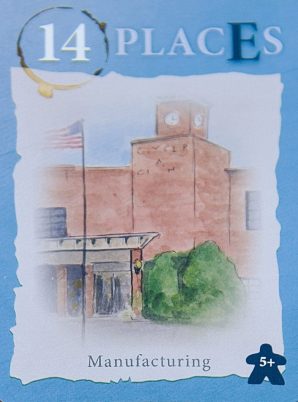
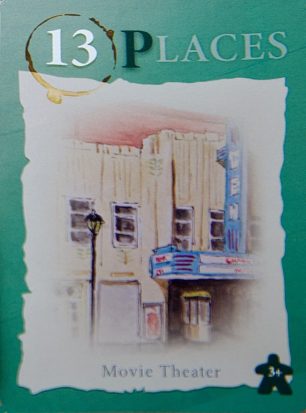

Daniel Wright painted original watercolors for the design of cards in the PLACES-bid game, featuring buildings in Kannapolis, Salisbury and Concord, where he lives.
Game is just the latest bid
Before creating PLACES-bid, Wright had worked with industry professionals and Charlotte alumni to incorporate immersive learning into his undergraduate and graduate-level courses. Each year, he makes sure to include case competitions, presentations by Charlotte-area industry pros, study abroad trips and commercial real estate site tours. He also co-teaches a real estate investment fund course.
“Daniel’s dedication and his genuine passion for students in the real estate program is very apparent,” said Constance Henderson ’23 MSRE. “PLACES-bid is really emblematic of that. He's found a way to bring a sort of levity and connectedness into the classroom in the form of this game.”
Henderson, an affordable housing credit specialist at TD Bank, focuses on developing communities across the country. She has also joined Wright in the classroom as an adjunct faculty member, along with Peter Stipicevic ’13, ’18 MSRE, vice president at Crosland Southeast, a leading development and investment firm. They co-teach the real estate investment fund course with support from the Fioretti Real Estate Fund.
Through the fund, one of fewer than 20 in the nation, students gain hands-on experience in the analysis, investment and management of private and public real estate securities. Key to their learning is active participation in private real estate deals sponsored by developers in the Charlotte region.
“This is what makes our fund and our program so marketable,” Henderson said. “Each of my students is pairing directly with a major developer or sponsor, and they're developing trust and rapport and relationships.”

Real-world approach broadens options
For Jerry Lee ’25 MSRE, the fund course added practical balance to theoretical learning. Students are divided into teams that focus on asset management or investment, with coaching by industry leaders and professors, all of whom have industry expertise.
“You're drawing on all of the different programs that you had throughout the master's program,” Lee said. “The whole process of being able to have an interface with management as an investor is like playing a real game. That's pretty special.”
For Lee, Wright stands out for giving students the opportunity to explore concepts and make mistakes. “He allows people the space to learn,” he said. “When dealing with new concepts, I felt like there's always a nice amount of space to inquire, to say things that are completely wrong and not feel embarrassed about it. He has a very inclusive way about him that is very charming and gives everybody an opportunity to succeed.”
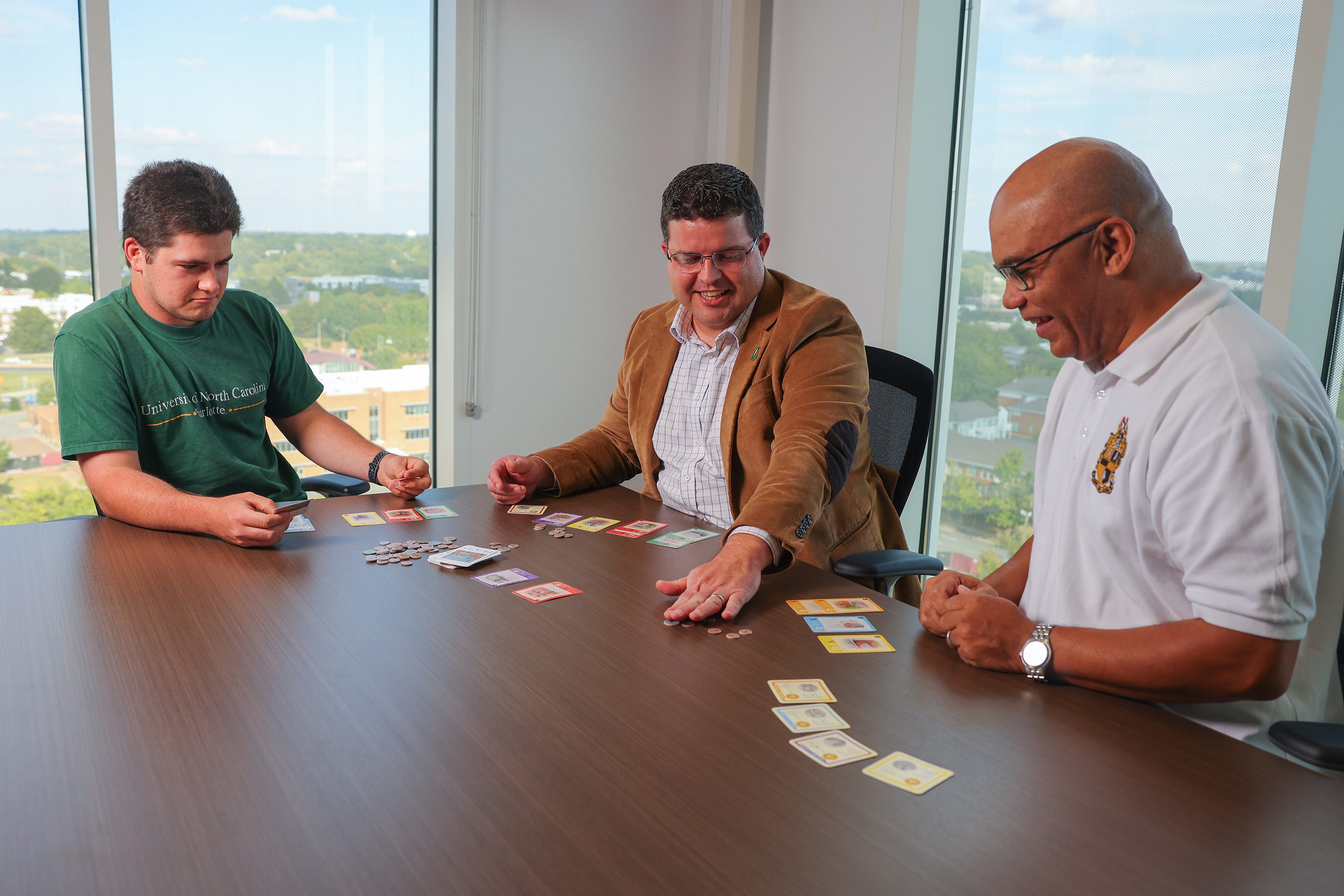
The connections that Wright and others with the Childress Klein Center for Real Estate have cultivated in Charlotte act as aces in the real estate program’s deck.
“One of the great benefits of Charlotte is you have layers of engagement,” Wright said. “With our real estate program, we have very active advisory board members who are local. They've done projects here in our region, and they engage with students to help them build careers. Then you have Belk College alumni, and by and large, our alumni live and work in Charlotte.”
Lee recalls the the first course he took with Wright, when the concept of community responsibility came up. “That's what the whole game is about,” Lee said. “You can't just put a garbage dump next to a multifamily development. There's a responsibility for placemaking that we all have that is going to allow continuity to exist in a community.”
When students grasp what is necessary for communities to thrive, as Lee has, Wright feels he has done his job.
"Real estate can be considered a game, but it's much more than that," he said. "The real estate industry is essential to economic growth and also has significant impact on the well-being of people in a community. When our graduates bring all they've learned to their careers, they can play a winning hand in the real-world game of real estate.”