College of Liberal Arts & Sciences

Talking policy: Scholars, local leaders to discuss elections and conventions
Today’s political climate is energized, at times in a polarizing way. At 5 p.m., Friday, Oct. 12, at UNC Charlotte Center City, a community conversation will consider how to channel this energy into meaningful political participation at the local level.

Toronto researcher to address biotechnology
Alessandro Delfanti from the University of Toronto will present “The History and Politics of Distributed Biotechnology” at 11:30 a.m., Tuesday, Oct. 30, in the Cone University Center, Room 113.
Delfanti, assistant professor of culture and new media, teaches at the Institute of Communication, Culture, Information and Technology; he is the author of “Biohackers: The Politics of Open Science.”

Nursing student honors family’s history of military service, completes special Army training program
Pilot Mountain, North Carolina, is a small town at the base of the Blue Ridge Mountains; from there, it is about 4,200 miles to Landstuhl, Germany, home to the United States’ largest international military hospital.
UNC Charlotte receives NSF funding for community co-development of artificial intelligence systems designed to improve public safety
Researchers at UNC Charlotte have been awarded funding from the National Science Foundation (NSF)’s Smart and Connected Communities program to co-develop technology to support public safety. The $1.9 million, four-year grant will develop an optical sensing platform that uses artificial intelligence to detect and prevent street crime without the use of profiling.
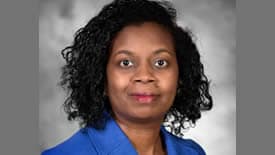
UNC Greensboro professor to give annual Maxwell-Roddey Lecture
Tara Green, professor and director of African American and African Diaspora Studies at UNC Greensboro, will deliver the 10th annual Bertha Maxwell-Roddey Distinguished Africana Lecture at 5:30 p.m., Thursday, Oct. 18, in the Cone University Center, McKnight Hall.
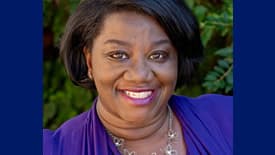
Sociologist to address ‘The Troubling Rise of For-Profit Colleges’
A sociologist with a national best-selling book detailing the rise of for-profit colleges, growing debts from student loans and their impact on social inequality will give a public talk on Thursday, Oct. 18.
Tressie McMillan Cottom, an award-winning author and assistant professor at Virginia Commonwealth University, will speak on her book, “Lower Ed: The Troubling Rise of For-Profit Colleges in the New Economy,” at 7 p.m. in Cone University Center’s After Hours Lounge.
Spend an evening with educators
The Charlotte Teachers Institute will host an “Evening for Educators” from 6 to 8 p.m., Tuesday, Oct. 9, at Discovery Place Education Studio.
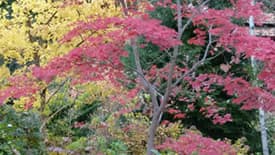
Fall Plant Sale to offer a variety of garden selections
The Fall Plant Sale at the UNC Charlotte Botanical Gardens is a great place to find selections that will yield spring blooms.
This annual sale will be 9 a.m. to 3 p.m., Friday and Saturday, Oct. 5-6, at the McMillan Greenhouse. A preview sale will be noon to 3 p.m., Thursday, Oct. 4, for members of the campus community and garden stewards. Students, faculty and staff receive a 10 percent discount with UNC Charlotte ID.
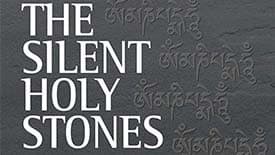
Screening of ‘The Silent Holy Stones’ scheduled
A free screening of the film “The Silent Holy Stones” is scheduled for noon, Friday, Sept. 28, in the Cone University Center, McKnight Hall.
Prior to the screening, the film director’s Wanmacaidan will give a brief lecture, starting at 10:30 a.m., and a complimentary light lunch will be served at 11:30 a.m. A question-and-answer session will follow the screening. The film is presented in Tibetan with English and Chinese subtitles.
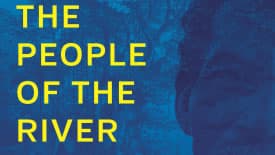
UNC Press publishing professor’s ‘The People of the River’
Oscar de la Torre, associate professor of Africana Studies, will have his first book, “The People of the River: Nature and Identity in Black Amazonia, 1835-1945” published by UNC Press; it is scheduled for release in October.
This work is a social and environmental history of the Africa-descended people in Brazil’s Amazonian forest. It is a story of the difficult journey from slavery to peasantry, and how Black Amazonians used the environment to forge new overlapping identities as citizens, black and indigenous in the post-emancipation years.