College of Liberal Arts & Sciences

Undiagnosed sleep disorders may damage college students’ academic success
Undiagnosed sleep disorders may be sabotaging students’ academic success, according to a study by UNC Charlotte psychology professor Jane Gaultney.
Gaultney presented the study at the Associated Professional Sleep Societies’ Conference and published the abstract in the journal Sleep. Her research found evidence suggesting that college students with sleep disorders may run a higher risk for lower GPAs, less motivation and possibly even more dire consequences.
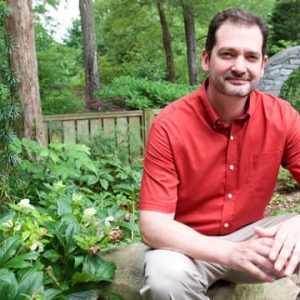
New Botanical Gardens director undertaking lifetime opportunity
As the new director of the UNC Charlotte Botanical Gardens, Jeff Gillman sees his mission as engaging the public with the gardens and with nature.
“My goal is to bring the gardens to the public,” Gillman said. “The gardens have had a wonderful base over the years, and I hope we can bring it to a wider audience and help more people to experience not only the gardens but also plants in general. That is something I’ve worked on for my whole career – public engagement and getting people to appreciate plants and the environment.”
Watch a rebroadcast of the ‘Live Wire’ devoted to Mount Zion dig
This week’s “Live Wire,” airing at 2 p.m., Thursday, is a rebroadcast of a segment devoted to the University’s archaeological dig at Mount Zion. Religious studies professor James Tabor and other guests discuss the excavation, which is uncovering history in Jerusalem.

Native plants restoration project topic today’s ‘Live Wire’
Click on the menu item “Live Stream” above or here to go to “The Live Wire.”
University’s archaeological dig receives widespread coverage
Archaeologist Shimon Gibson describes the vision for the Mount Zion excavation site near Jerusalem in this video. The dig is a multi-year effort in the ancient city, and UNC Charlotte is the only American university licensed to carry out such excavations in Jerusalem.
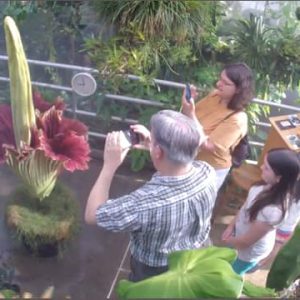
Odie the Titan draws crowd to McMillan Greenhouse
Never underestimate the ability of a bizarre plant to bring thousands of visitors to campus. Odie, the Titan Arum, attracted a following during his recent blooming event.
July 16 ‘Live Wire’ devoted to Mount Zion archaeological dig
This week’s “Live Wire,” takes viewers to Jerusalem, the location of UNC Charlotte’s archaeological dig at Mount Zion. James Tabor, professor of religious studies, will speak directly from Israel about the exciting work he and his team have been doing to uncover history in the Holy City. Other guests also will report from the dig, on the July 16 edition of “The Live Wire,” Inside UNC Charlotte’s streaming webcast, airing at 2 p.m..

Blooming Titan named Odie
UNC Charlotte’s burgeoning Titan Arum now has a name – Odoardo or “Odie” for short. The flower is named for Italian naturalist Odoardo Beccari, who discovered the Titan Arum in Sumatra in 1878.
Biology major Mariah Huffman, co-president of the UNC Charlotte Student Community Garden, submitted the chosen name. She said she is excited to have the chance to experience a Titan Arum blossom. While she knew about Bella, the University’s previous Titan Arum, she was not a student when the plant last bloomed in 2010 before it expired.

Time to name the Titan
One of UNC Charlotte’s Titan Arums or “corpse flowers” is preparing to bloom in the next seven to 10 days, so it is time to give it a name.
“Amorphophallus titanum or the Titan Arum, which is native to Sumatra, is considered one of the rock stars of the plant world,” said Paula Gross, interim director of the UNC Charlotte Botanical Gardens.
The yet to be named flower is one of two Titan Arums the Botanical Gardens purchased from California in 2008; at that time, the plants were roughly five years old.

Trendy method of marijuana use holds risks, CLAS researcher suggests
A popular method of using marijuana may put young users at greater risk for burns than the more customary way of using marijuana, a UNC Charlotte professor suggests.
John Stogner, a criminal justice and criminology professor in the College of Liberal Arts & Sciences, assessed the dangers of a practice called “dabbing” in research recently published in Pediatrics, the journal of the American Academy of Pediatrics. Stogner and co-author Bryan Miller of Georgia Southern University warn of the implications of this growing trend.